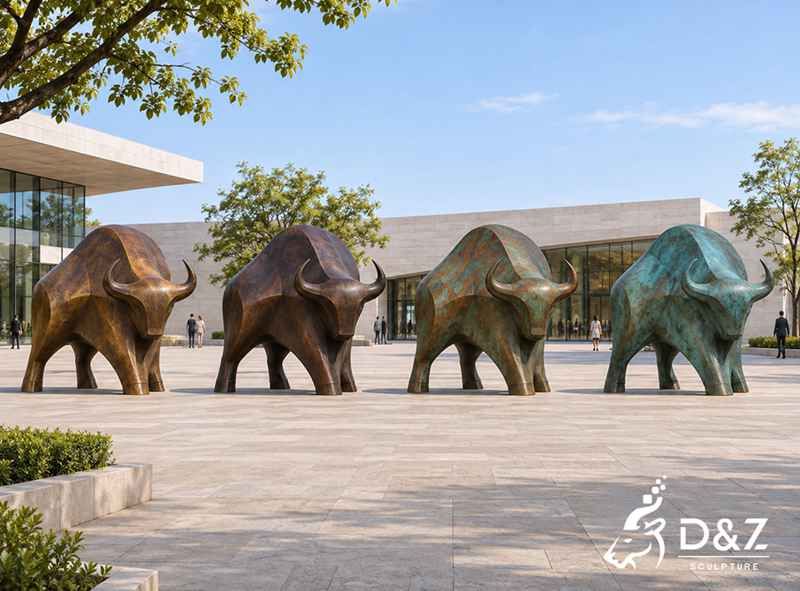
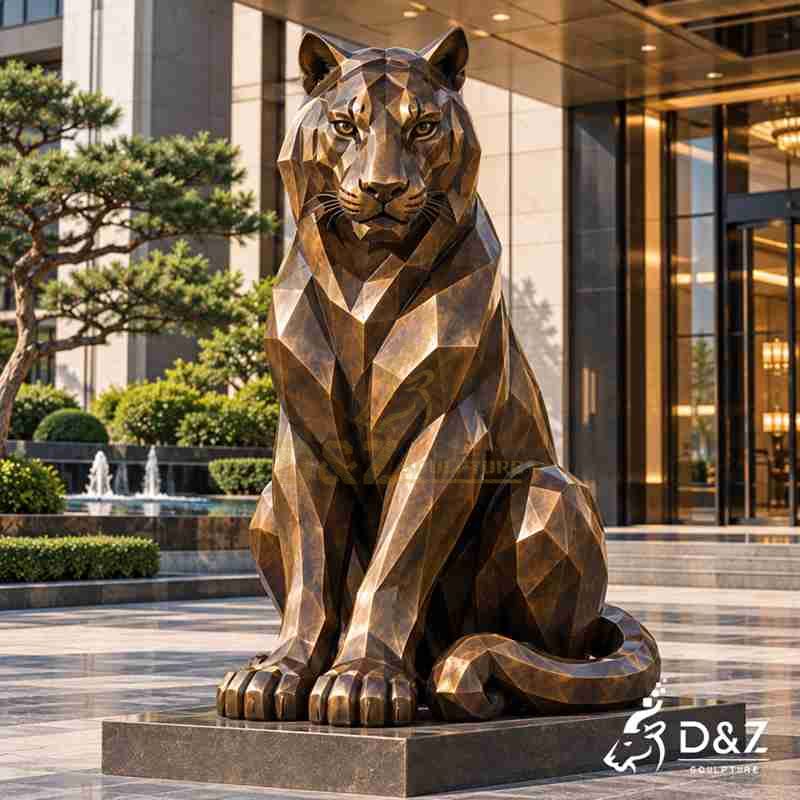
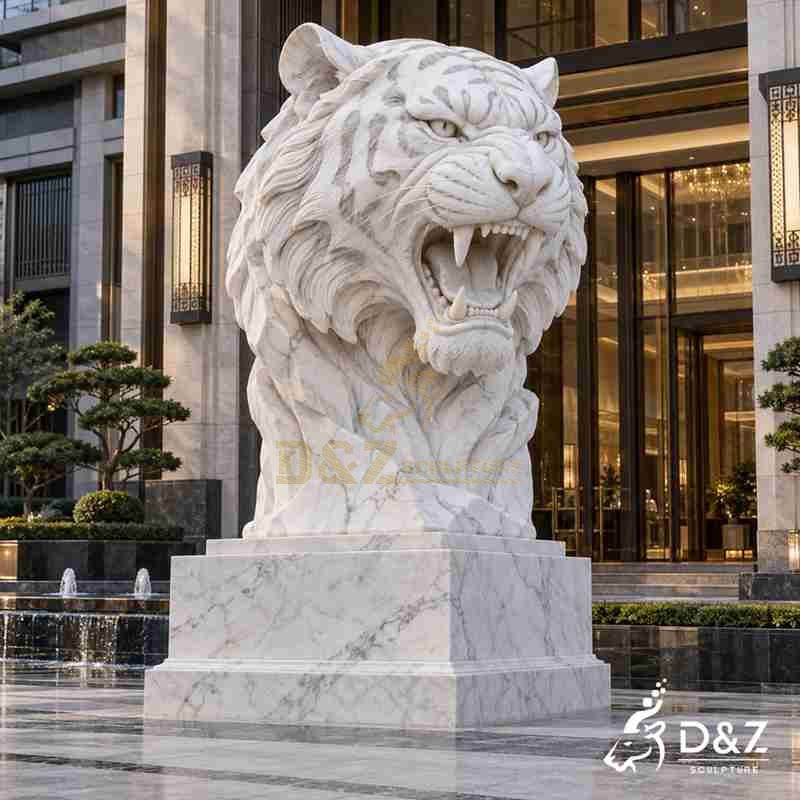
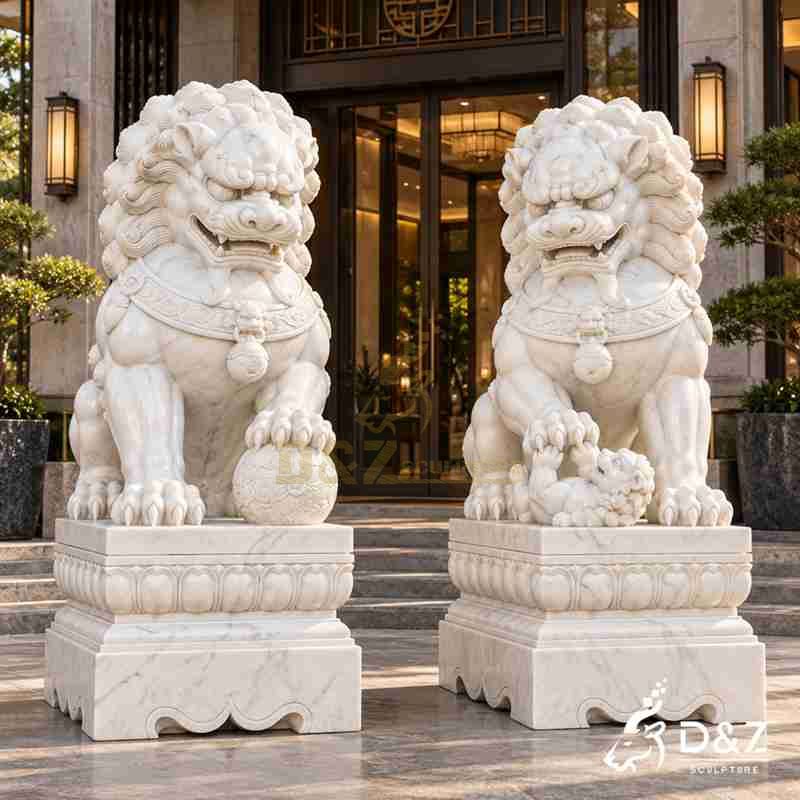
When selecting bronze statue patina, simply confirming "dark brown" or "copper green" is not enough. The same color name can encompass a wide range of underlying tones, degrees of light and shadow, patterns of mottling, and surface sheens. Furthermore, the sculpture’s texture, the intended viewing distance, the ambient lighting at the installation site, and future maintenance conditions all influence the final appearance.
For custom projects, it is advisable to consider color, surface depth, protective treatments, and the installation environment in tandem: first, define the desired visual effect; next, verify it using samples created under conditions that closely mirror the actual production process; and finally, document the agreed-upon result to serve as a benchmark for both production and final acceptance.
What Is a Patina on a Bronze Sculpture?
How Is the Patina on Bronze Formed?
Common Bronze Patina Colors and Effects
Artificial Patinas vs. Natural Oxidation: What Is the Difference?
The Role and Selection of Protective Surface Coatings for Bronze Sculptures
How to Choose a Patina for a Sculpture and Its Display Space
Considerations for Bronze Patinas in Different Climates
How to Approve Bronze Patina Samples
Maintaining Visual Consistency Across Large-Scale Bronze Sculptures
Factors Influencing the Cost of Bronze Patinas
Characteristics and Limitations of Bronze Patinas
FAQ About Bronze Statue Patinas
The term "patina" is generally used to describe the color and surface variations found on bronze sculptures. In the context of sculpture production, a patina can be achieved through intentional, artificial treatment or develop naturally over time through exposure to the environment.
From a technical standpoint, a "chemical patina" refers to color achieved by inducing a chemical transformation on the metal surface through controlled processes. Similar visual effects can also be produced using tinted transparent coatings, pigmented paints, or other "antique-finish" techniques; however, these methods differ in how they are applied, how they wear over time, and how they should be maintained. When purchasing, you should verify the specific coloring process employed, as well as whether a layer of wax or a clear protective coating has been applied over the color. Do not rely solely on a label like "antique bronze finish" or a photograph to make your judgment.
The most practical way to understand bronze sculpture patina is to focus on three questions simultaneously: How is the color on the surface of the sculpture formed?
Is there a layer of wax or a clear protective coating applied over the color?
During use, which changes are considered part of the intended effect, and which ones require inspection or maintenance?
Explore our bronze sculpture collection to see different bronze finishes and sculpture applications.
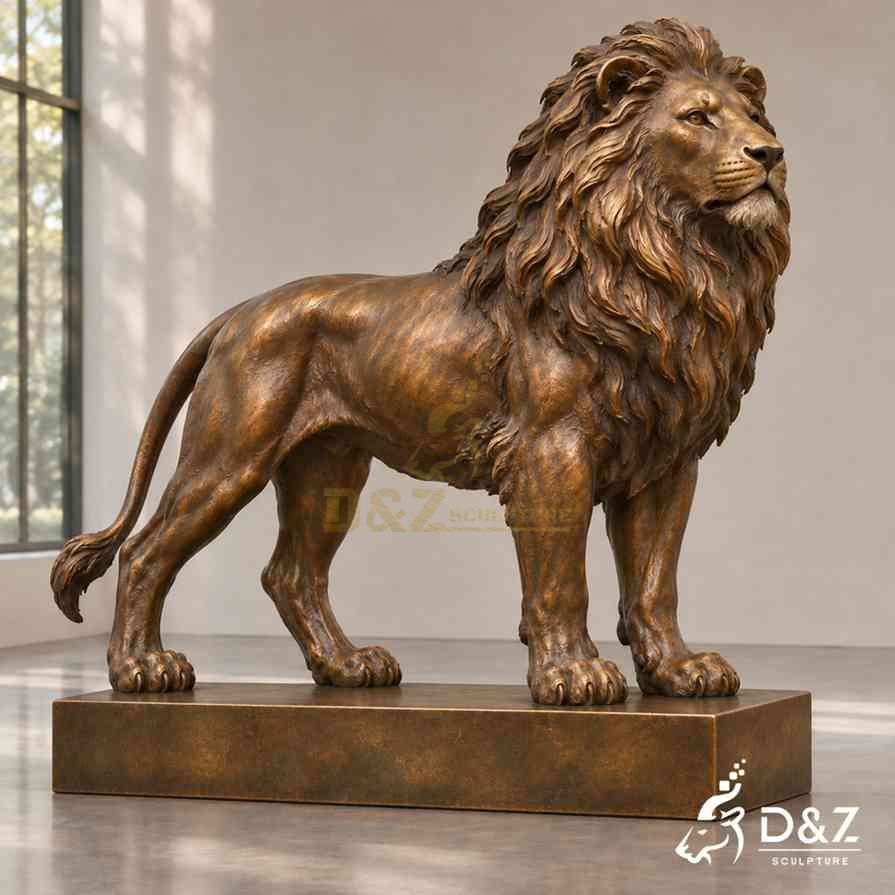
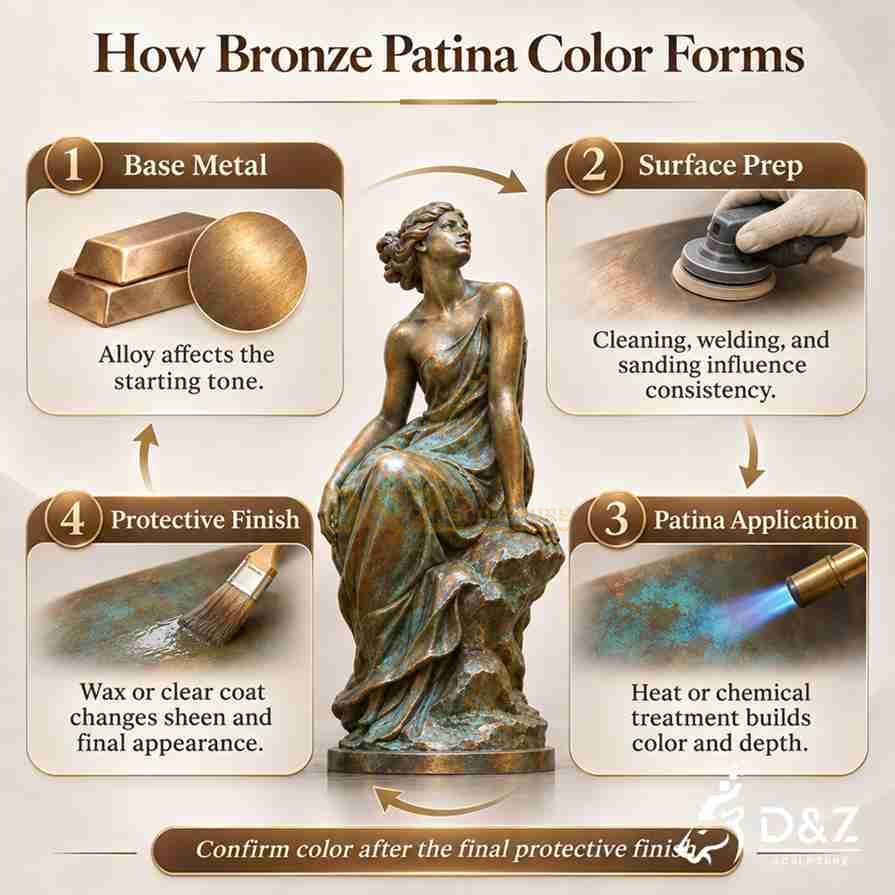
The final appearance of a bronze sculpture is the result of several factors: the base material, surface preparation, the coloring process, and the protective layer.
Surface preparation serves as the foundation for coloring: once cast, a sculpture must undergo assembly, welding, refining, and cleaning. Factors such as residual oils, debris, localized abrasions, or variations in surface condition across different areas can lead to inconsistent results, even when the same coloring process is applied.
Coloring creates the base color and layers: Common bronze patina techniques include brushing, spraying, or other controlled surface treatments under appropriate conditions. Some processes involve heating, while others rely on lower temperatures or longer reaction times—the exact method depends on the alloy and the desired aesthetic outcome.
Protective treatments influence the final look and feel: once the coloring is complete, the application of wax or a clear protective coating can alter the depth of the color, the level of reflectivity, and the tactile quality of the surface. Therefore, the final appearance should be evaluated only after the protective treatment has been fully applied and has reached its intended state, rather than judging the color before it has been sealed.
For a broader understanding of materials and fabrication, see our guide to materials used in sculpture.
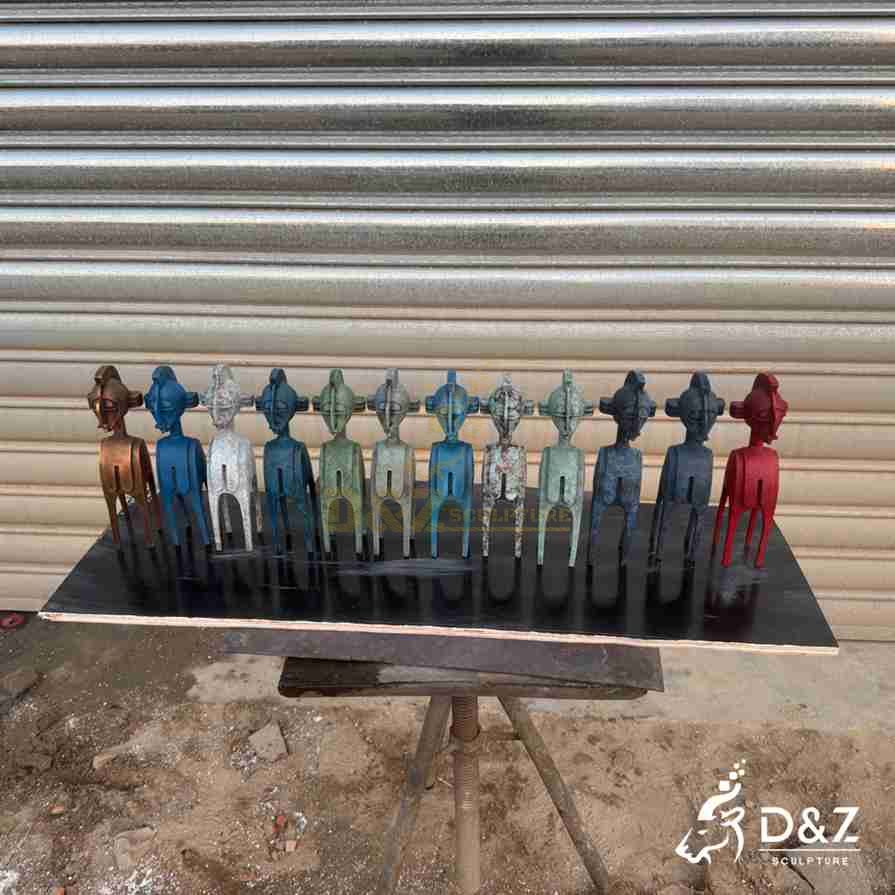
When choosing bronze patina colors, one should start with the desired temperament and details that the sculpture aims to convey. While color names serve as a useful guide for communication, physical samples are essential for confirming the actual result.
| Color Direction | Key Visual Characteristics | Suitable Works or Spaces | Points to Consider During Review |
|---|---|---|---|
| Light Brown, Warm Brown | Distinct metallic quality; light and warm overall | Figures, animals, or interior furnishings viewed at close range | Check if highlights are too bright, if the overall tone leans too yellow, and if there is sufficient depth/detail in the recessed areas |
| Medium Brown, Antique Bronze | Balanced tone; effective for conveying volume and texture | Classical figures, commemorative works, realistic animal sculptures | Clarify the nature of the "antique" effect—e.g., does it require mottling or localized brightening? |
| Dark Brown | Visually stable; emphasizes contours | Large halls, commemorative spaces, or settings with bright backgrounds | Ensure that facial features and fine textures remain discernible |
| Black, Near-Black | Strong definition of contours; clean, minimalist aesthetic | Modern forms, abstract works, or sculptures emphasizing silhouettes | Determine if warm-toned highlights are retained and if details remain visible under side lighting |
| Verdigris, Blue-Green | Highly distinctive; evokes a sense of age | Landscape sculptures, abstract works, or spaces requiring color contrast | Consider the extent of green coverage, the scale of mottling, and the underlying base color and brightness |
| Reddish-Brown, Russet | Prominent warm tones; enhances the appearance of texture | Works that highlight handcrafted marks or surface undulations | Clarify whether the red is the dominant base tone or an accent layer, and ensure it harmonizes with the lighting |
The term "antique bronze finish" generally refers to a stylistic aesthetic rather than the actual age of a piece, and it does not correspond to a single, fixed color formula. When specifying this effect, clarify whether you require a uniform brown, darkened recesses, localized warm highlights, or a distinct, mottled appearance.
A "black bronze patina" does not necessarily imply a flat, featureless, pure black. Decisions such as whether to retain the metallic tone on raised surfaces or whether to employ a low-gloss finish will significantly impact the legibility of the work.
When selecting a "green bronze patina," it is advisable to specify both the extent and the distribution of the green coloration. A subtle, localized patina versus an extensive, full-coverage blue-green finish will yield vastly different visual results, even if the color hues are similar. Red bronze patina and dark bronze patina should both be determined through physical samples; one should not place an order based solely on the name.
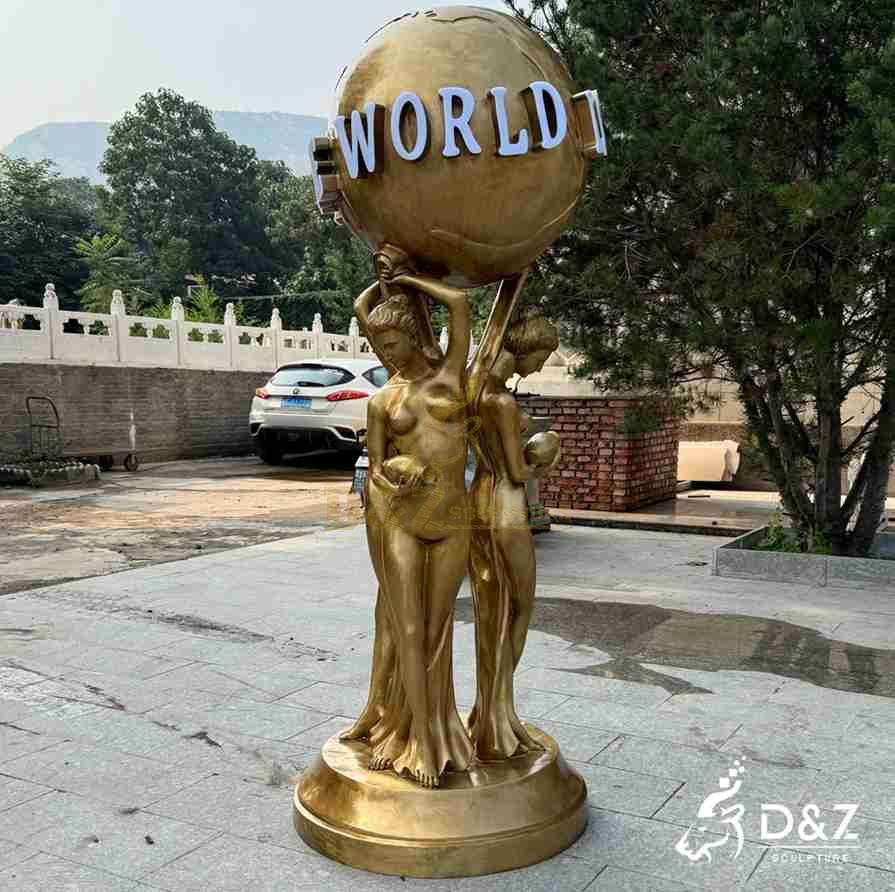
Furthermore, surface color alone cannot be used to identify the material. Bronze and brass are distinct copper alloys, and their appearance is further influenced by polishing, coloring, and protective treatments. A golden-yellow surface does not automatically indicate which alloy it is.

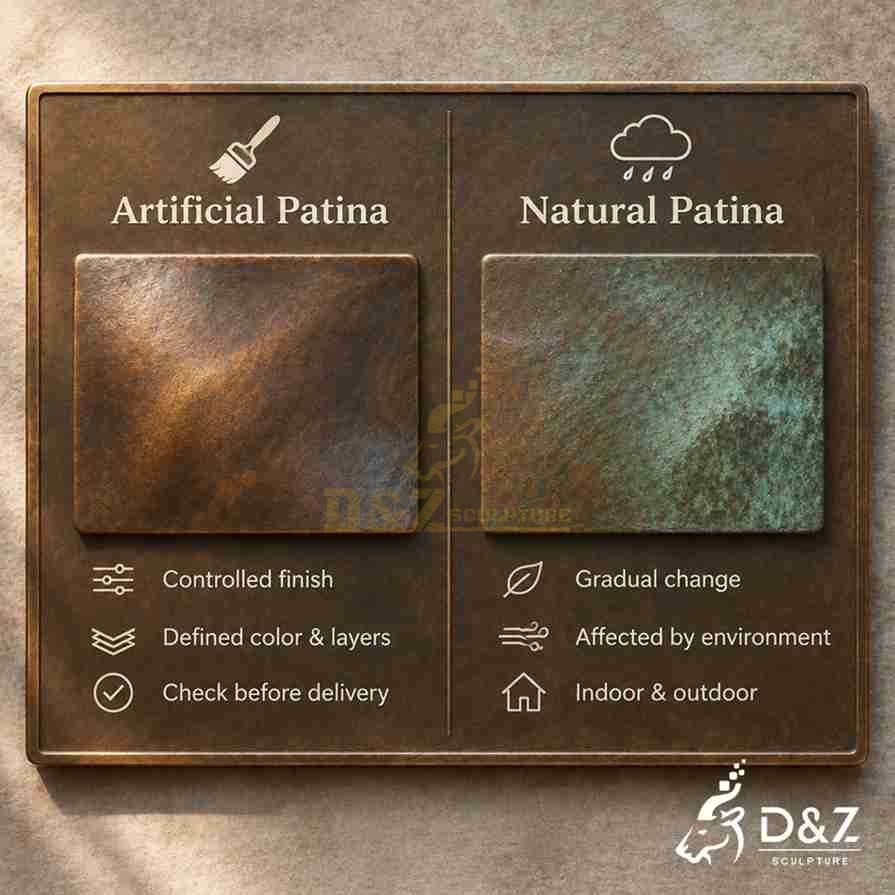
An artificial patina is created during the production phase through controlled surface treatments to achieve a specific color and depth; the result can be verified against an approved sample before delivery. A natural patina, by contrast, develops gradually over time during use. Its rate of formation, color, and distribution are influenced by factors such as the specific alloy, humidity, pollutants, salt content, the flow of rainwater, and any pre-existing protective layers. Such natural changes are not necessarily uniform, nor will they always result in a green finish.
While artificial treatments offer greater control, "controllable" does not mean that every texture is perfectly replicated, nor does it imply that the appearance will remain unchanged forever after delivery. Variations can arise due to the nuances of hand-applied coloring, complex surface geometries, and the condition of the protective layer.
A "natural bronze patina" is not limited to outdoor environments. Indoor factors—such as humidity, pollutants, contact with human hands, and residues from cleaning agents—can also affect the metal surface, though the conditions driving these changes differ from those found outdoors.
Once a bronze sculpture has been patinated, the decision to apply a protective layer should be based on the surface finish, the intended display environment, and the available maintenance resources. A protective layer can help mitigate the impact of moisture, pollutants, or frequent physical contact; however, it will also alter the color’s depth, saturation, and reflectivity. Consequently, a protective layer serves both as a maintenance measure and as a factor that shapes the final appearance of the artwork.
Common treatments include waxes and transparent coatings. Wax layers generally facilitate ongoing maintenance, though they may require periodic inspection and reapplication. Transparent coatings provide a continuous surface seal, but their final appearance, weather resistance, and the methods required for future repairs depend on the specific product used and the conditions under which it was applied.
For indoor works, the need for a protective layer should be assessed based on the frequency of physical contact, cleaning methods, and the display environment. For outdoor works, additional factors—such as exposure to rain, sunlight, salt spray, air pollution, and fluctuations in temperature and humidity—must also be taken into account. For projects located in coastal, waterfront, or industrial areas, the label "outdoor coating" is not a sufficient basis for determining suitability. Instead, the fabricator should define a comprehensive surface treatment plan tailored to the specific conditions of the project.
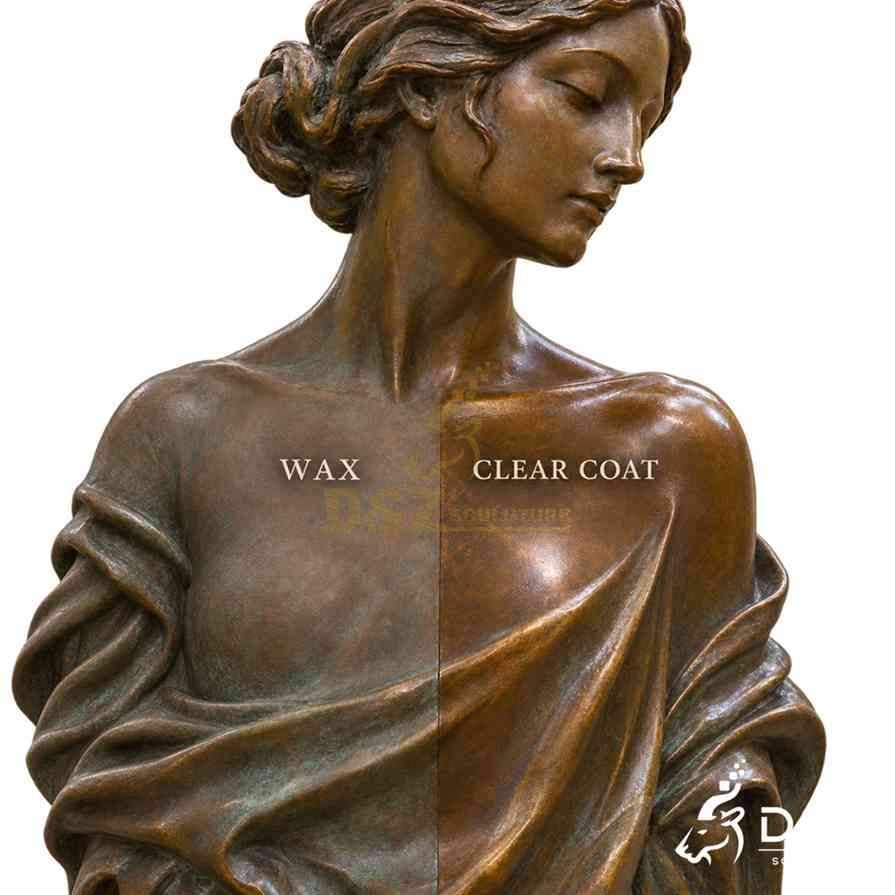
When choosing a color, consider the sculpture’s details, viewing distance, ambient lighting, and background. A dark tone that appears harmonious from a distance may obscure details when viewed up close; conversely, a rich, mottled texture that looks striking at close range may become indistinct from afar.
For realistic figurative sculptures: Focus on the tonal gradations of the face, hands, and folds in clothing, ensuring that shadows are not so deep that they obscure facial expressions.
For animal sculptures: Balance texture with color contrast, paying close attention to the eyes, nose, muscular contours, and surface details.
For abstract sculptures: Select colors based on the interplay of curved surfaces, silhouettes, and spatial relationships; avoid overly complex mottling that might weaken the form. You can also explore our abstract bronze yoga sculpture as an example of how bronze color and flowing forms work together.
For indoor displays: Determine the color by considering lighting direction, color temperature, background materials, and viewing distance.
For outdoor displays: Take into account sunlight exposure, shade from trees, architectural surroundings, and primary viewing angles. Note that "wet" samples (samples appearing darker or glossier due to moisture) should serve only as a reference; the final acceptance must be based on the approved, stabilized appearance.
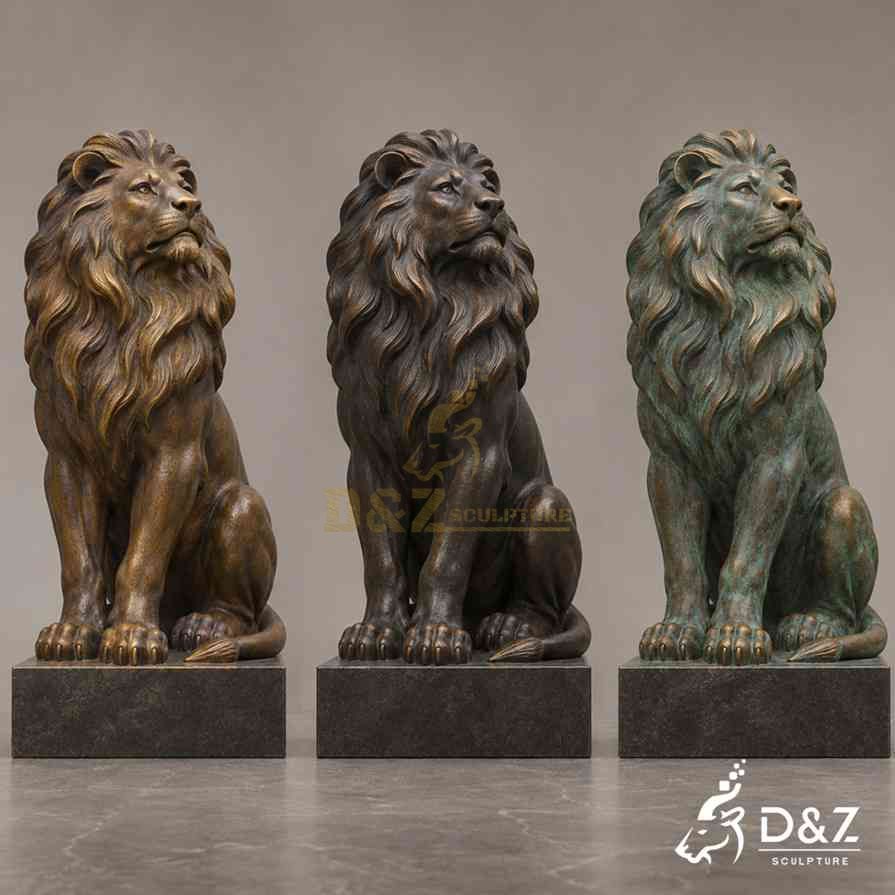
Climate influences more than just color; it also affects the condition of the protective layer, the accumulation of pollutants, and the complexity of maintenance. It is insufficient to categorize all locations simply as "outdoor" environments.
| Environmental Conditions | Key Issues to Evaluate | Design and Maintenance Recommendations |
|---|---|---|
| Coastal or Salt-Spray Exposed Areas | Salt deposits, duration of humidity, localized coating damage | Define actual exposure conditions to verify the protective system; pay attention to joints, bases, and hard-to-clean areas; schedule regular salt removal and inspections. |
| Rainy or Humid Areas | Water pooling, prolonged dampness, rainwater streaking | Ensure proper drainage in recesses and at the base; minimize direct, long-term exposure to irrigation/sprinklers; monitor surface changes along water runoff paths. |
| Dry, High-Sunlight Areas | Dust, UV radiation, temperature fluctuations, occasional moisture | Do not equate "dry" with "maintenance-free"; monitor for degradation of the protective layer, abrasion from windblown sand, and potential scratching during cleaning. |
| Urban or Industrial Areas | Combined effects of pollutant accumulation and rainfall | Maintain cleaning records; inspect for black deposits, streaking, and localized discoloration. |
| Indoor High-Contact or Waterfront Locations | Fingerprints, frequent wiping, effects of cleaning agents and water quality | Establish protocols for contact management and cleaning methods in advance; evaluate fountains or waterside installations on a case-by-case basis. |
The sample approval process should translate aesthetic preferences into clear, actionable requirements for production and final acceptance.
Ensure conditions mirror actual production: Use materials, surface textures, and protective treatments that are identical or representative of the final piece. For complex forms, include samples that feature both raised and recessed areas, or conduct color testing on approved, representative sections of the actual work.
Specify the visual effect: Document the base color, the range of light and dark tones, highlights on raised areas, shadows in recesses, the degree of mottling, and the final sheen or gloss level. For example: "A deep brown base tone, with subtle warm-brown highlights on raised areas and occasional green accents; the overall finish has a low-gloss sheen."
Maintain confirmation records: Assign a final sample reference number and document the material, surface treatment, protective system, date of approval, and observation conditions. Both parties should retain physical samples or clear, detailed reference records.
Define acceptable variations: Since hand-applied mottled effects are difficult to replicate precisely across every inch, the acceptable range for color deviation and textural variation should be agreed upon in advance.
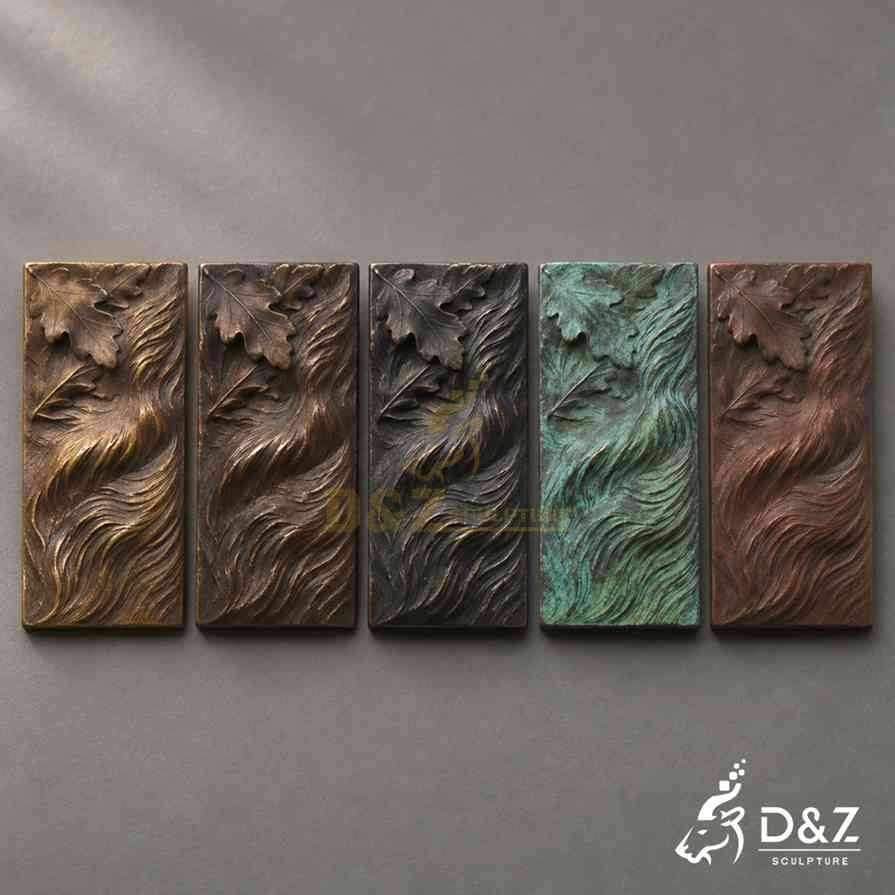
For large works, the key is overall coherence—ensuring the piece looks unified as a whole, rather than just having individual components that happen to match in color.
Before production begins, clearly define the locations of component joints, on-site welding requirements, the sequence of patination, and methods for protection during transport. If the sculpture requires welding or touch-ups after arriving on-site, the restoration of the surface in those areas must be factored into the project plan.
While using consistent materials and process parameters helps control the outcome, it cannot replace a comprehensive visual inspection. Factors such as alloy composition, surface preparation, and heat exposure can vary across different components, affecting the final color. The following checks are recommended during the fabrication process:
Arrange components according to their final assembly orientation and spatial relationships, comparing the surfaces on either side of each joint.
Evaluate both the fine details at close range and the overall appearance from the intended viewing distance.
Compare the primary viewing faces, the back, and surfaces oriented in different directions.
Whenever possible, conduct a trial assembly or a full-scale review of the overall appearance.
Before packaging, take comprehensive photographs to document any areas that will require on-site restoration.
For examples of large bronze works, explore our large bronze Hercules Atlas sculpture.

Surface area and accessibility: Deep recesses, narrow gaps, or complex, inward-curving surfaces are generally more difficult to treat than open, flat planes.
Complexity of form and texture: Intricate details—such as hair, feathers, relief work, or fine folds in clothing—require more labor for cleaning and layering the patina.
Desired effect: The workload varies significantly depending on whether the finish involves a single base tone, selective highlighting, multi-layered colors, or complex, mottled patterns.
Sample approval process: This includes the cost of creating test samples, as well as any additional work required if the direction of the finish is changed after the initial approval.
Initial surface condition: The effort required for a newly fabricated piece differs from that of a project requiring the removal of old coatings or the repair of corrosion; therefore, these cannot be compared directly. Component Breakdown and Site Conditions: Factors such as on-site connections, lifting and hoisting requirements, scaffolding, and environmental controls may influence the construction schedule and logistics.
Protective Treatments: Specifications must address material compatibility, application procedures, and ongoing maintenance requirements.
A patina can enhance a sculpture’s volume, texture, and visual character through base tones, tonal variations, and luster; however, expectations for the final appearance should remain realistic.
Visual Appearance Varies with Lighting: The same surface may look different under natural daylight, warm artificial lighting, or in shadows; the final finish should be evaluated in the context of the intended display environment.
Variations in Hand-Applied Texture: While samples can establish the general color direction and tonal range, the specific placement of mottling and fine textural details cannot be replicated exactly from one area to another.
Protective Functionality Requires Specific Assessment: The presence of a patina does not automatically guarantee that a sculpture is suitable for all environments or exempt from the need for maintenance.
Restoration May Require Broader Treatment: Localized touch-ups to color or protective coatings may not blend seamlessly with the surrounding areas; the overall visual harmony should be assessed before proceeding with any intervention.
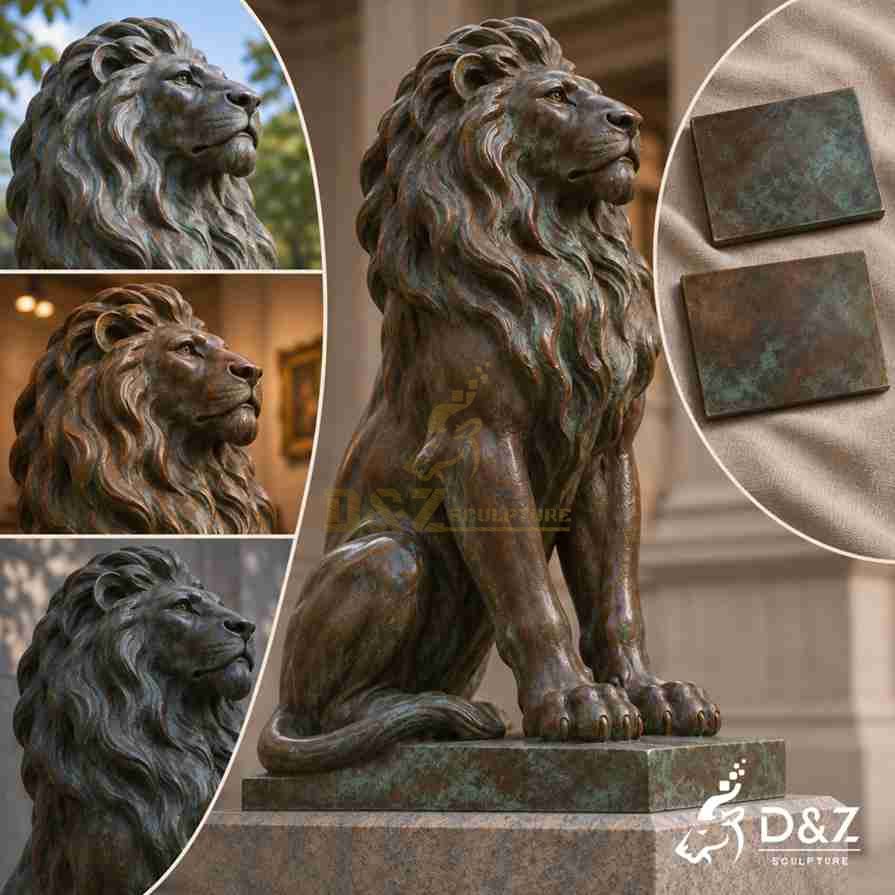
Before cleaning, assess the condition of the patina and any protective coatings. If the surface is stable and water-safe, wipe it gently. Ensure that any cleaning agents used are compatible with the surface; rinse away all residues and allow the piece to dry completely. Do not use polishes, abrasive materials, or acidic/alkaline cleaning agents.
Indoor Sculptures: Dust regularly using a soft, dry cloth or a soft-bristled brush. If wet cleaning is necessary, test on an inconspicuous area first and ensure the surface is dried promptly.
Outdoor Sculptures: Regularly inspect for dust accumulation, streaks from rainwater, and issues around joints or the base. Cleaning methods must be compatible with the surface finish; avoid high-pressure washing or vigorous scrubbing.
Address Anomalies with Caution: If you observe peeling, powdering, blistering, or rapid localized color changes, document the issue by photographing both the overall piece and the specific area, noting the location, date, and recent cleaning history. Consult the original fabricator or a professional conservator before attempting any sanding, touch-up painting, or waxing.
A: An artificial patina can be created to achieve a specific, desired look during the production phase; the time required depends on the coloring, drying, and protective treatment processes. A natural patina has no fixed development timeline, as it is influenced by the alloy composition, environmental conditions, and any pre-existing protective layers.
A: While they may share a similar visual appearance, the formation process, layering, and distribution can differ. It is generally impossible to determine how a patina was formed based solely on a photograph.
A: Not necessarily; it depends on the depth of the color, the surface sheen, and the form of the sculpture itself. When reviewing a sample, it is advisable to check key details such as facial features and textures.
A: There is no fixed interval. The need for restoration should be determined based on the current state of the surface, the environment in which the piece is displayed, and its maintenance history.
A: No. You must first verify the original protective system and the appropriate maintenance materials; one should never apply a layer of wax without fully understanding the existing surface treatment.
A: First, determine whether the issue is due to dust, abrasion, changes in the protective layer, or damage to the colored patina itself, and cross-reference this with the factory records. Do not attempt to polish or touch up the color without professional assessment.
A: Hand-applied finishes may exhibit subtle variations. While a sample can serve as a standard for color and overall effect, it may not be possible to replicate specific mottled textures or patterns exactly in every instance.
A: This depends on the cause and extent of the damage. You must first identify whether the issue is surface grime, wear to the protective layer, or a change in the patina itself, before deciding whether to perform a localized repair or a complete re-application.
A: It may be necessary to perform follow-up finishing and surface restoration on the seams and connection points; such procedures should be discussed and agreed upon prior to production.
A: Water quality, splash range, cleaning and maintenance, and surface protection conditions need to be considered, and the actual usage scenario should be explained in advance.
A suitable bronze statue patina needs to take into account the sculpture's visual expression, the site environment, and subsequent maintenance needs. Color is only one aspect; texture, luster, protective systems, and actual viewing conditions are equally important.
Before commissioning, it is advisable to prepare details regarding the sculpture’s form and dimensions, its intended location, primary viewing distance, local environmental conditions, and reference colors. During the production phase, confirm representative samples, the coordination of segmented components, and acceptance criteria. Upon delivery, retain documentation of the surface finish and maintenance guidelines to facilitate verification of the final product and provide a reference for future upkeep.
Leave a message

Any landscape ideas in your mind, describe to D&Z sculpture team directly, you can imagine we can create.


Copyright © 1996-2026 D&Z Sculpture Co., Ltd. All Rights Reserved | Sitemap |