D&Z Sculpture | Abstract Yoga Sculptures: Bronze Figurative Art Defined by Fluid Curves and Featureless Forms
| Years of Extensive Experience | One-Stop Custom Service | Lifetime Warranty & Maintenance | Global Shipping |
Minimalist Figurative Art Through Fluid Curves
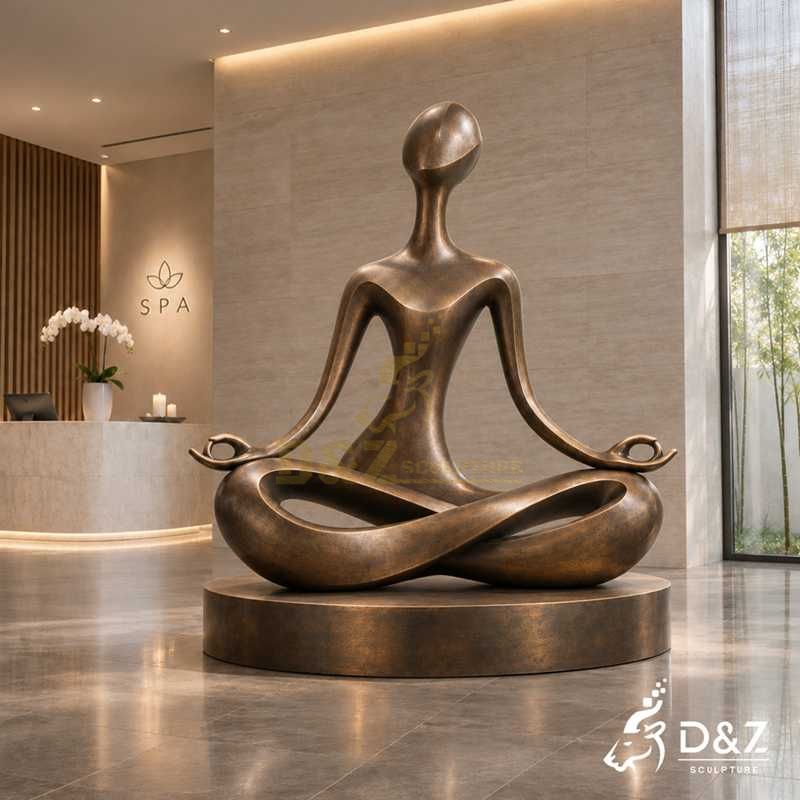
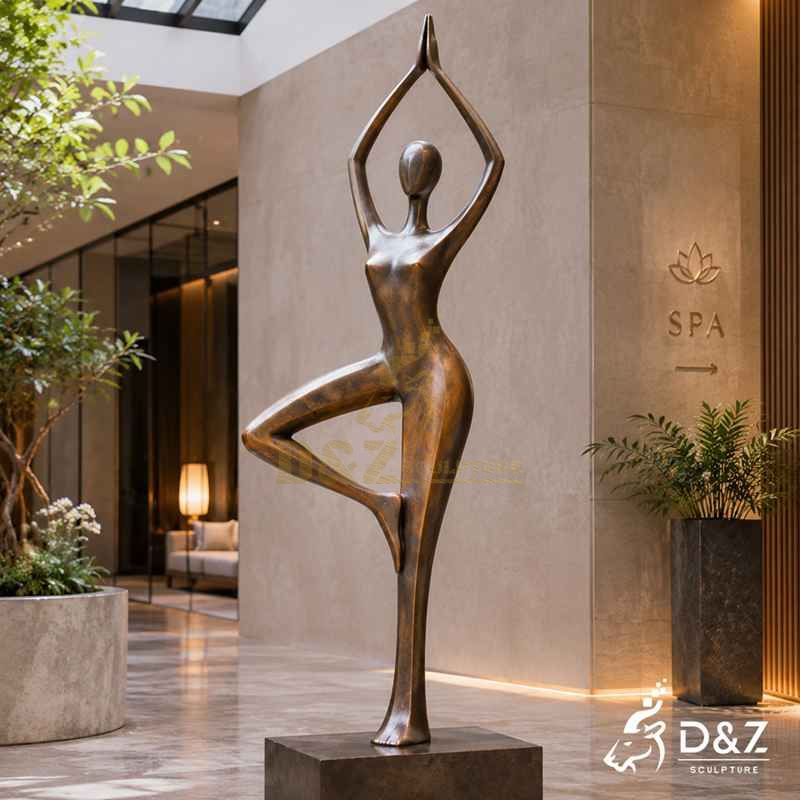
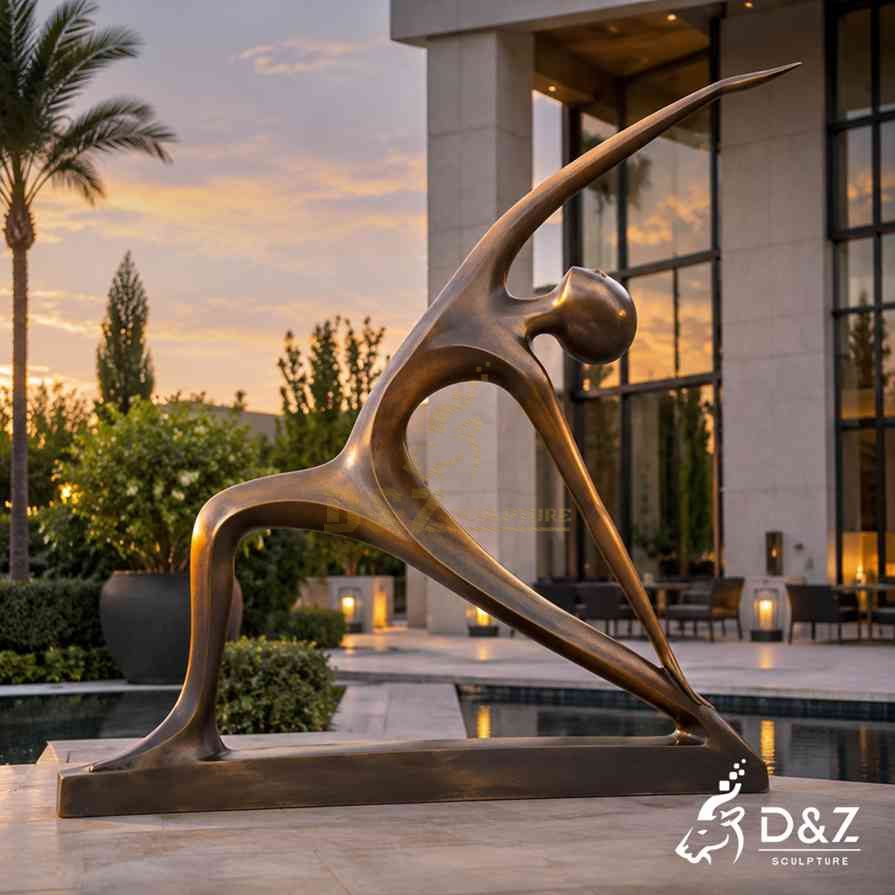
D&Z Sculpture offers custom abstract yoga sculptures that capture the evolving postures of the human body through simplified anatomical structures, elongated proportions, and continuous, fluid curves. Unlike traditional figurative sculptures—which often emphasize facial expressions and precise anatomical detail—this collection conveys its message primarily through the language of bodily posture.
These yoga sculptures feature simplified, featureless heads, soft human contours, and smooth, natural transitions between the torso and limbs. Devoid of sharp angles or intricate ornamentation, the designs utilize sweeping, continuous curves to create a clean silhouette, evoking a sense of stillness, balance, and graceful extension.
Core Design Features of Abstract Yoga Sculptures
The most prominent characteristic of these abstract yoga sculptures is the simplification of the human form through expansive, continuous curves.
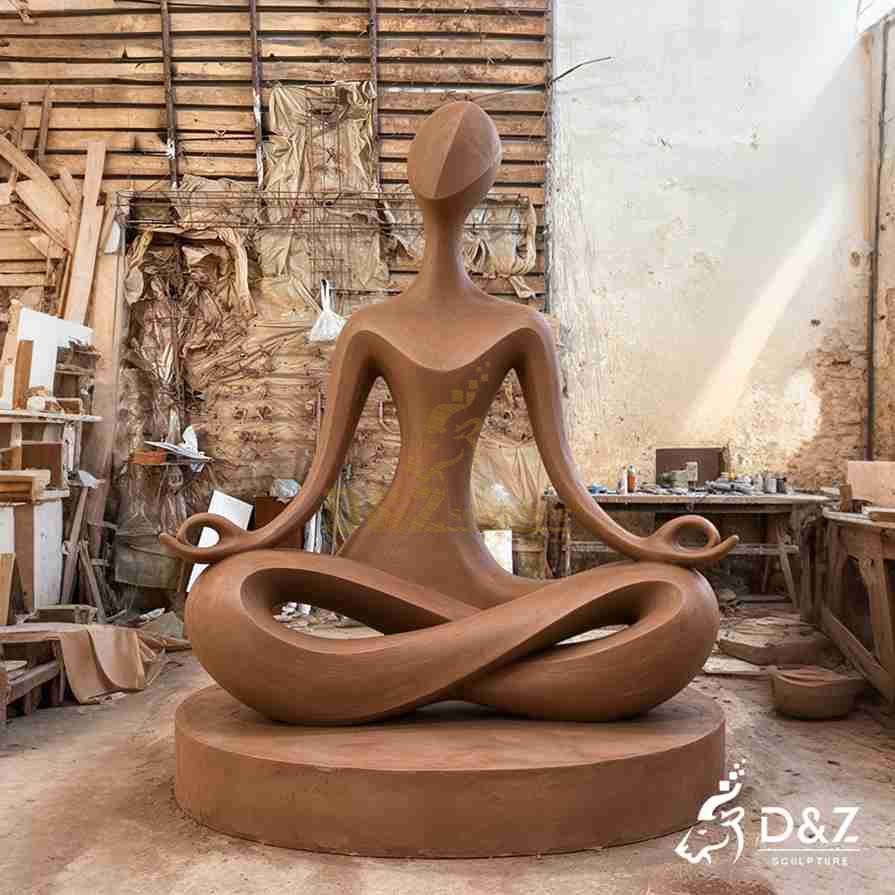
Featureless Forms: Facial features are intentionally omitted, with the head rendered as a smooth, rounded, unified shape. This shifts the viewer's focus toward the body's posture rather than the identity or expression of a specific individual.
Elongated and Softened Proportions: The torso, arms, legs, and neck are often elongated to create an elegant overall silhouette. This artistic stylization preserves the recognizability of each pose while lending the sculpture a more refined visual quality.
Rounded Transitions and Continuous Lines: The connections between the shoulders, waist, hips, and limbs are soft and fluid. By replacing sharp angles and rigid geometric edges with sweeping curves, the sculpture maintains a sense of harmony from every viewing angle.
Minimalist Surface Treatment: A simplified surface highlights the sculpture’s overall form. While the texture of the bronze and subtle tonal variations add depth, the design avoids the need for complex, superfluous decorative details.
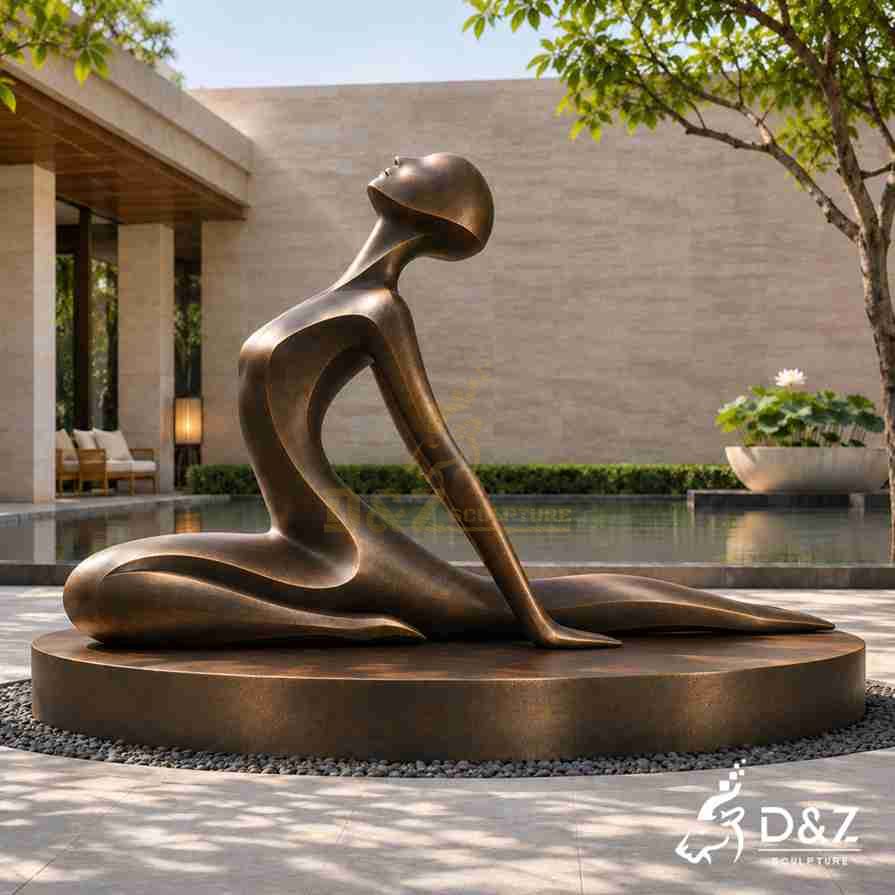
Yoga Pose Sculptures: Variations in Posture and Visual Character
Each yoga pose sculpture creates a unique silhouette, occupies a distinct spatial footprint, and emphasizes different visual focal points. The selection should take into account the relationship between the sculpture and its surrounding space.
| Yoga Pose | Visual Characteristics | Atmosphere |
|---|---|---|
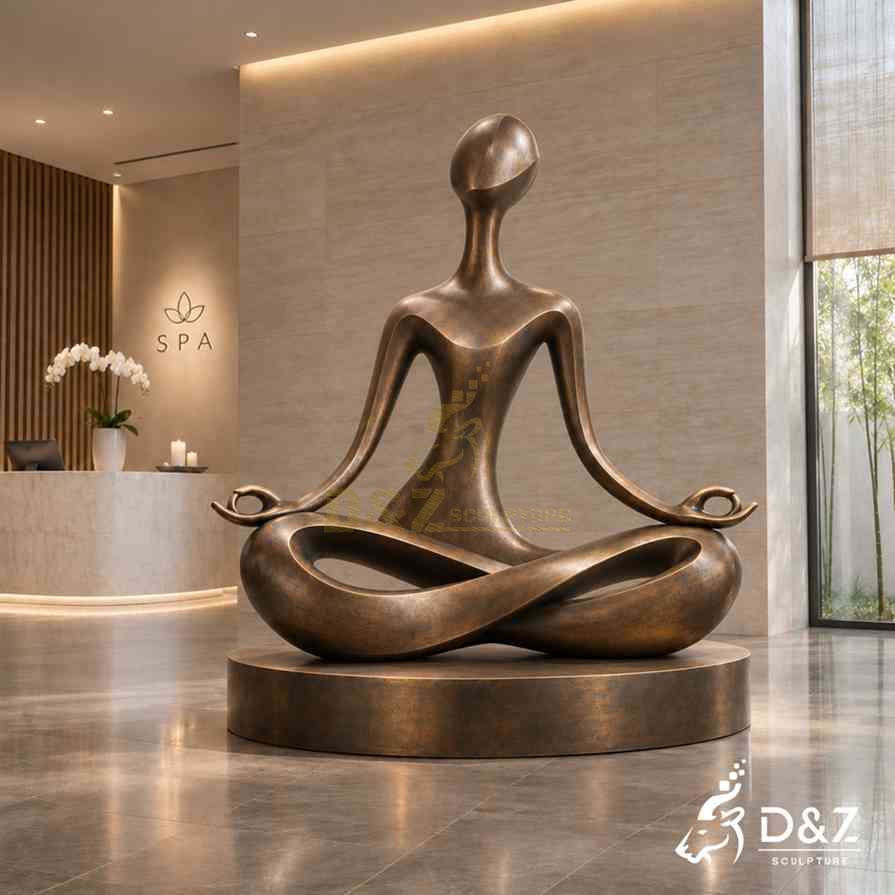
| Meditation Pose | Cross-legged, hands in a meditative mudra; balanced and stable composition | Serene, healing |
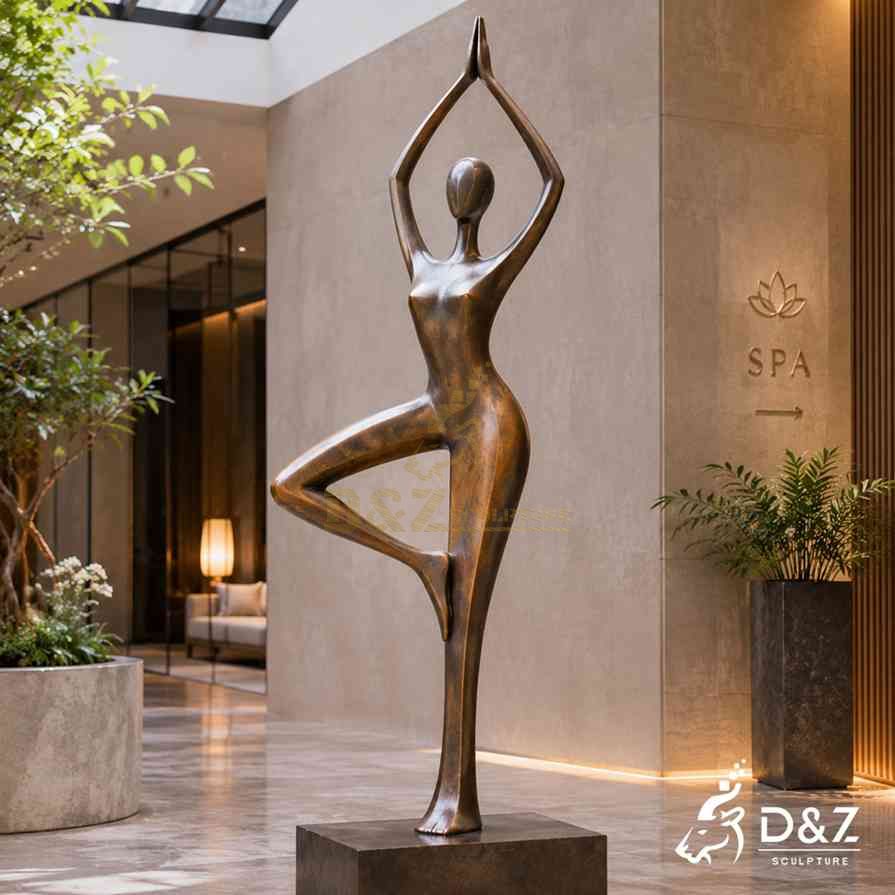
| Tree Pose | Standing on one leg, hands raised and pressed together; tall and vertical | Light, balanced |
| Dancer’s Pose | Supported on one leg with the body extended backward; strong, dynamic lines | Dynamic, artistic |
| Cobra Pose | Upper body lifted and arched backward; an upward, expansive curve | Expansive, breathable |
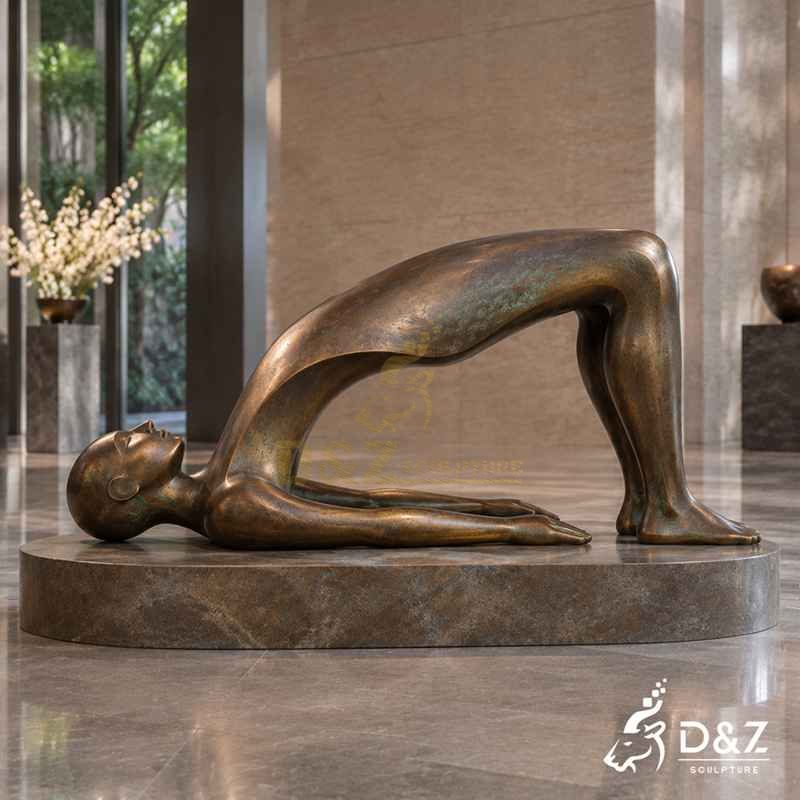
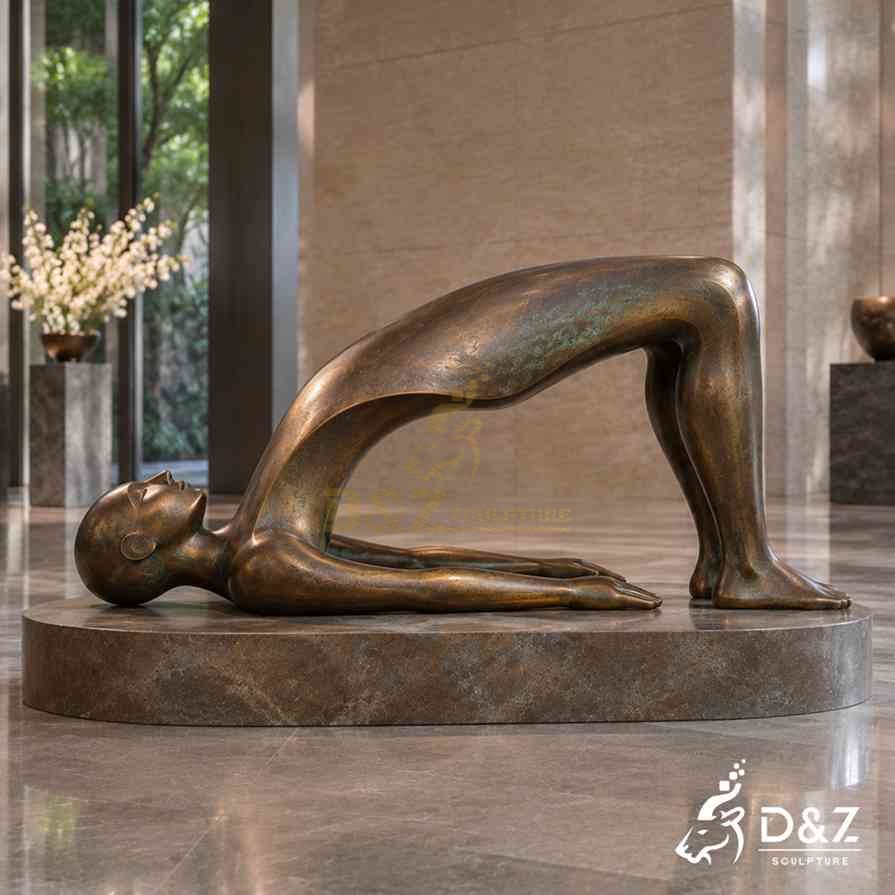
| Bridge Pose | Body arched upward; rounded and full in form | Soft yet powerful |
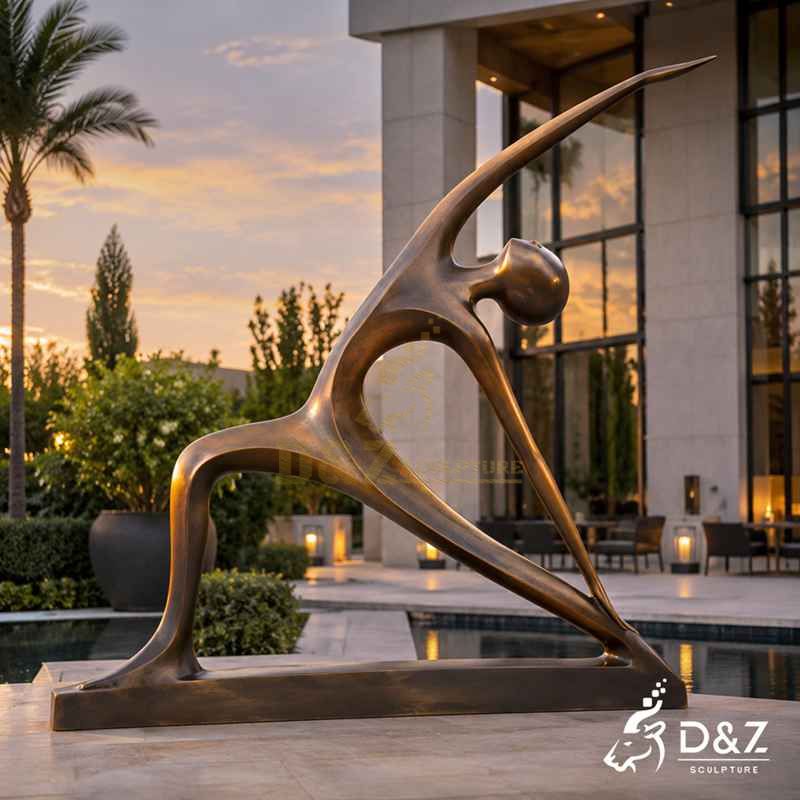
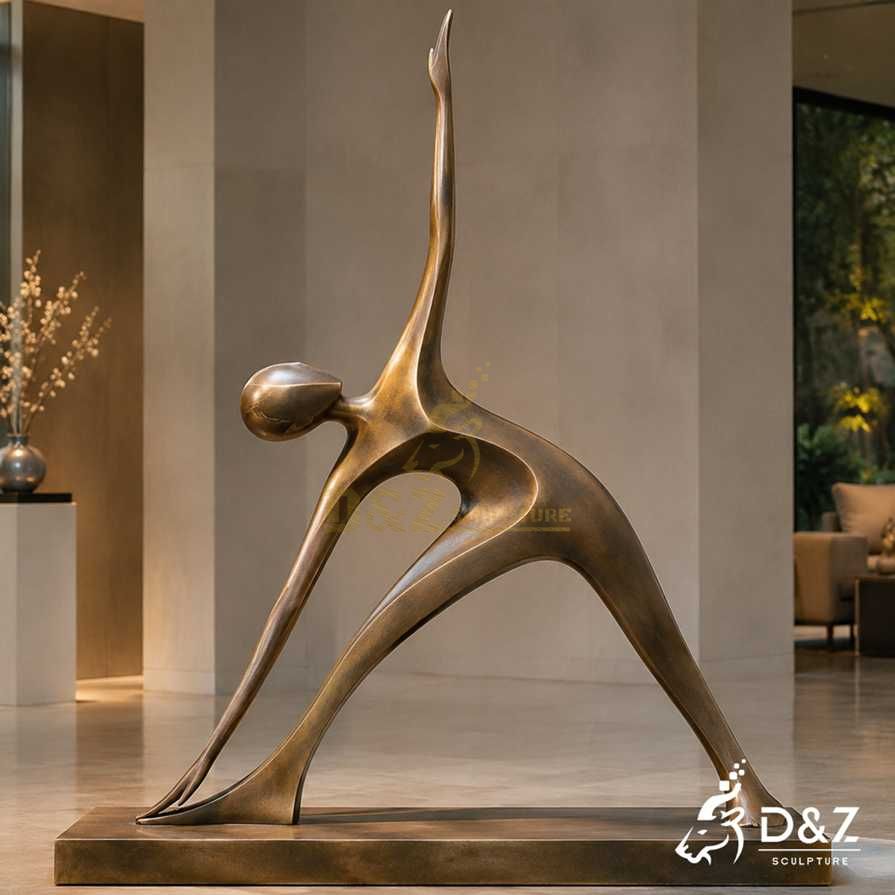
| Side Stretch | Body bent to the side with fluid, elongated lines | Graceful, soft |
| Seated Forward Fold | Seated with the torso folded forward; an introverted, understated form | Quiet, gentle |
| Warrior Pose | Legs apart with a low center of gravity; limbs extended outward | Powerful, grand |
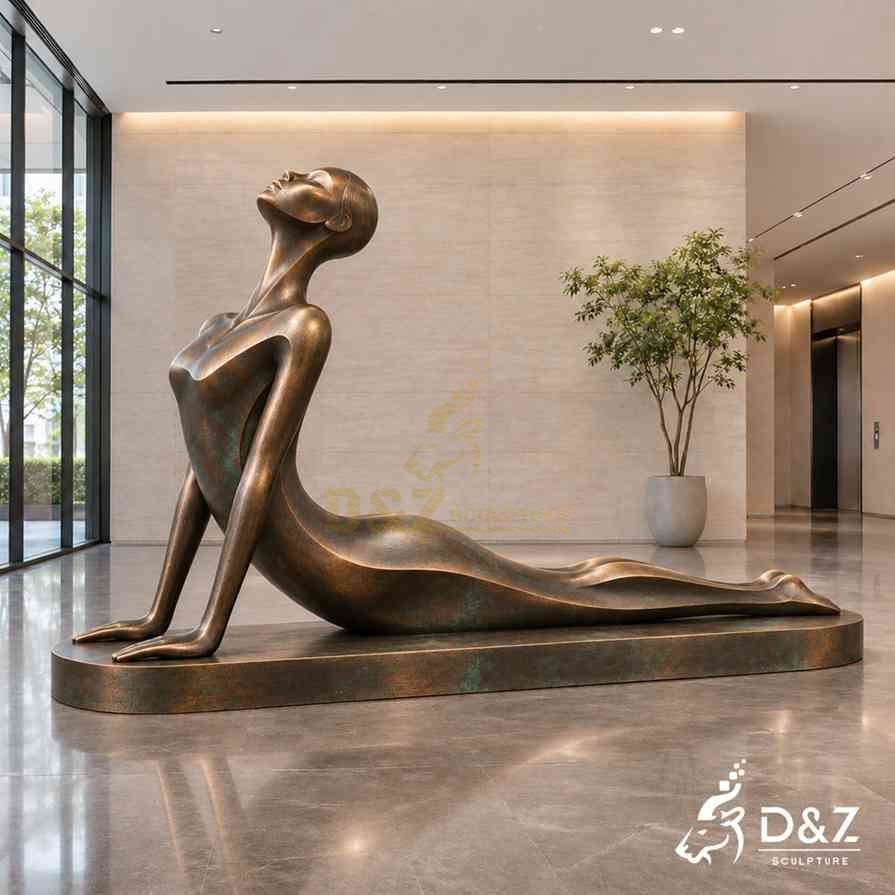
Proportions and Contours of the Female Form
Modern yoga woman sculptures can incorporate varying degrees of abstraction while maintaining a fluid design language.
To achieve a more elegant visual effect, one might elongate the neck, simplify the torso, and render the limbs as soft, graceful curves. To emphasize the expressiveness of a pose, one could accentuate the curvature of the waist, the extension of the arms, and the interplay between the supporting leg and the lifted leg.
Head and Neck: A smooth, featureless head preserves an overall minimalist aesthetic; the length of the neck and the angle of the head influence the figure's posture.
Shoulders and Arms: Rounded transitions at the shoulders and extended arms define the primary lines of the upper body.
Waist and Torso: Soft curves at the waist convey the body’s flexibility while ensuring the figure does not appear overly slender.
Hips and Legs: The proportions between the hips, the supporting leg, and the lifted leg determine the visual balance of the pose.
Hands and Feet: Details may be simplified, provided they remain proportionally harmonious with the overall human structure.
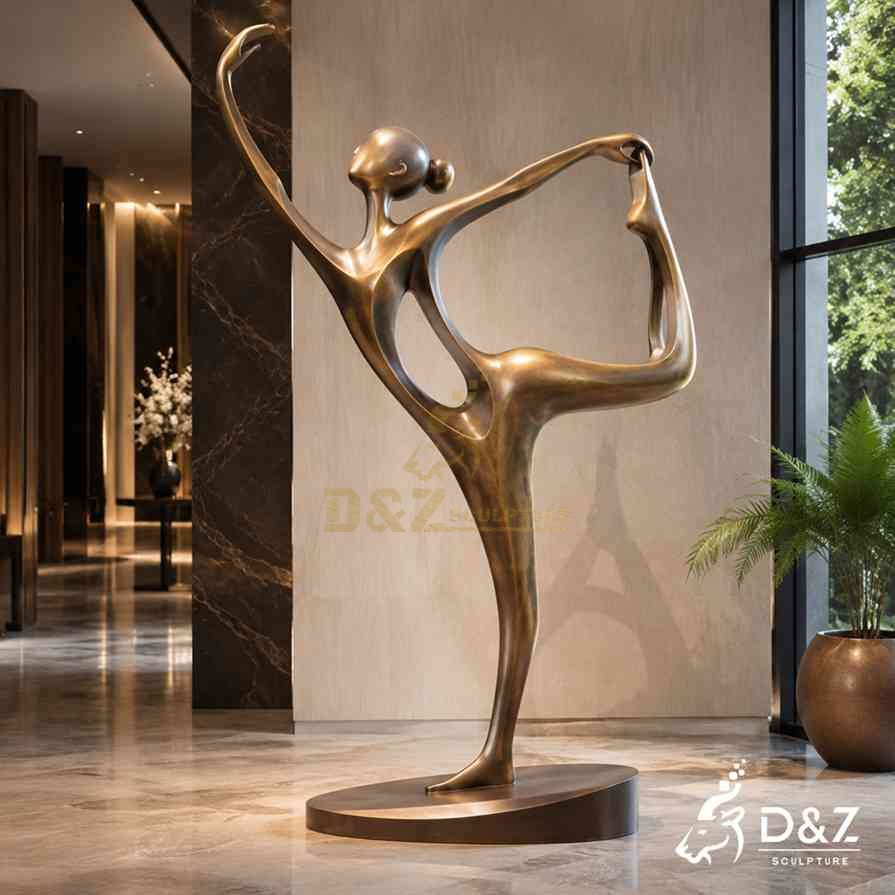
Abstract Forms, Visual Balance, and Multi-Angle Effects
Abstract yoga sculptures convey poses through the relationships between key parts of the human body. The torso should transition naturally into the waist and hips, while the arms and legs should establish clear lines of movement, ensuring the overall silhouette does not appear overly crowded. For abstract figures lacking facial features, fluid contours and precise anatomical relationships are paramount; they are the primary factors that make a pose easily recognizable.
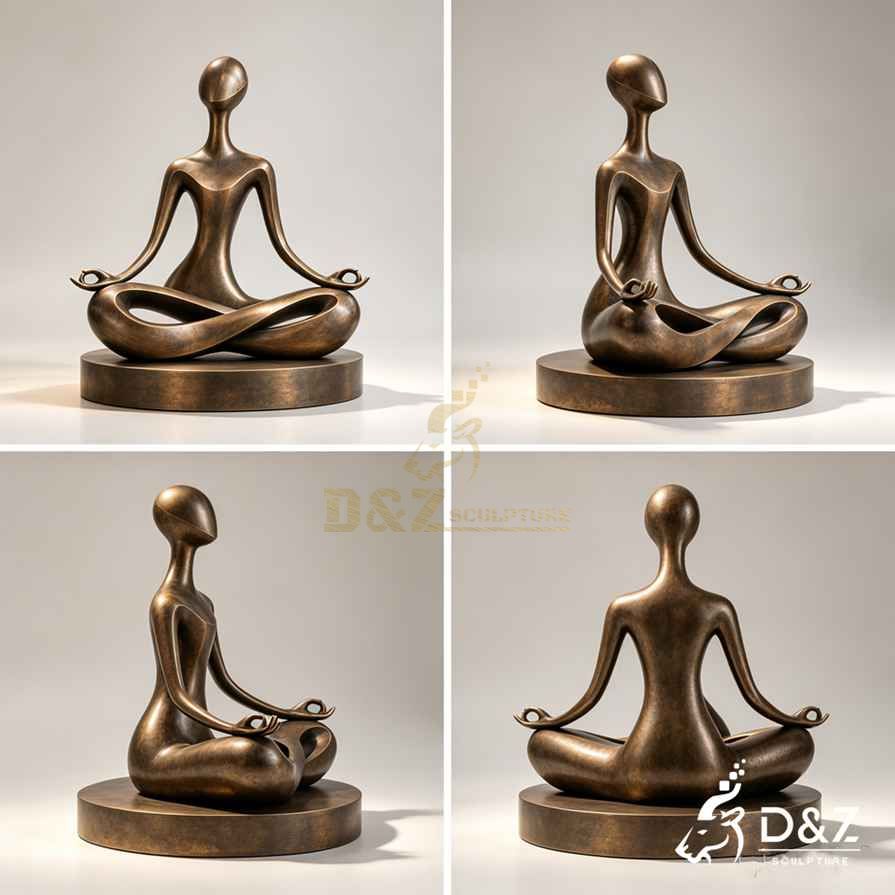
For large-scale sculptures, we recommend evaluating the piece from four perspectives:
Front View: Examine the overall silhouette, human proportions, limb positioning, and visual center of gravity.
Side View: Assess the thickness of the torso, the curvature of the back, the contour of the abdomen, and the extension of the limbs.
Oblique/Angled View: Observe the overlapping of limbs, the use of negative space, and the three-dimensional effect as the viewing angle shifts.
Back View: Check the contours of the back, the transitions between the shoulders, waist, and hips, and the natural integration of the arms and legs—ensuring the sculpture remains visually complete from every angle.
Bronze Yoga Sculptures: Materiality and Surface Finishes
Bronze yoga sculptures are crafted using the lost-wax casting process. Depending on the overall size and pose, the piece may be cast as a single unit or produced in sections and assembled via welding. Where necessary, internal steel reinforcements can be incorporated to support extended limbs and ensure structural integrity. Specific casting techniques, surface protective treatments, and installation methods are determined based on the sculpture’s design and its intended environment.
When placed outdoors, bronze sculptures will undergo natural oxidation. The extent of this color evolution depends on the surface finish, local climatic conditions, and maintenance; appropriate protective treatments can be selected based on the specific environment.
Ideal Placements for Abstract Yoga Sculptures
Spas and Wellness Resorts: The simplified forms harmonize well with natural stone, warm lighting, water features, and minimalist interior materials.
Yoga Studios and Meditation Centers: The gentle, elongated postures resonate with the philosophy of yoga, helping to cultivate a serene and relaxing atmosphere.
Hotel Lobbies and Entrances: Serving as welcoming art installations, these pieces offer a minimalist, sophisticated aesthetic that elevates the space and provides guests with a soothing first impression.
Private Gardens and Courtyards: Crafted from durable, weather-resistant bronze, these sculptures harmonize with greenery and water features, becoming the visual focal point of the courtyard.
Public Art and Resort Landscapes: With their grand scale and abstract, non-religious nature, these works are well-suited for large-scale outdoor landscape projects, conveying a sense of peaceful artistry.
Structural Integrity and Installation Safety for Bronze Yoga Sculptures
Bronze yoga sculptures often feature expansive human poses—such as standing on one leg, reaching arms upward, backbending, or stretching laterally. While these forms emphasize a fluid, lightweight visual quality, their actual fabrication requires careful attention to the figure’s center of gravity, limb support, and overall structural stability. Key considerations include:
Connections between the torso and limbs
Support at the point of contact between a single leg and the base
Structural strength of cantilevered or extended limbs
Wind load resistance for large-scale outdoor sculptures
Corrosion protection and drainage for internal components
Safety risks associated with public interaction
Foundation load-bearing capacity, ground anchoring, and on-site installation
Packaging, Global Shipping, and On-site Installation
Whether a large bronze yoga sculpture requires segmented transport depends on several factors: total height, the specific pose, the extent of limb extension, maximum width, available transport equipment, and site access conditions. For poses involving single-leg stances, raised arms, backbends, or wide stretches, special attention must be paid to the dimensions of protruding limbs and the protective measures required during transit.
Prior to shipping, critical areas—such as arms, fingers, feet, the head, and any other slender, protruding, or cantilevered parts—must be carefully protected to prevent collisions, bending, or surface scratches during loading, unloading, and transport.
Once fabrication is complete, we conduct a trial assembly at the factory to ensure that all connection points fit together perfectly. For final installation, you may choose between mechanical fastening (using screws/bolts) or on-site welding. Following final disassembly, the dimensions, weight, and packaging of each component are meticulously tailored to the specific transport route, shipping method, and unloading conditions. Furthermore, the design accounts for lifting equipment and on-site installation space, with carefully planned foundations and anchoring points.
FAQ About Abstract Yoga Sculptures
Q: Can the color of the bronze sculpture be customized?
A: Yes. Options include antique bronze, dark brown, or a finish with localized green patina; these can be confirmed via physical surface samples.
Q: How is the stability of a standing yoga sculpture ensured?
A: Stability is guaranteed by evaluating support points, internal reinforcement structures, base connections, and foundation plans, all based on the sculpture’s dimensions and weight distribution.
Q: Can the sculpture’s base be customized?
A: Yes. The base can be designed in a circular, rectangular, or any other suitable shape, tailored to the sculpture’s pose and the installation environment.
Q: Will the connection points be visible after the bronze sculpture is cast in sections?
A: The locations of the seams are strategically planned based on the sculpture’s form and structure. Through welding, grinding, and surface finishing, we ensure the continuity of the human curves is maintained as seamlessly as possible.
Q: How should the recessed areas of the sculpture’s curves be cleaned?
A: Use a soft cloth or a soft-bristled brush. Avoid tools that could scratch the bronze surface or damage the patina layer.
Q: Can scratches on the surface of a bronze yoga sculpture be repaired?
A: Minor scratches can typically be addressed through localized grinding and re-coloring. The specific repair method depends on the extent of the damage and the original surface finish.
Q: How long does it take to commission a custom bronze yoga sculpture?
A: Generally, the process takes 30–60 days, depending on the sculpture’s size, the complexity of the pose, the casting techniques used, and the specific surface finish requirements.
Commission Your Abstract Yoga Sculpture
D&Z Sculpture offers a comprehensive, one-stop customization service for abstract yoga sculptures—covering everything from initial design and clay modeling to bronze casting, surface finishing, packaging, and delivery. Whether you prefer a seated meditative pose, a standing balancing posture, or an expressive stretch, we can tailor the proportions, fluid body contours, bronze-like finish, and base to suit the specific requirements of your project.
Please provide us with reference images, preferred dimensions, the intended installation location, and your design concept. We will guide you through the selection of an appropriate pose, structural support, material finish, and installation method to create an abstract yoga sculpture that perfectly complements your space.