The tiger statue, through its posture, size, and details, transforms the animal's power into a visual language within space. The seated tiger conveys composure and alertness, while the striding tiger displays rhythm and dynamism. Geometric facets, the tiger's head composition, and wing design imbue the work with diverse artistic expressions. The cultural symbolism embodied by the tiger provides the background for the creation, but the specific meaning of a sculpture must be understood in conjunction with its form, materials, and location. D&Z Sculpture offers custom designs for tiger sculptures in realistic, geometric, and fantastical styles, taking into account the characteristics of bronze, brass, stainless steel, and marble, while also considering architectural scale, viewing distance, and outdoor usage conditions.
This article will begin with symbolic meaning and representative forms, introducing material craftsmanship, spatial application, and key issues in selection, installation, and maintenance, providing a reference for architectural and landscape projects.
Table of Contents
What Do Tiger Statues Symbolize?
Tigers in Art: Historical Examples
Natural Tiger Features in Sculpture
Common Tiger Statue Poses and Their Visual Effects
10 Tiger Statue Designs to Explore
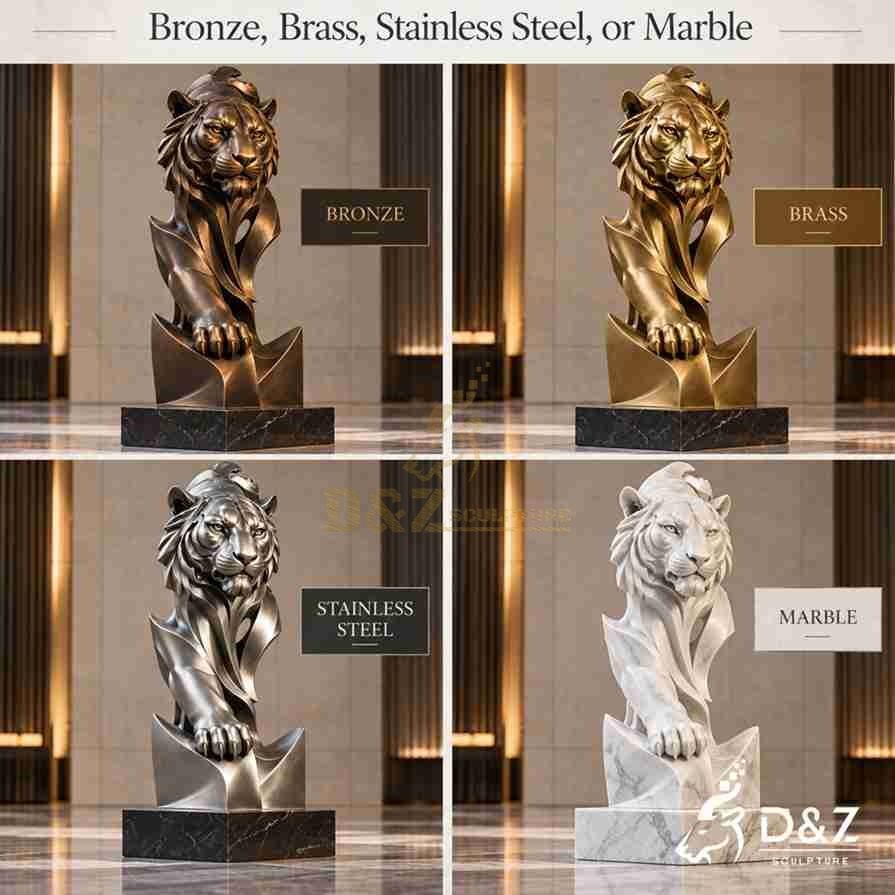
Bronze, Brass, Stainless Steel, or Marble
Where Can Large Tiger Statues Be Installed?
How to Choose and Customize a Tiger Statue?
Tiger statues are often used to express strength, courage, authority, and protection. The specific symbolism needs to be understood in conjunction with cultural background, body posture, and display environment. The same tiger image can convey a majestic, alert, composed, or approachable temperament through different styling.
Power and Courage: The tiger's broad shoulders, strong limbs, and focused gaze provide the foundation for the sculpture's expression of power.
Guardianship and Vigilance: Straight forelimbs, raised head, and gaze directed towards the approaching figure further enhance the visual sense of vigilance.
Composure, Confidence, and Focus: A stable and relaxed posture, and a serene expression represent composure, inner strength, and focused, non-frivolousness.
Imagination and Enterprising Spirit: The tiger's pioneering and fearless wildness symbolizes lofty ambitions and a spirit of enterprise, signifying breaking boundaries and continuous progress.
For thousands of years, the tiger has been a highly impactful and classic subject in art, circulating through different civilizations and carrying diverse cultural connotations.
In ancient Chinese art, the tiger is a guardian auspicious beast; stone carvings and bronze tiger statues were used to ward off evil and symbolize power.
In South and Southeast Asia, the tiger symbolizes royalty and martial prowess.
In Western art, the tiger represents wild vitality, commonly appearing in mythological works and 19th-century bronze animal sculptures.
Contemporary sculptors continue to reinterpret the tiger image, retaining its core of power and majesty through realistic or abstract designs, creating large-scale outdoor sculptures suitable for hotels, industrial parks, and corporate plazas.
The tiger's natural form provides a clear model for the sculpture. The head, neck, shoulders, back, limbs, and tail work together to form a complete body outline.
Head and Facial Structure: An open mouth requires coordination of the upper and lower jaws, teeth, and tongue; a closed mouth can express alertness or calmness through the gaze, ear direction, and the outline of the muzzle.
Shoulders, Back, Limbs, and Center of Gravity: The sculpting of muscles and joints should serve specific movements, allowing a sense of power to naturally emerge from the body structure.
Stripes and Fur Representation: Stripes in the sculpture can be arranged according to animal reference images and expressed through carving, surface texture, or color treatment; fur can be organized along the growth direction of the cheeks, neck, and body.
Tail and Overall Outline: The tail's curve can be arranged in conjunction with the body's orientation, and its relationship to the limbs can be examined from the front, side, and back to ensure the artwork maintains a clear form from multiple angles.
Seated Posture: Concentrated Outline and Dignity
Seated tigers typically organize their bodies with forelimbs supporting their weight and hindquarters tucked in, forming a concentrated longitudinal outline. When viewed from the front, the head, chest, and forepaws form the main visual axis, easily conveying a calm and alert temperament.
Standing Posture: Clear Volume and Power
Standing postures can more fully showcase the proportions of the shoulders, back, waist, abdomen, and limbs. The position of the limbs determines the degree of body extension, while head height affects the overall imposing presence.
Walking Posture: Continuous Rhythm and Direction
Walking tigers use the alternation of fore and hind limbs, the rise and fall of the shoulders and back, and the extension of the tail to create a sense of movement in a static artwork. The side view makes the stride and body length easier to see, while a slightly forward angle simultaneously presents facial expression and the relationship between the limbs.
Crouching Posture: Low Center of Gravity and Sense of Poised Power
The crouching tiger creates tension through its lowered torso, bent limbs, and forward-focused gaze. The body silhouette is close to the ground, with the head and forepaws becoming the visual focus, while the hindquarters enhance the sense of poised power through a taut volume.
Reclining Posture: Relaxed Horizontal Composition and Sense of Tranquility
The reclining tiger spreads its torso along the base, and its limbs can be tucked in or naturally extended forward, forming a more relaxed outline. Looking up and gazing can maintain alertness, while looking down or lying on your side makes it easier to appear relaxed.
Leaping Posture: Extended Outline and Dynamic Tension
The leaping tiger creates a strong direction of movement through its extended torso, raised limbs, and tilted body axis. The side and oblique views clearly demonstrate the extension of the body, while the curve of the tail echoes the movement.
The following ten large tiger statues encompass realistic, geometric, and fantastical designs, showcasing how posture, materials, and composition give tiger images different visual qualities and artistic expressions.
1. Bengal Tiger Statue
The Bengal Tiger Statue displays physical strength in a rock-climbing posture. Its two front paws are planted on the high rock face, while its hind legs provide support below. The shoulders, back, and torso form an upward-extending diagonal line. The head is raised, the gaze looking forward, and combined with the full chest and shoulders, clear tiger stripes, and naturally curved long tail, it presents an alert yet composed expression. Click to customize a Bengal Tiger Statue
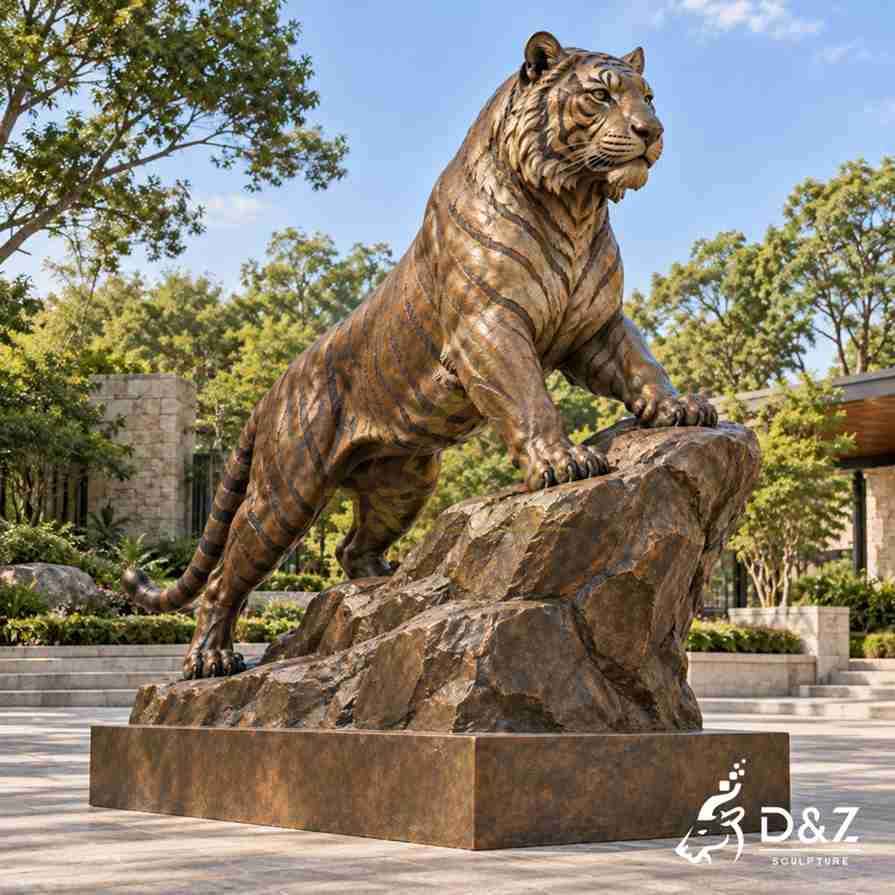
Large Bronze Bengal Tiger Statue for Outdoor Decoration DZJ-883
2. Brass Tiger Statue
The Brass Tiger Statue features a combination of a mother tiger and cubs. The adult tiger stands on all fours, its body spread out laterally, its head turned towards the viewer; the cubs sit upright beside its front legs, smaller in size and more focused in their posture. The orange-yellow, black, and white surface partitions enhance the distinguishing features of the tiger stripes, face, and chest/abdomen, maintaining a consistent visual language between the two animals. Click to customize the Brass Tiger Statue
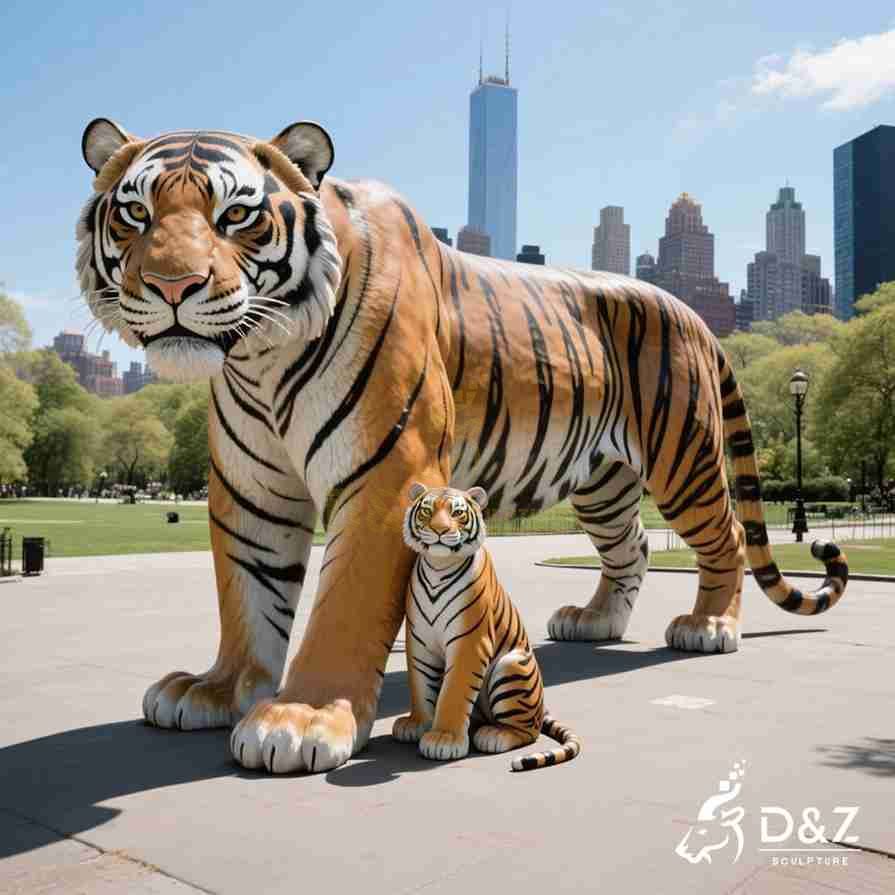
Large Outdoor Brass Tiger Statue for Sale DZJ-98
3. Marble Tiger Statue
The Marble Tiger Statue features a forward-extending posture. One forepaw extends forward, while the hind legs and other supporting legs create a gait variation, and the open mouth further emphasizes the emotional expression of the movement. The tiger stripes spread along the back, abdomen, and limbs, working in conjunction with the shoulder undulations, chest/abdomen contours, and facial sculpting to create a complete animal image. Click to customize a Marble Tiger Statue
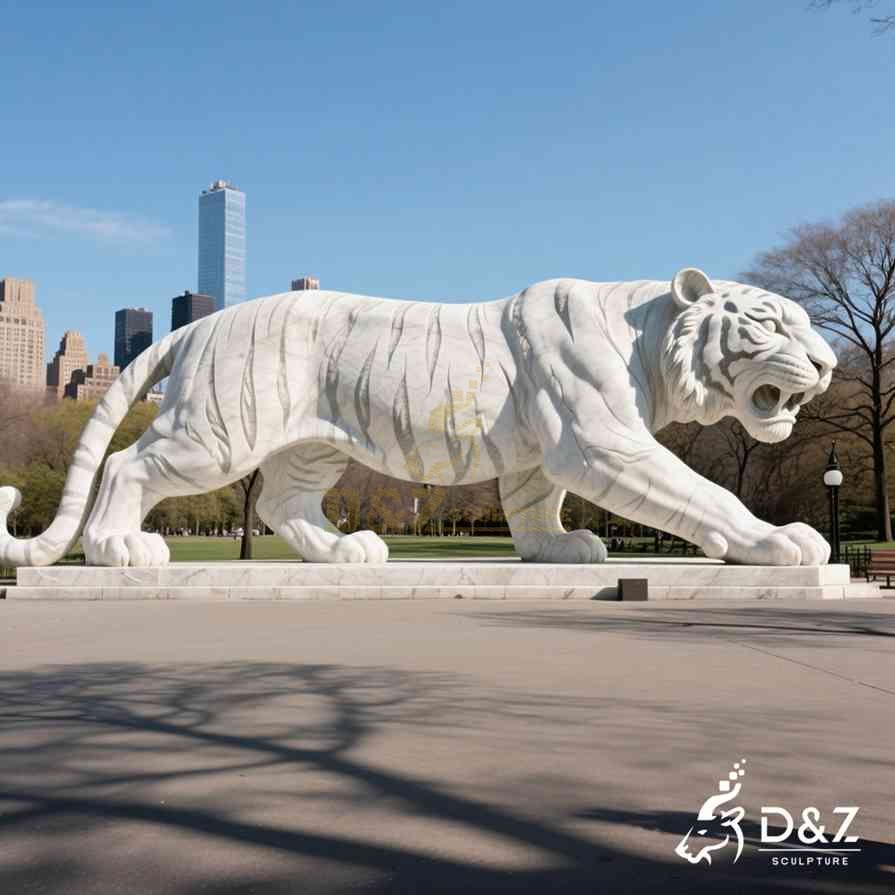
Large Outdoor White Marble Tiger Statue for Sale DZJ-148
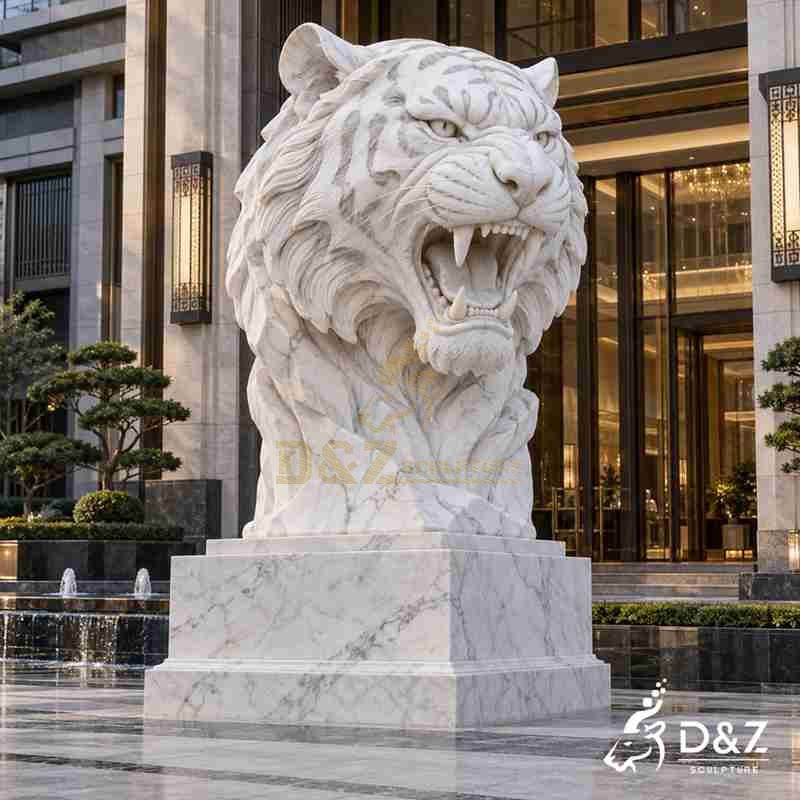
4. White Tiger Head Statue
The White Tiger Head Statue focuses on the head and neck. The lowered eyebrows, forward-gazing eyes, and fully open mouth create a strong expression. The canines, tongue, muzzle folds, and layered cheek fur enrich the details for close-up viewing. The head and neck taper downwards and connect to a square stepped base. Click to customize a White Tiger Head Statue
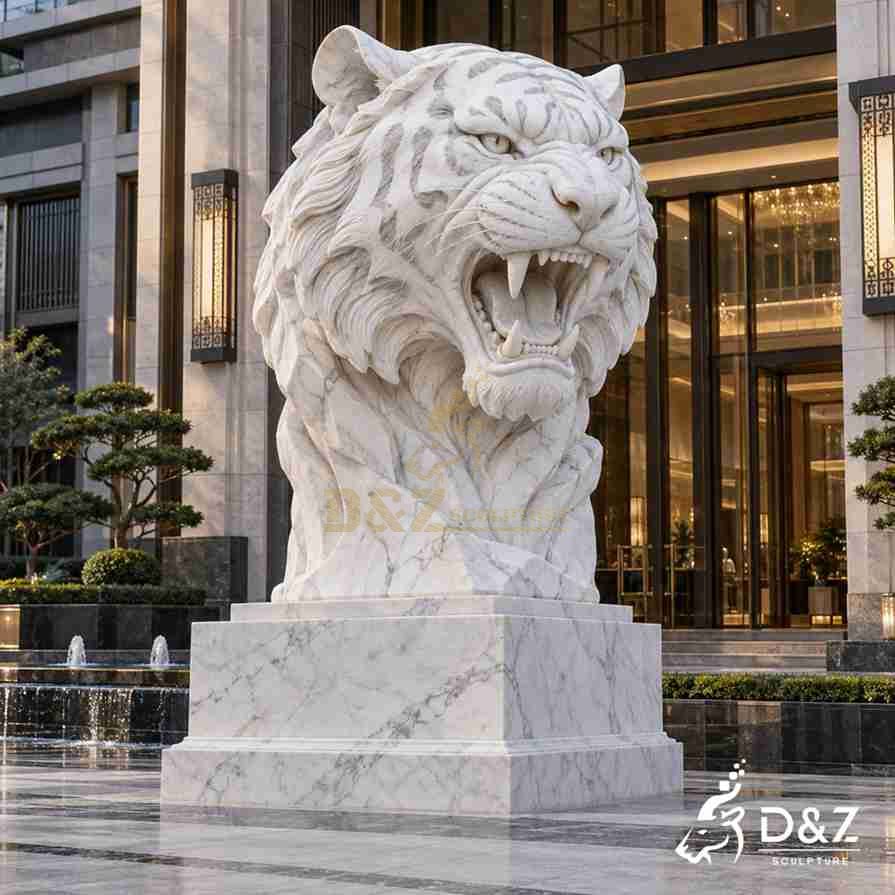
Large White Tiger Head Statue | Hand-Carved Marble Art DZJ-882
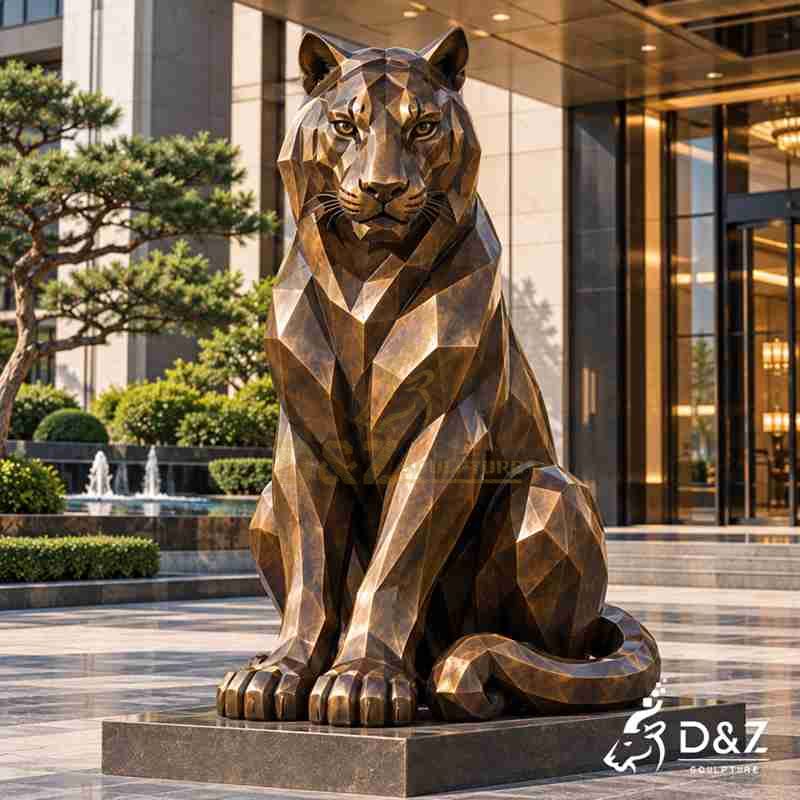
5. Sitting Tiger Statue
The Sitting Tiger Statue reconstructs the animal's form using geometric facets. With its forelimbs upright, claws side by side, hindquarters tucked in, and tail curled along one side of the body, the tiger presents a concentrated longitudinal profile. The forehead, cheeks, chest, shoulders, and limbs are connected by planes of varying sizes, preserving the tiger's distinctive features and establishing a clear, rhythmic zigzag pattern. Click to customize the Sitting Tiger Statue
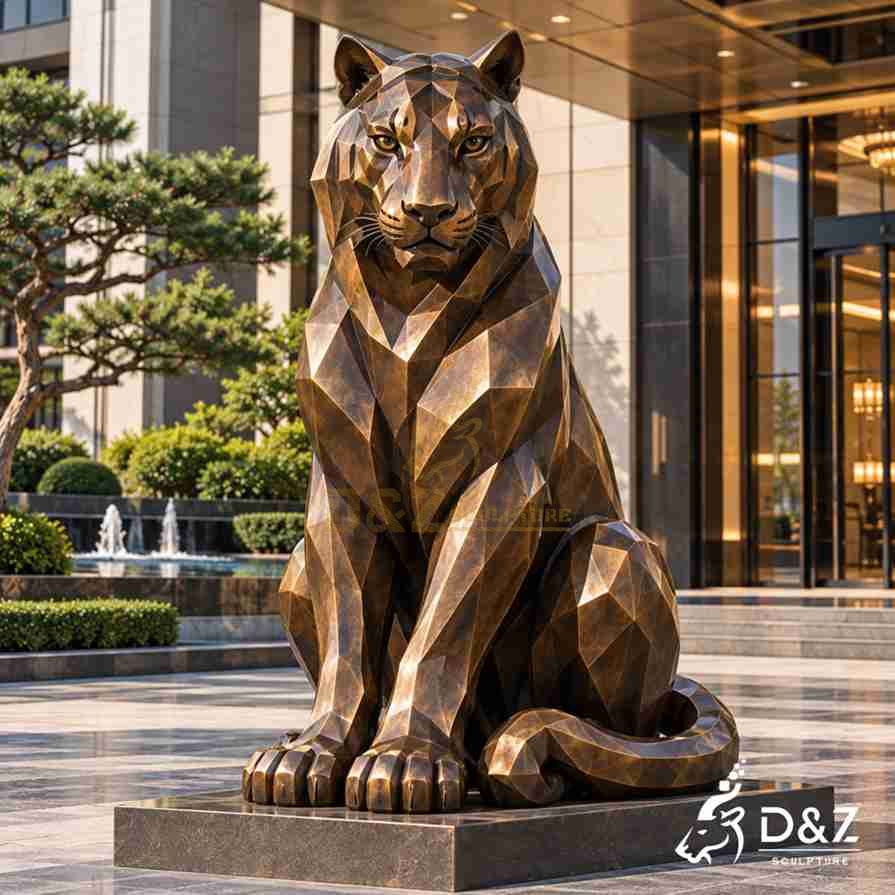
Sitting Tiger Statue | Geometric Bronze Sculpture DZJ-887
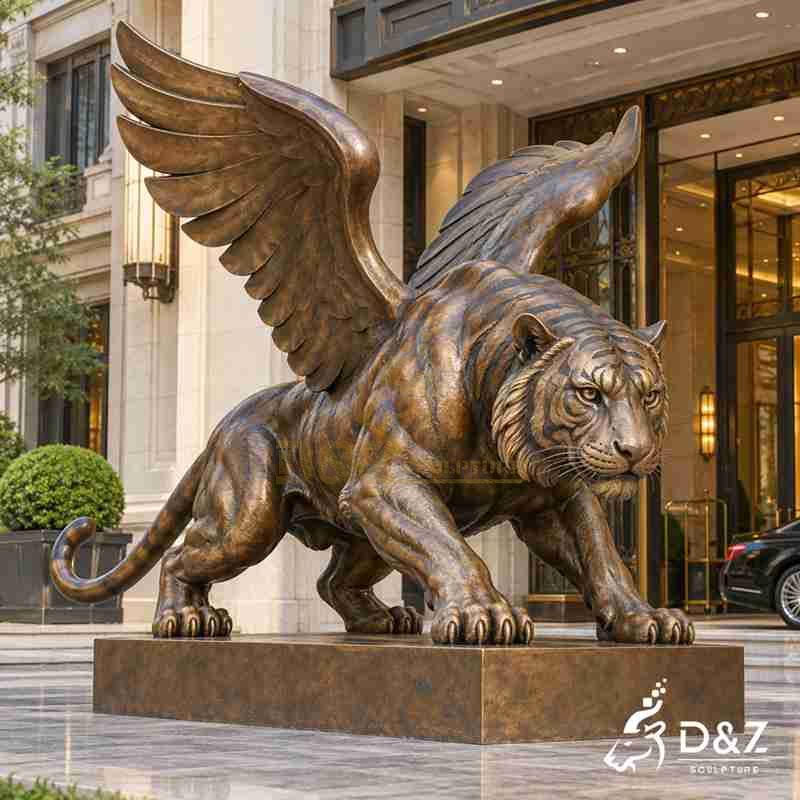
6. Winged Tiger Statue
The Winged Tiger Statue combines a powerful tiger body with outstretched wings. The forelimbs support the body forward, the hind limbs are bent, and the body is slightly lowered, creating a poised and ready-to-strike posture. Broad wings spread upwards from the shoulders and back, with long feathers arranged in layers, creating a rich silhouette together with the tiger's stripes, muscular undulations, and curled tail. Click to customize the Winged Tiger Statue
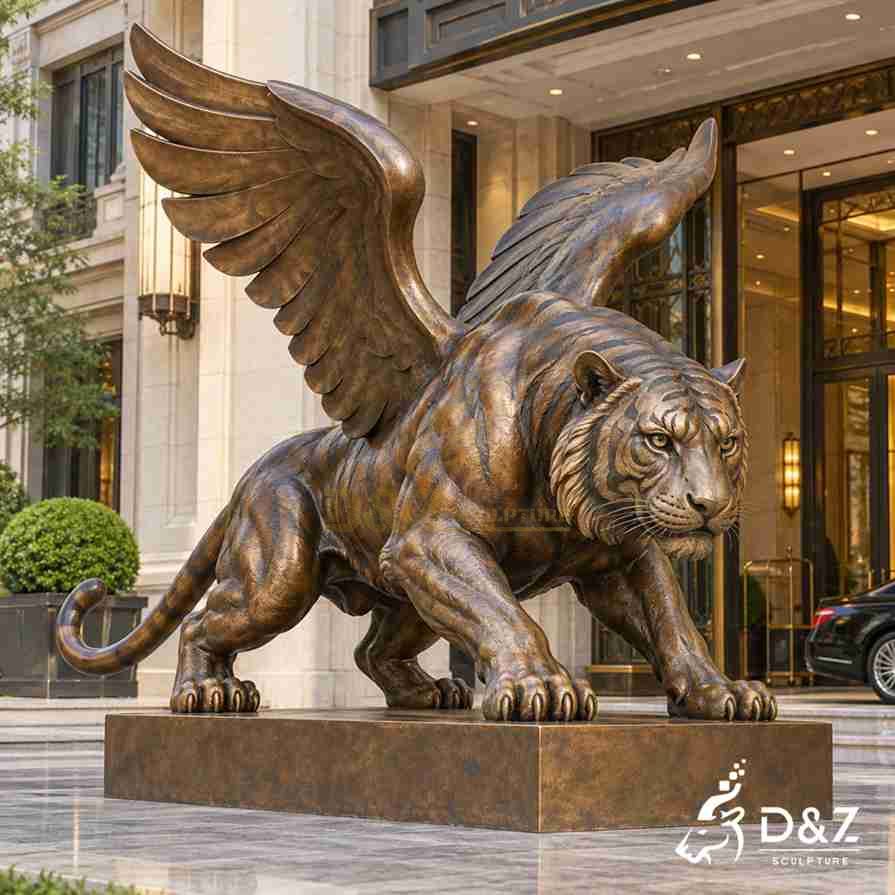
Large Bronze Winged Tiger Statue for Outdoor DZJ-885
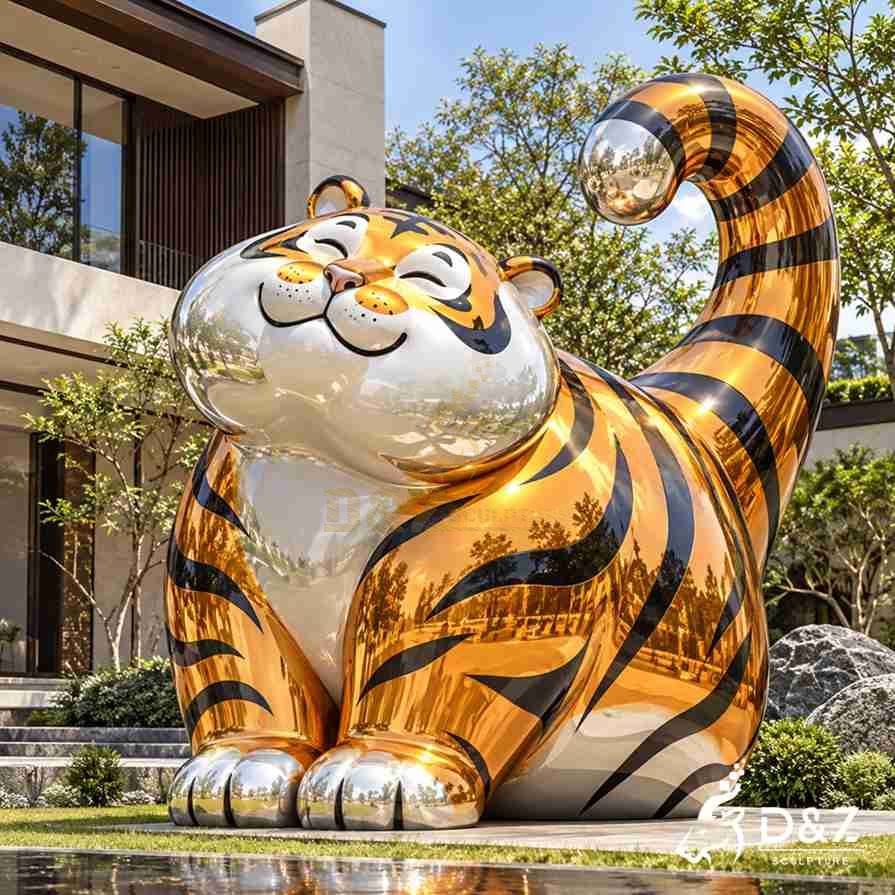
7. Funny Tiger Sculpture
The Funny Tiger Sculpture features a rounded, full body, bulging cheeks, and short, stubby forelimbs, creating a cartoonish image. Closed eyes, upturned corners of the mouth, and a small nose combine to form a smiling expression, while a high-curled tail adds a lively variation to the silhouette. Golden yellow, silver-white, and black stripes interweave, making the appearance highly recognizable. Click to customize the Funny Tiger Sculpture
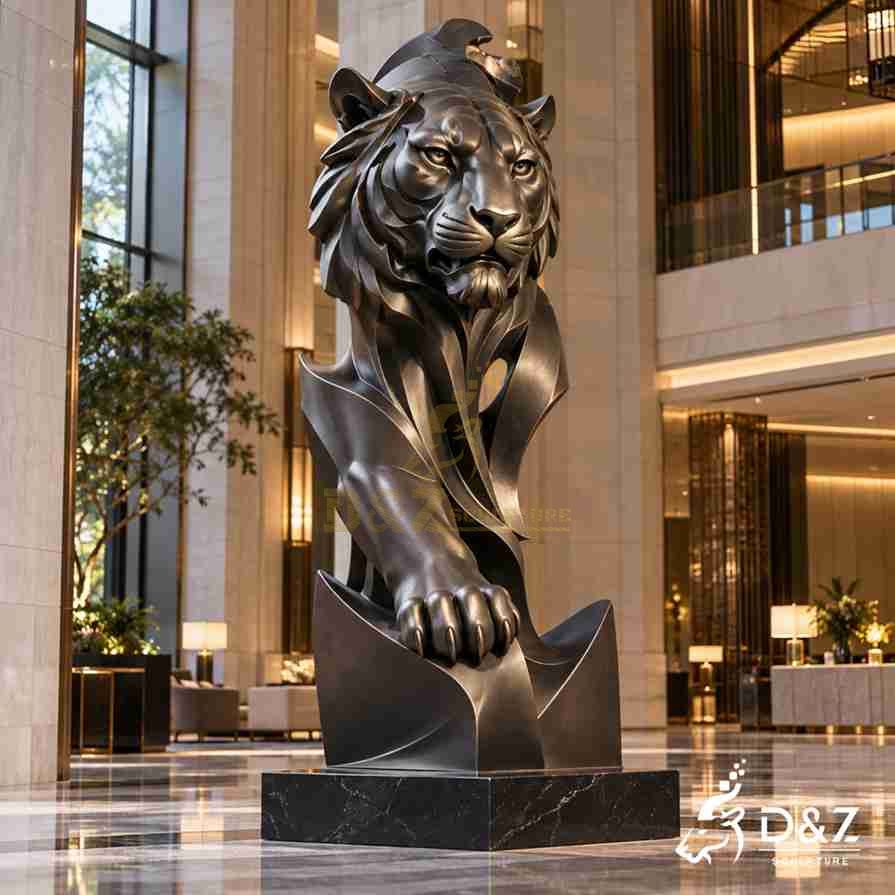
8. Tiger Bust Sculpture
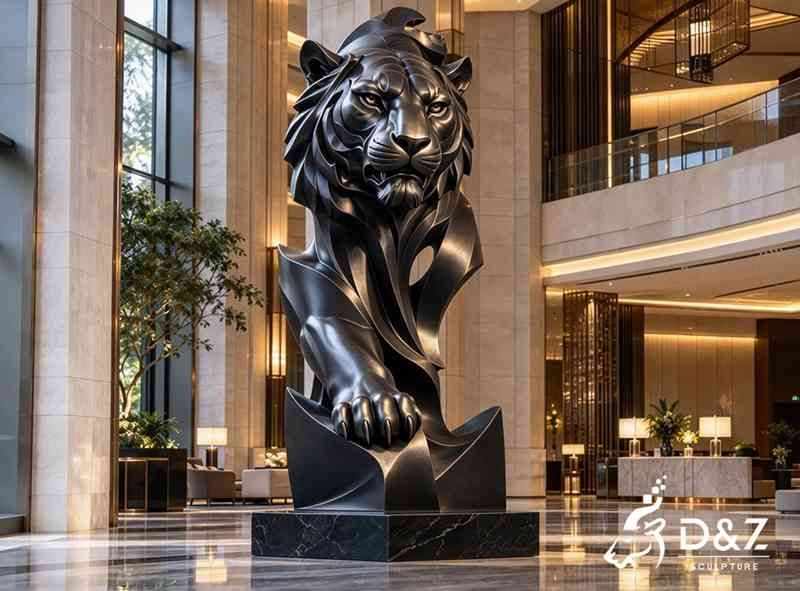
The Tiger Bust Sculpture combines a tiger's head, a portion of its chest and shoulder, and one forepaw into a vertical design. The face retains clearly defined eyes, nose, mouth, and ears, while the cheek stripes extend outwards, gradually transforming into layered curved surfaces. The chest and neck area is organized through twisted, ribbon-like shapes and openwork spaces, with the forepaws resting downwards on folded components. Click to customize the Tiger Bust Sculpture
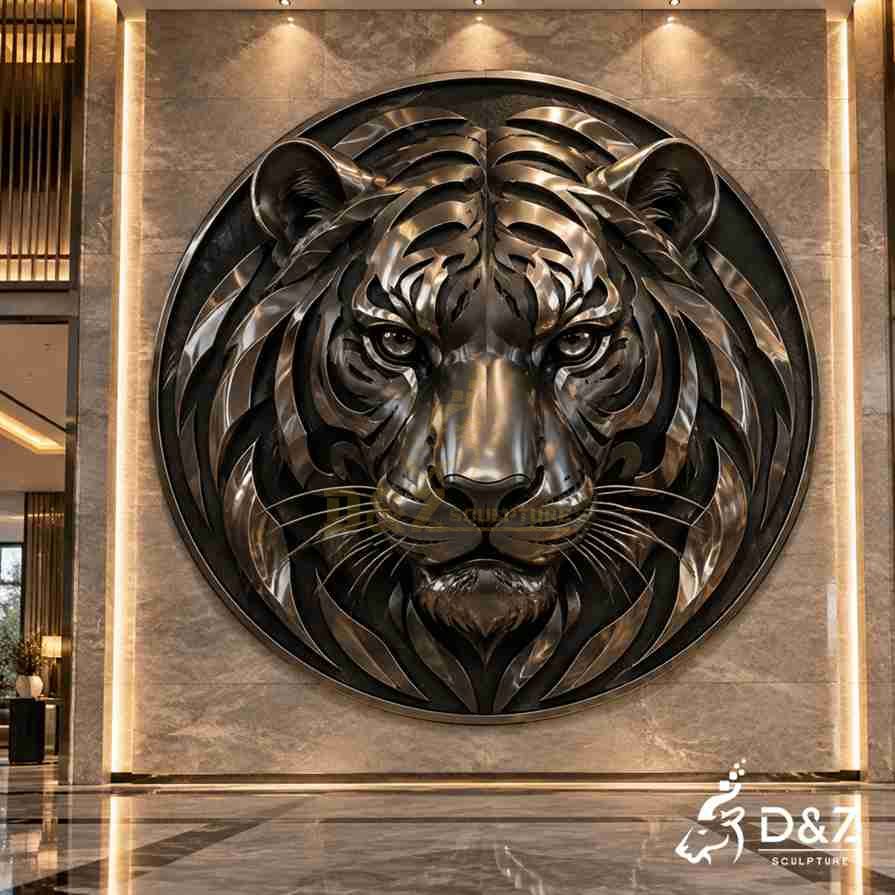
9. Tiger Wall Sculpture
The Tiger Wall Sculpture features a rounded backplate that brings out the overall silhouette, with the tiger's head centered and eyes looking straight ahead. Stripes on the forehead, around the eyes, and cheeks are treated as layered, undulating curves, while the muzzle, jaw, and whiskers extending to the sides further enhance the three-dimensional effect. A dark base contrasts with the highlights on the surface, making the facial features and patterns clearer. Click to customize the Tiger Wall Sculpture
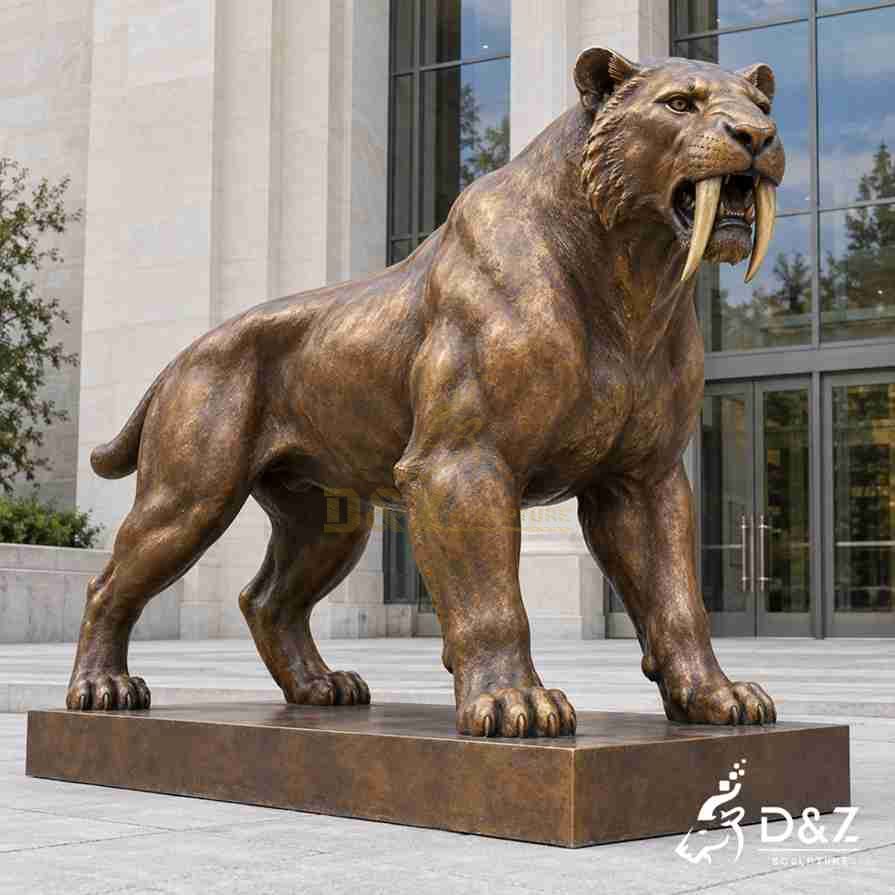
10. Saber Tooth Tiger Statue
The Saber Tooth Tiger Statue is characterized by a thick neck, full shoulders and chest, and robust forelimbs. The four-legged stance perfectly showcases the body proportions, with the short tail tucked behind. The open mouth reveals two long, downward-extending canines; the light-colored teeth contrast with the dark brown body, drawing visual attention to the head. Click to customize the Saber Tooth Tiger Statue
The material influences the detail, surface lighting, and overall character of a tiger sculpture, and also alters its production, installation, and maintenance.
Bronze: Rich Detail and Weighty Mass
Bronze can be used to express complex forms and intricate textures through casting. Lost-wax casting is a common technique, allowing bronze to preserve the layers between muscles, facets, stripes, and feathers. A bronzed brown hue with highlights can enhance the body's contours, creating a serene visual effect.
Brass: Warm Metallic Tones and Decorative Expression
Its natural color has a warm yellow hue, and it can be combined with surface coloring to create different appearances. A sense of intimacy can be conveyed through contrasts in volume, stripes, and facial details.
Stainless Steel: Continuous Curves and Modern Design Language
Suitable for depicting rounded, playful tigers, half-body tigers with openwork curved surfaces, and layered tiger heads on walls. The color, luster, and texture of the finished product further alter the visual effect.
Marble: Sculpted Layers and the Texture of Natural Stone
Through sculpting, shapes are gradually formed, allowing for the expression of animal details through concavity, convexity, transitions, and surface finishing. White marble is suitable for highlighting the tiger's eyebrows, canines, and cheek fur, and can also be used to showcase the tiger's shoulders, back, and limbs through large areas of light and shadow.
Hotel Entrance and Arrival Area: Seated tigers, climbing tigers, and tiger head statues can serve as visual identifiers at the entrance. A seated posture emphasizes solemnity, a climbing posture adds upward dynamism, and the tiger head focuses on facial expression.
Commercial Plaza and Public Pedestrian Space: Open plazas are suitable for displaying full-body tigers or winged tigers that can be viewed from multiple directions. Larger, expansive silhouettes can echo open spaces, while playful tigers can add a relaxed feel to casual commercial spaces.
Corporate Parks and Campuses: Geometric seated tigers and realistic Bengal tigers can be designed around project themes such as focus, confidence, or ambition. Entrance plazas are suitable for emphasizing a positive image, while walking postures along park paths can echo the direction of the path.
Villa Courtyards and Landscaped Gardens: Bronze and marble tigers can be placed along courtyard axes, paved nodes, or landscape transitions, creating layers with plants, rocks, and building facades.
Theme Parks and Family-Friendly Spaces: A smiling, rounded physique and exaggerated proportions make the tiger more easily integrated into family-friendly commercial areas and leisure parks. The winged tiger is suitable for fantasy-themed scenes, creating a narrative context with architecture, plants, and background installations.
Zoos and Natural History Museums: Realistic Bengal tigers and combinations of mother tigers and cubs are suitable for visitor entrances, science trails, and educational display areas. Saber-toothed tigers can be used in natural history or paleontology exhibits, accompanied by accurate species descriptions.
When choosing a tiger statue, start with the theme you want to convey for the space, gradually determining the shape, scale, materials, and scope of production.
Clarify the Theme and Direction: First, clarify the main message of the work, then coordinate the expression, head orientation, and body posture.
Confirm dimensions based on site: You can provide site photos, floor plan, and main viewing directions. Use outline diagrams or scene renderings to determine the relationship between the artwork and the architecture, pathways, and surrounding landscape.
Choose materials, colors, and surface finishes: Material selection should consider the design style, indoor and outdoor environment, and maintenance arrangements.
Further details through drawings and models: Customization can include head expression, tiger stripes, limb positions, tail curves, wings, base, and partial decorations.
Q: Are large tiger statues suitable for long-term outdoor placement?
A: Yes, but the materials, surface treatment, and installation plan need to be selected based on the local climate, salt spray, pollution, and water accumulation conditions. Regular inspections and maintenance should also be arranged.
Q: Are large metal tiger sculptures solid or hollow?
A: Bronze sculptures can be hollow-cast, while stainless steel works can use a metal shell structure. Internal support, connection methods, and material thickness need to be determined based on the size, shape, and structural design.
Q: Does installing a tiger statue require a separate foundation?
A: This needs to be determined based on the statue's weight, support location, and site load-bearing conditions. For completed works, the foundation, base, and anchoring relationships should be confirmed.
Q: Will the color of a metal tiger statue change over time?
A: Possibly. Sunlight, rain, salt, and the condition of the protective layer can all affect the surface appearance. Proper maintenance can effectively slow down changes.
Q: How should outdoor tiger statues be cleaned daily?
A: Follow the maintenance instructions based on the material and surface treatment. Use soft tools to remove surface dust and avoid using strong acids or alkalis.
Q: How are large tiger statues packaged and transported?
A: Depending on the material and shape, use surface isolation, local cushioning, and wooden crates for secure mounting. Pay special attention to protecting prominent parts such as the ears, teeth, tail, and wings.
Q: How long does it take to customize a large tiger statue?
A: Generally, it takes 30-60 days, depending on the size, material, complexity of the design, quantity, and surface treatment of the sculpture.
Q: Can tiger statues be placed next to water features?
A: They can be integrated into water feature planning, but the splash range, water quality, drainage, and maintenance channels should be confirmed in advance before determining the material, surface treatment, and placement location.
WhatsApp: 0086 13613220352
Email: info@dzsculpture.com
D&Z Sculpture provides one-stop custom large tiger sculpture services for hotels, courtyards, commercial spaces, and public landscapes. You can send reference images, site photos, estimated dimensions, and the installation area. We will then discuss your requirements for design, materials, base, and drawings, and provide project quotations, packaging, shipping, and installation support.
Leave a message

Any landscape ideas in your mind, describe to D&Z sculpture team directly, you can imagine we can create.


Copyright © 1996-2026 D&Z Sculpture Co., Ltd. All Rights Reserved | Sitemap |