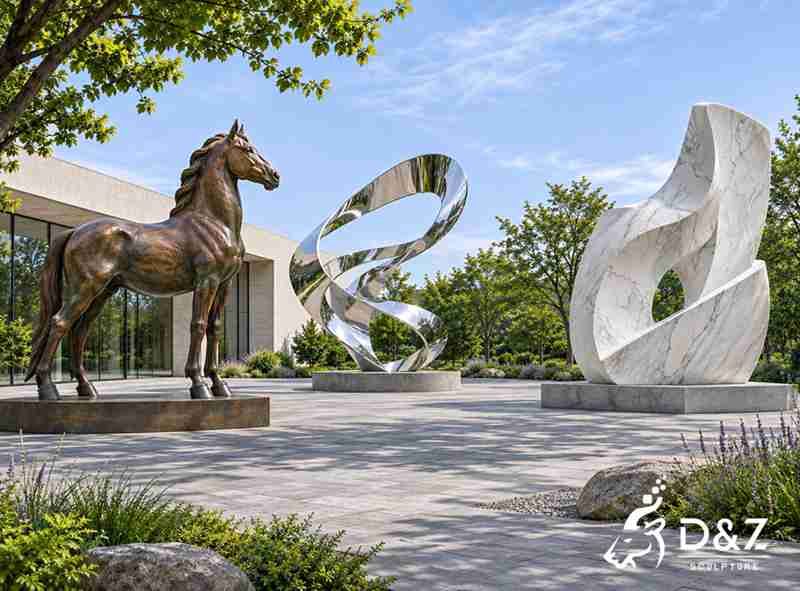
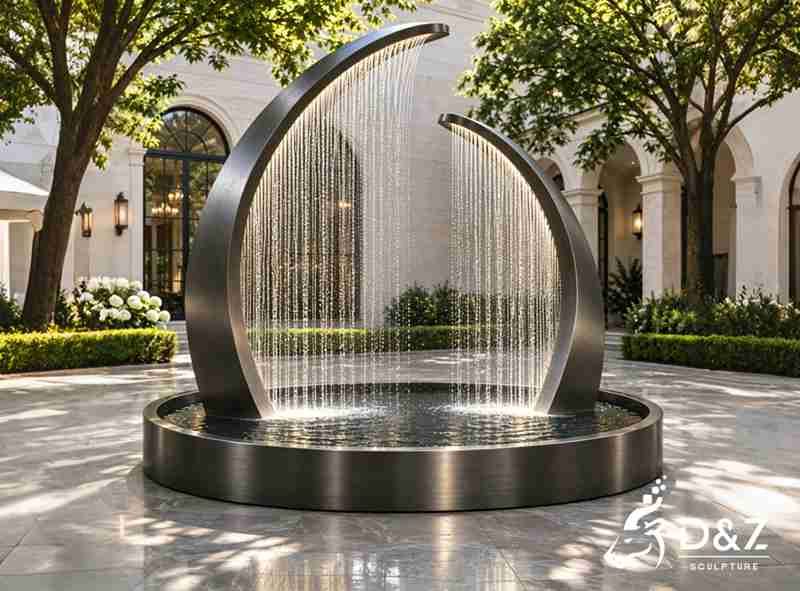
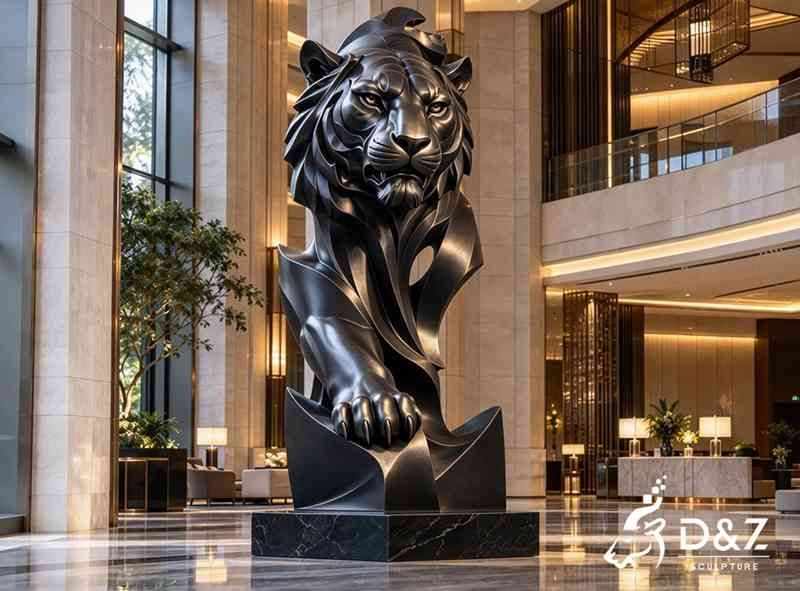
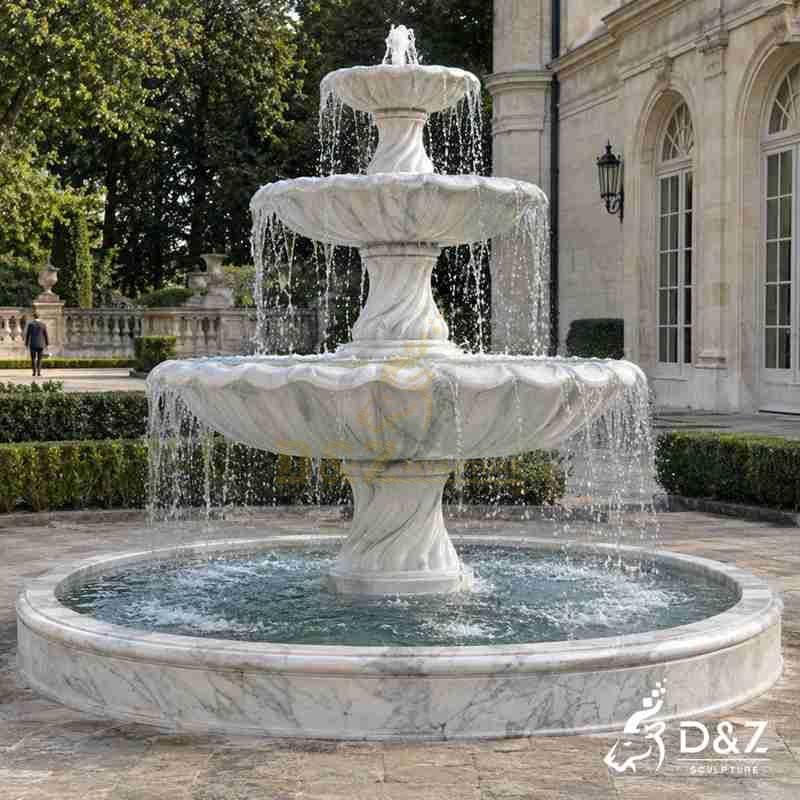
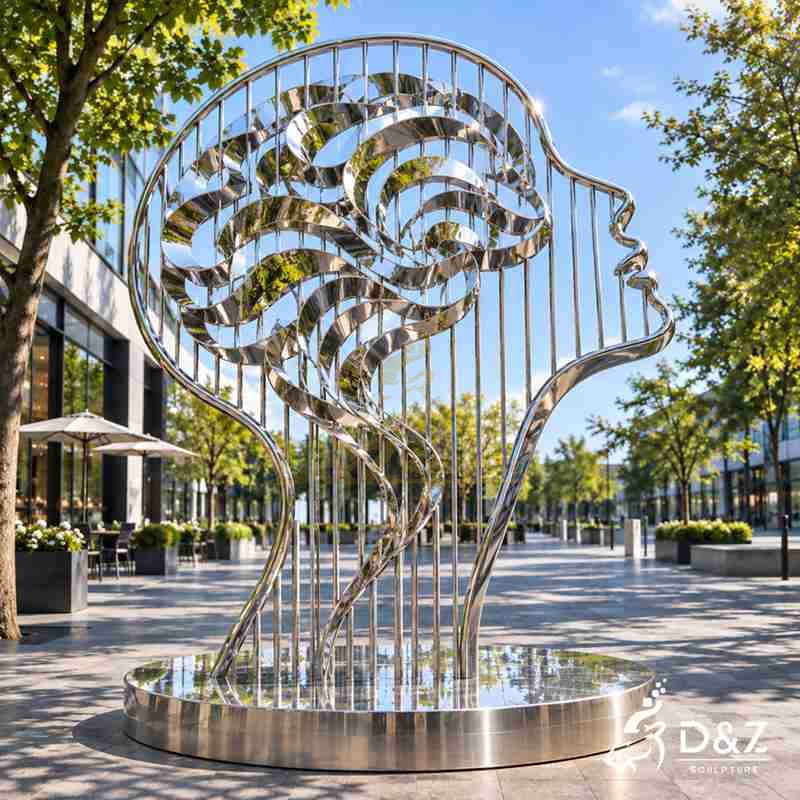
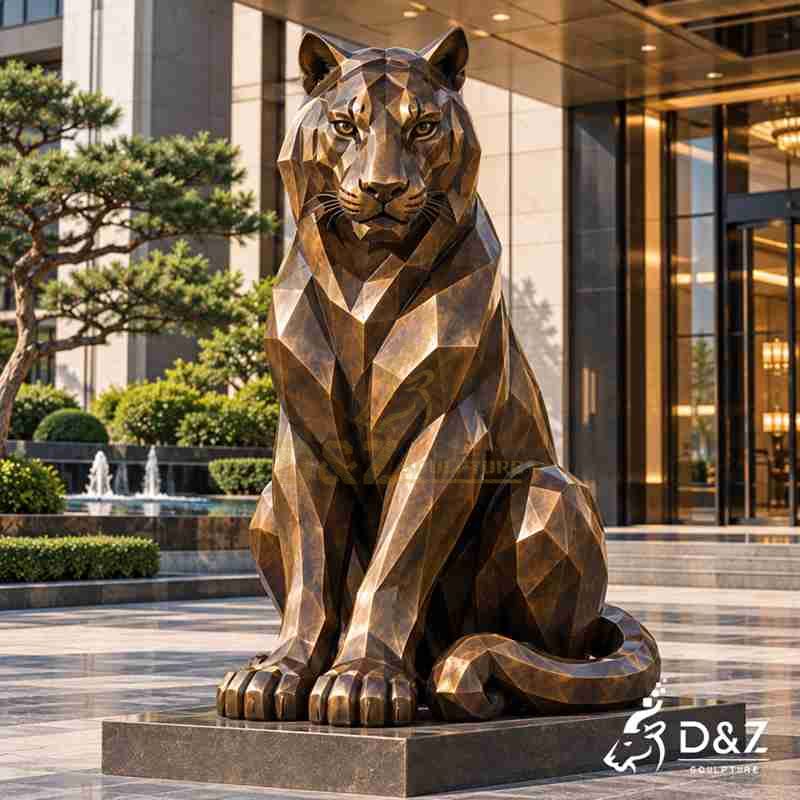
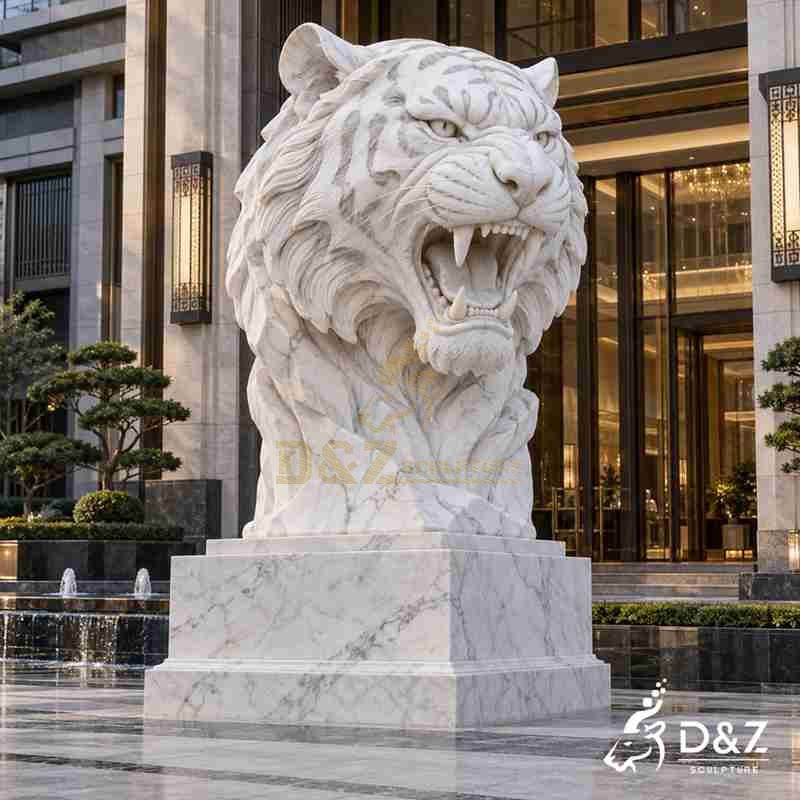
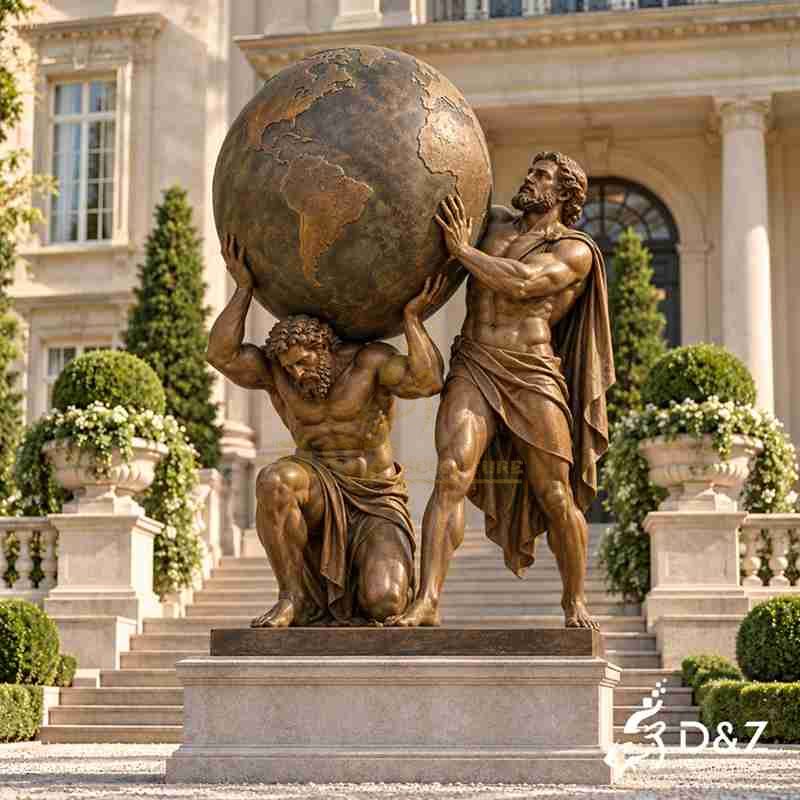
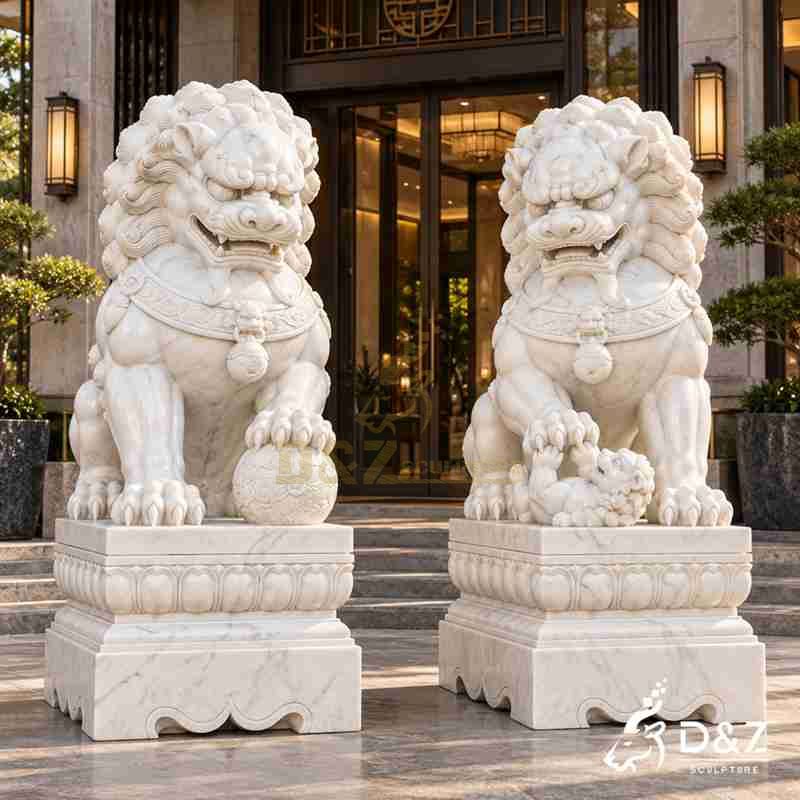
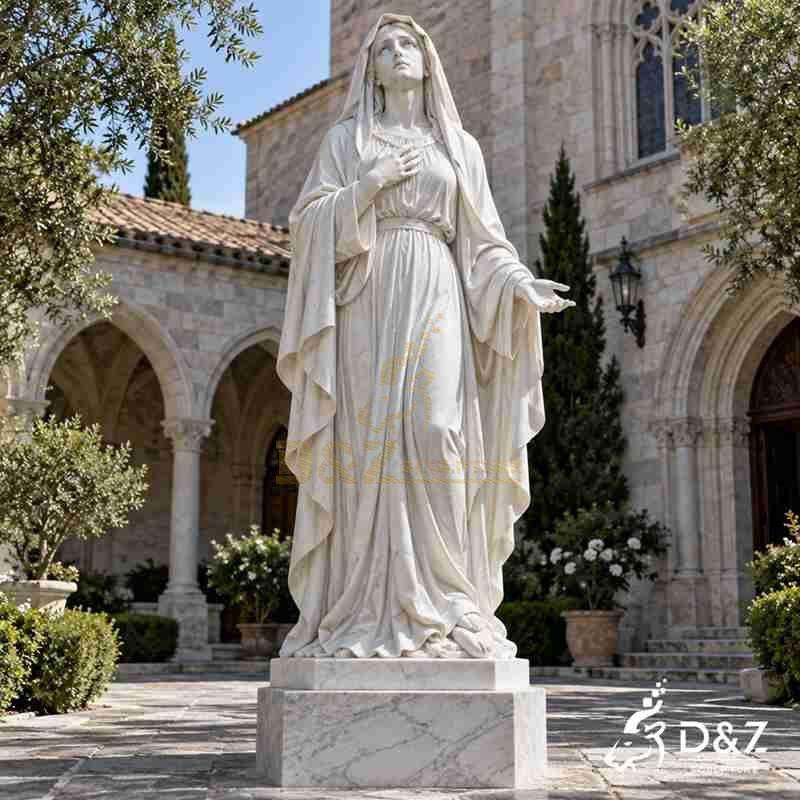
Bronze animal sculptures, mirror-polished stainless steel installations, and marble figures can occupy similar spaces yet create very different visual impressions. Each material interacts with light differently, follows its own production process, and may require different installation and maintenance planning.
So, what materials are used in sculpture, and how should you choose for a large project?
Bronze, stainless steel, Corten steel, marble, and fiberglass are among the materials used in sculpture projects. Each offers different possibilities for form and fabrication. Whether a material suits a particular project depends on the design and site conditions.
For hotel entrances, public plazas, landscaped gardens, and commercial spaces, material choices should be considered alongside the design. Understanding how material, form and setting relate can help define project requirements before production begins.
Overview of Common Materials Used in Large Sculptures
Bronze Sculptures: Fine Details and Surface Color
Stainless Steel Sculptures: Reflections, Curves and Open Spaces
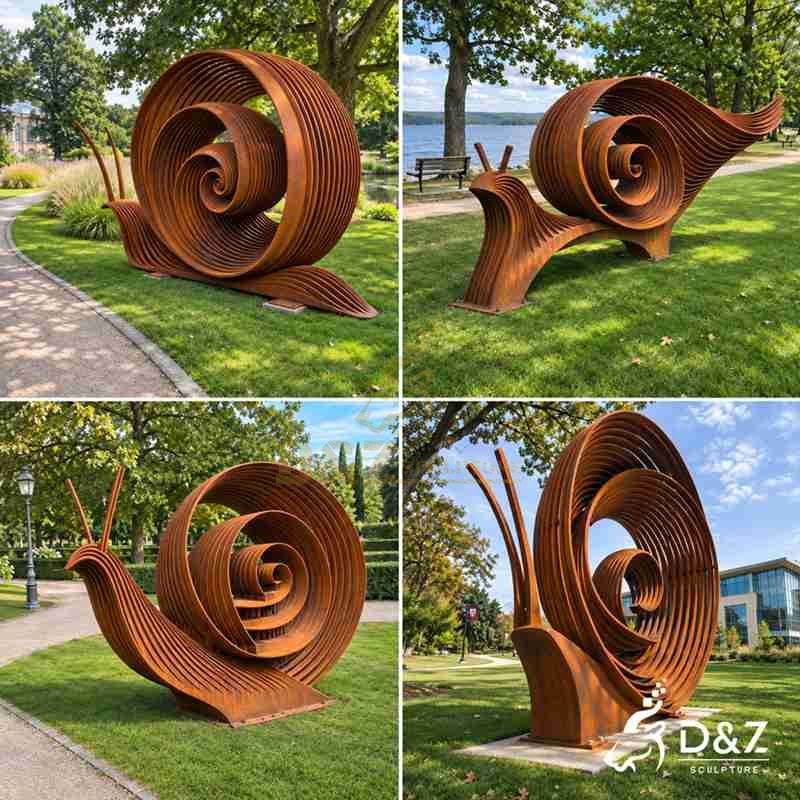
Corten Steel Sculptures: Rust Tones and Landscape Design
Stone Sculptures: Marble and Other Stone Options
Fiberglass and Lightweight Sculpture Materials
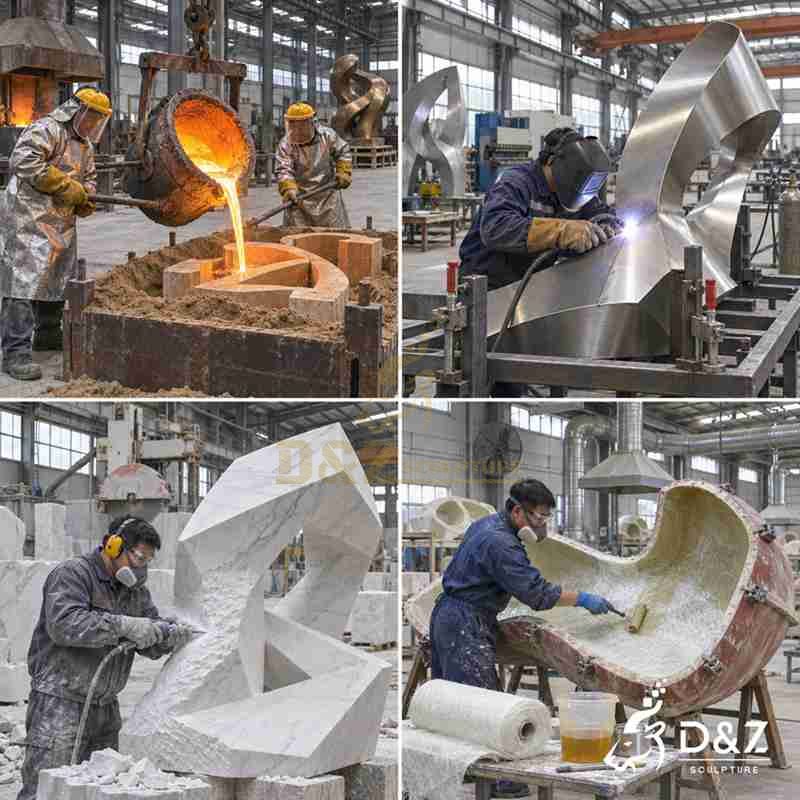
Sculpture Materials and Production Processes
Choosing Materials for Outdoor Sculpture
Durability of Indoor and Outdoor Sculptures
How Scale Affects Material Selection
How to Choose a Material for Your Project
The main types of sculpture materials used in large projects include bronze, stainless steel, Corten steel, marble, and fiberglass. When comparing them, distinguish between the visible surface, internal supports, and foundation connections, since a single work may combine several materials.
For example, a large metal sculpture may have an outer metal skin and an internal support structure. A fiberglass sculpture may also need internal reinforcement and a purpose-designed base connection. The material named in a product description may not represent every component of the finished work.
| Material | Appearance | Common Production Methods | Project Considerations |
|---|---|---|---|
| Bronze | Fine modeling details, surface texture and bronze patinas | Casting, assembly and surface finishing | Section planning, surface treatment, protection and maintenance |
| Stainless steel | Mirror-polished, brushed or painted surfaces | Cutting, forming, welding and polishing | Grade, weld finishing, reflections and site conditions |
| Corten steel | Rust-brown surface and plate-based forms | Cutting, forming, welding and surface treatment | Drainage, wet and dry conditions, runoff and nearby paving |
| Marble | Natural veining, carved details and a sense of mass | Carving and surface finishing | Stone selection, form, handling, support and site suitability |
| Fiberglass | Molded forms and a wide range of colored finishes | Mold making, composite layup and surface finishing | Layup, internal supports, coatings and maintenance |
This table offers an initial comparison. Each project needs further review based on its design and site.
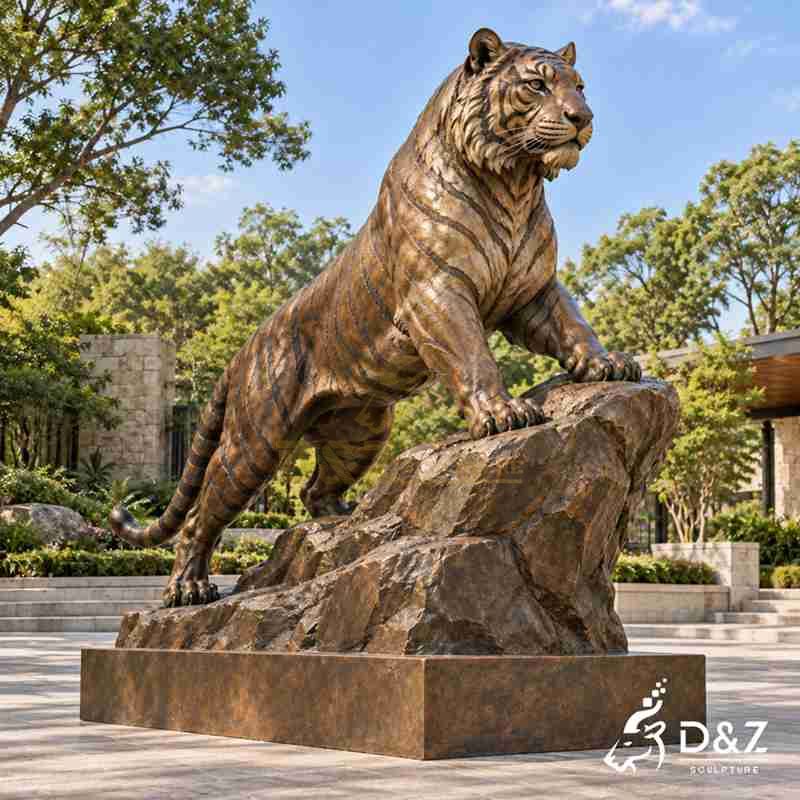
Bronze is often used for figures, animals and commemorative subjects. Through modeling and casting, details such as clothing folds, facial features, muscles and fur can be rendered in metal.
Surface treatment also shapes the finished appearance. A consistent brown tone, varied bronze colors, and other approved finishes can change how highlights, recesses and textures read.
Large bronze sculptures may be cast in sections, then assembled and finished. Section locations should account for the form, casting requirements, shipping and later fabrication. The plan should work across all stages of the project.
Outdoor bronze surfaces are affected by their surroundings. Moisture, deposits, contact, and the condition of protective coatings can all influence appearance. Projects should define the intended finish and include suitable maintenance guidance.
Explore our custom bronze sculptures to compare subjects, finishes, and project options.
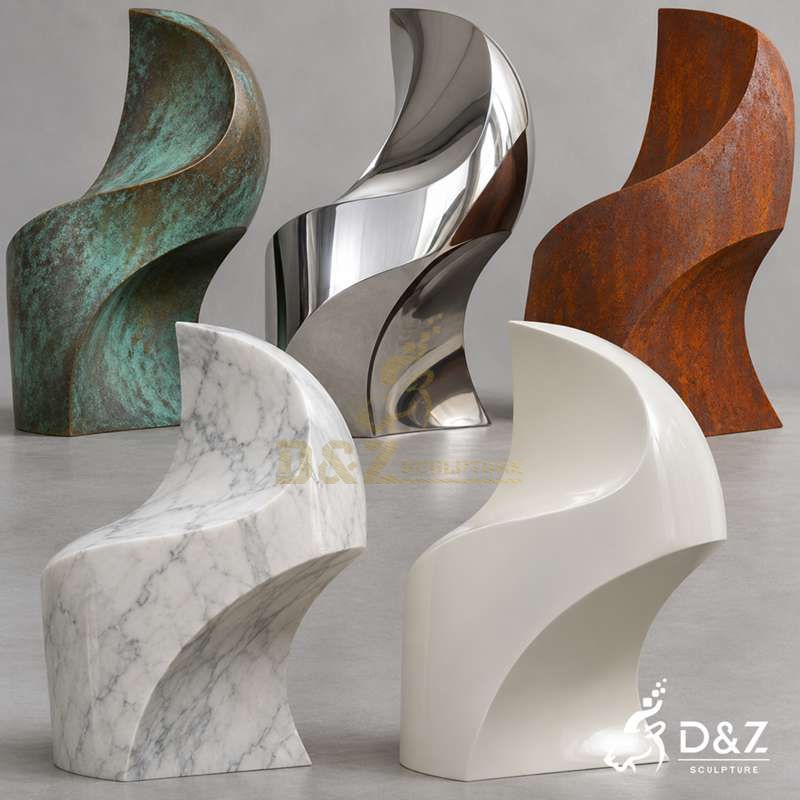
Stainless steel can be used for broad curves, geometric facets, open structures and flowing forms, creating a strong visual connection with modern architecture.
When comparing metal sculpture materials, consider how each metal’s appearance, fabrication requirements, and site conditions fit the project.
Surface finishing makes a marked difference. Mirror-polished stainless steel reflects buildings, plants, sky and passersby. A brushed finish creates directional texture, while paint introduces color and brings its own finishing and maintenance considerations.
These effects should be evaluated in the actual setting. The same mirror-polished work may reflect an open sky differently from a complex building façade. Reviewing the design from key viewpoints can help determine the right finish.
Material selection also involves more than naming the steel. Grade, fabrication quality, weld treatment, control of processing contamination, and exposure conditions should all be considered. Stainless steel should not be described as immune to corrosion or staining in every environment.
Browse our metal sculpture collection for examples of reflective and formed metal work.

When a rust-brown surface is part of the design, Corten steel can be a material option. It is often used for layered plates, geometric animals, silhouettes, and abstract compositions.
The finished result depends on both fabrication and site conditions. Plate edges, openings, layers and connections define the form, while surface changes affect color and texture. Projects should agree in advance on the acceptable range of color variation and weathering.
Drainage deserves particular attention. Corten steel needs suitable environmental conditions, and persistent dampness may affect its performance. Sites exposed to salt, frequent splashing, or prolonged irrigation should be assessed individually.
Rust runoff should also be considered. Water flowing over Corten steel may carry rust-colored deposits onto nearby surfaces. Light-colored or porous paving may be especially affected, so the base and drainage route should be coordinated in advance.
See our Corten steel sculptures for more weathering-steel design directions.
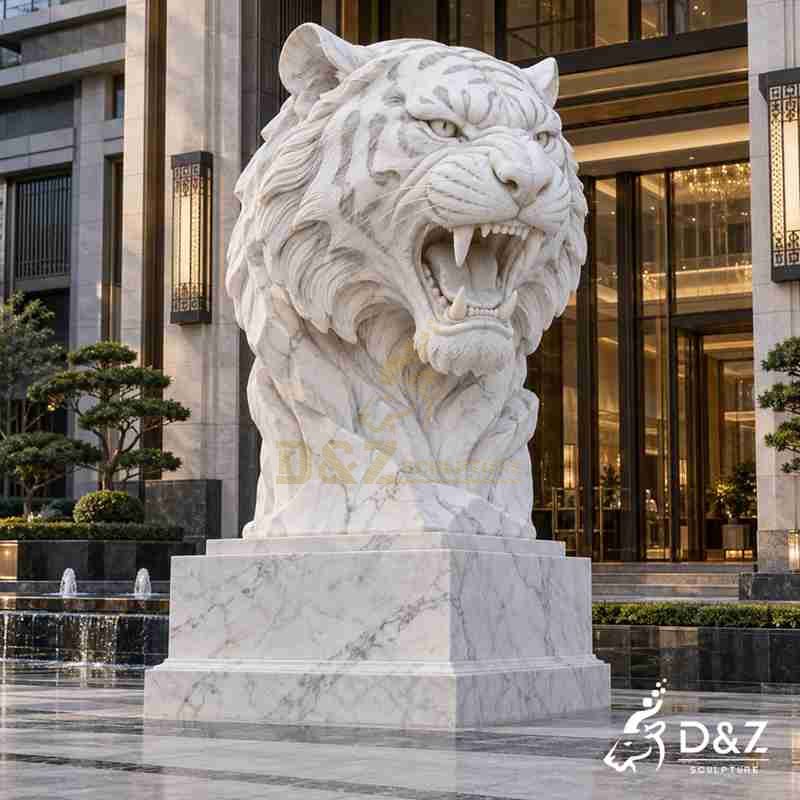
The color, veining, mineral structure and natural variation of stone become part of the sculpture. These characteristics should be considered before carving begins.
When comparing stone sculpture materials, review each stone’s color, veining, structure and suitability for the sculpture’s form and installation site. Marble is one option; the final choice should be based on the actual stone and project requirements.
Marble is often chosen for work that emphasizes carved transitions, facial expression, flowing forms, or a particular natural texture. The relationship between the stone’s pattern and the sculpture’s form can also influence the finished result.
Assessment should focus on the actual stone and design. Slender projecting parts, deep recesses, joins and handling requirements all need to be reviewed before production.
Explore our stone sculpture collection for carved marble and other stone projects.
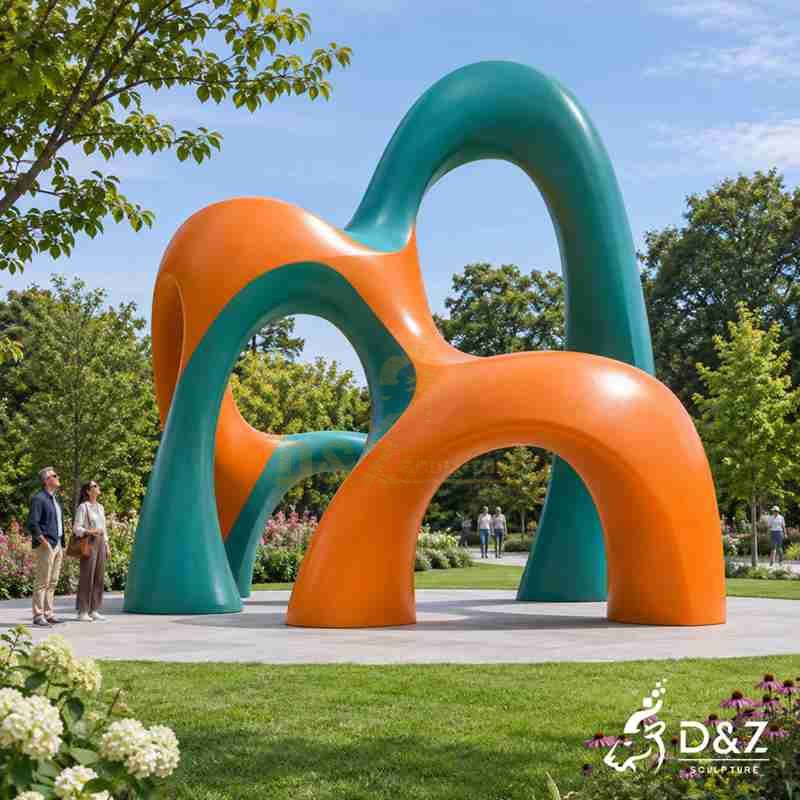
Fiberglass is a composite material that can be molded into complex forms. It may suit large colorful works, themed installations, and designs involving broad curves or repeated components.
For projects considering a lightweight sculpture material, fiberglass may be one option. When evaluating lightweight outdoor sculpture materials, account for the layup, internal supports, base and other components, since these determine the finished weight and installation requirements.
Painting can create a wide range of finishes, but a photograph alone cannot confirm the internal construction. Similar smooth, colorful surfaces may use different material systems, so product descriptions and specifications should identify the material accurately.
When assessing an outdoor fiberglass sculpture, ask about the layup, reinforcement, coating, repair methods, and maintenance requirements. Even if the shell is relatively light, wind resistance, public contact and anchoring still need to be considered.
View our fiberglass sculptures for molded forms and custom color finishes.
A large sculpture’s quality depends on more than its primary material. Fabrication, surface treatment and reinforcement all contribute to the finished appearance, service life and maintenance needs.
A typical project sequence is:
Concept design → 3D modeling → Section planning for shipping, casting and lifting → Cutting, forming, casting or carving → Assembly → Seam grinding and leveling → Surface finishing → Protective coating → Trial assembly, inspection and export packaging
Surface finishing is a key stage in its own right:
Stainless steel can be mirror-polished, brushed, fluorocarbon painted or electroplated.
Bronze can receive an antique patina, aged finish, chemical coloring or clear coating.
Corten steel can be naturally weathered or treated to stabilize its color.
Marble can be polished, matte-finished, or acid-washed for an antique effect.
Fiberglass can be finished to resemble bronze or stone, or painted in a solid color.
Deciding what material to use for outdoor sculpture involves the site environment, visual style, budget and ongoing maintenance. The right choice depends on the project; no single material suits every site.
For coastal salt-spray environments, 316 stainless steel may be worth considering. In areas with freeze-thaw cycles, marble needs appropriate moisture protection. Damp locations call for careful drainage planning.
Bronze and marble may suit projects seeking a detailed or classical appearance. Stainless steel can work well for reflective, modern forms; Corten steel for a natural rust tone; and fiberglass for colorful, complex forms where a lighter construction is being considered.
Maintenance depends on the material, finish, location, and exposure. Stainless steel may need cleaning to remove deposits; bronze and marble may need periodic surface care; and fiberglass coatings may need renewal after prolonged exposure to sunlight.
Material selection should also account for weight, wind loads, foundations, and lifting plans so the sculpture suits its intended use over time.
For large outdoor projects, browse our large city sculptures and consider the scale and installation setting together.
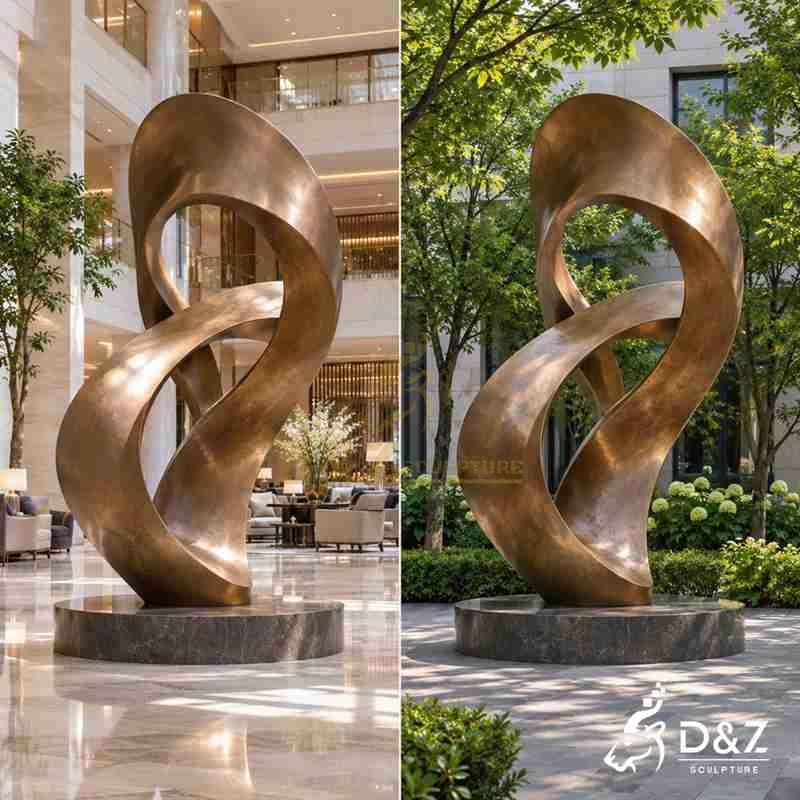
The same material may perform differently indoors and outdoors. Indoor environments are usually more stable, with less exposure to sunlight, rain, salt spray and freeze-thaw cycles. Bronze, marble and fiberglass may therefore need less frequent maintenance indoors.
Outdoors, sculptures are continually exposed to ultraviolet light, rain, temperature changes and windblown dust. Mirror-polished stainless steel may collect visible deposits; marble may be affected by moisture penetration and weathering; bronze may oxidize gradually; and fiberglass paint may age or fade. Weathering is part of the intended appearance of Corten steel.
For outdoor pieces, internal frames, welds, anchoring, and water protection should be planned along with the primary material. Indoor pieces may have different structural and coating requirements, depending on their size and installation conditions.
The durability of outdoor sculpture materials depends on the full design and installation, not just the material name.
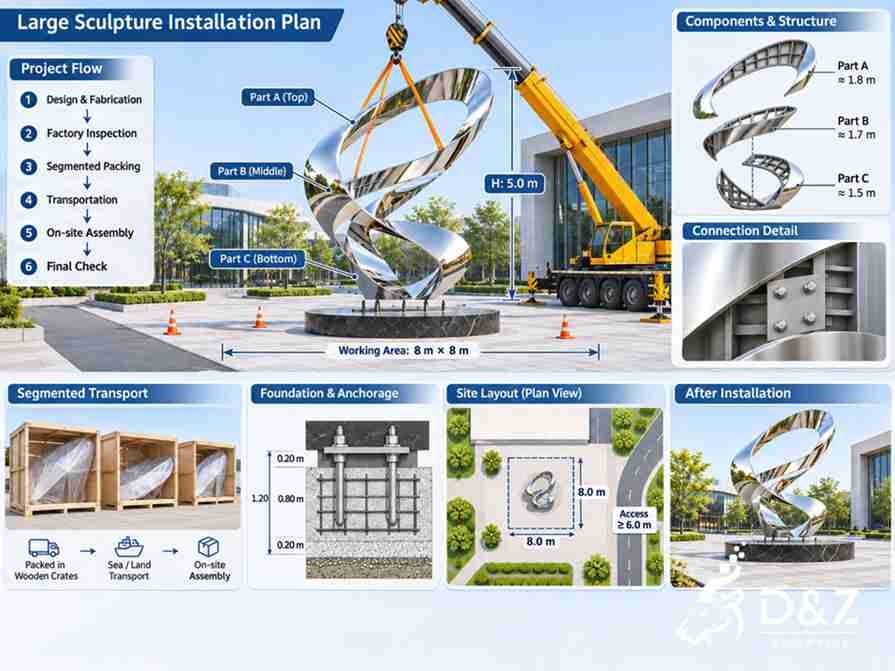
When selecting materials for a large-scale sculpture project, compare large scale sculpture materials for their suitability for fabrication, shipping and installation. As a work grows in height, width or weight, material weight and structural behavior also affect the support and connection plan.
As a sculpture grows, transport limits, handling methods, structural design and on-site connections become more significant. Even a visually simple work may need internal supports or a carefully planned assembly sequence.
Confirm whether the sculpture will ship as one piece or in sections. Consider vehicle access, lifting positions, nearby buildings, overhead obstructions and available work space.
The foundation and anchoring also need coordination. Their design depends on the sculpture, loads, ground conditions, and applicable local requirements. An installation diagram can explain how components fit together, but it does not replace project-specific engineering.
Review our large outdoor sculpture projects alongside site access, foundations, and assembly requirements.
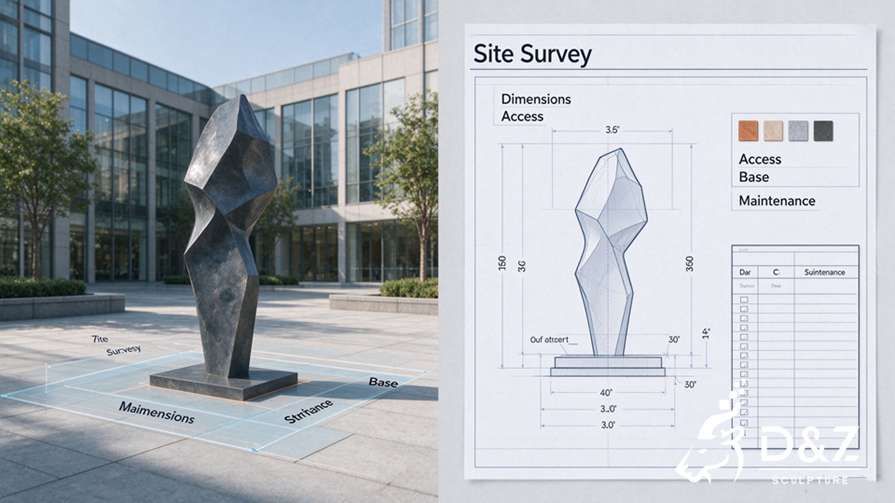
Clear requirements make material discussions more useful. Consider providing the following information:
Describe the site, nearby materials, pedestrian routes, and maintenance access.
Clarify whether the design should emphasize modeled detail, reflections, carved texture, rust tones, or color.
Provide the overall height, width, depth, projecting elements, and base requirements.
Confirm access restrictions, on-site assembly needs, and responsibilities.
Plan practical inspection and surface-care arrangements.
Coordinate fabrication, finishing, packaging, shipping, foundation, installation and maintenance.
Comparing materials against the same project requirements is more useful than looking for one material that suits every situation.
Share your site information with our sculpture project team to discuss material and installation requirements.
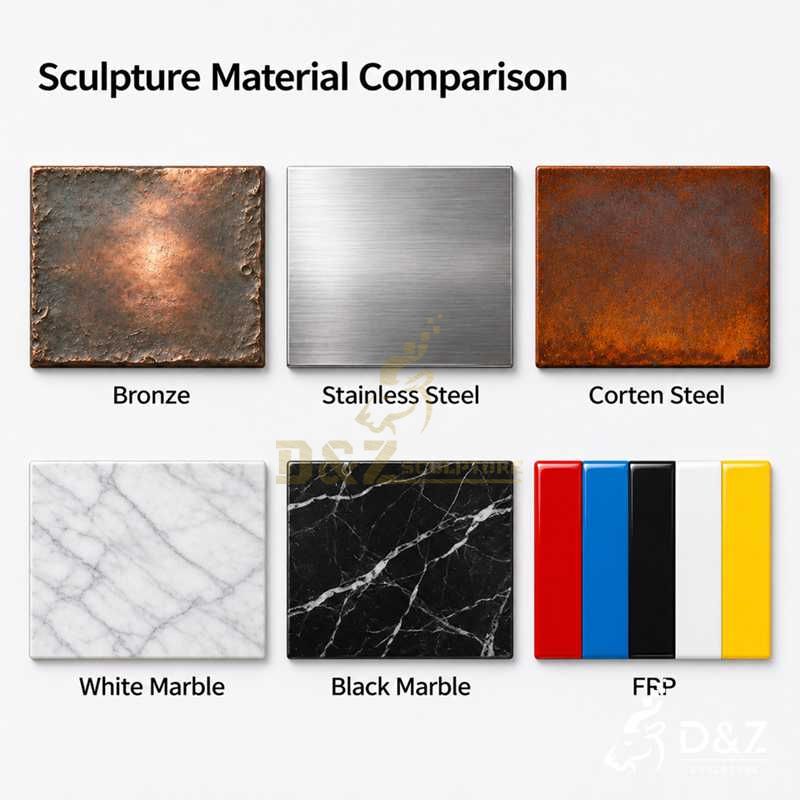
Common choices include bronze, stainless steel, Corten steel, marble, and fiberglass. The right option depends on the design, location, fabrication requirements, and maintenance plan.
There is no single best material for every site. Consider the local climate, desired appearance, sculpture design, installation conditions, and maintenance needs.
They can be used outdoors when the structure and coating are selected for the exposure conditions. Ask about the reinforcement, coating, repair method, and maintenance requirements.
Corten steel develops a weathered surface whose appearance can continue to change with exposure. Plan drainage carefully because runoff may leave rust-colored stains on nearby surfaces.
Often, but changing materials may require adjustments to thickness, details, connections, internal support, and fabrication methods.
Large outdoor projects should be assessed for site-specific loads, foundations, and anchoring. A qualified professional should determine the engineering requirements for the location.
Both grades are used in sculpture. Grade 316 generally offers better resistance to chloride corrosion, which may be relevant in coastal or salt-exposed environments.
Large bronze sculptures are commonly hollow castings. Wall thickness, internal support, and connections are determined by the form and installation requirements.
Outdoor exposure can gradually change the appearance of bronze. The finish and maintenance plan should reflect the color and surface effect you want to preserve.
Marble may be considered for outdoor projects, but the specific stone, design, climate, support, drainage, and installation conditions should be reviewed before fabrication.
Tell us about your sculpture project. You can share site photos, a plan, target dimensions, budget, delivery schedule, and style preferences. We can review the site conditions and discuss suitable materials, design options, and project planning.
Whether you need a new custom sculpture or an assessment of an existing proposal, D&Z Sculpture can support design, fabrication, and delivery. We look forward to hearing from you.
Leave a message

Any landscape ideas in your mind, describe to D&Z sculpture team directly, you can imagine we can create.


Copyright © 1996-2026 D&Z Sculpture Co., Ltd. All Rights Reserved | Sitemap |