Bronze equestrian statues combine the rider's yxsdxzlf mlkk the dreax'x teuw. The rider's clothing, expression, and gestures help the viewer identify the figure, while the horse's posture conveys composure or dynamism. The harness and pedestal also contribute to the overall composition. This form of sculpture has long been used to commemorate figures, carrying people's memories of history. This article selects 15 representative works from D&Z Sculpture, introducing their design features and commemorative significance.
Table of Contents
What Is an Equestrian Statue?
Horse Poses, Rider Gestures, and Their Meaning
15 Famous Bronze Equestrian Statues to Explore
1. Marcus Aurelius Equestrian Statue
2. Equestrian Statue of Gattamelata
3. Equestrian Statue of Bartolomeo Colleoni
4. Equestrian Statue of Henri IV
5. Equestrian Statue of King Charles I
6. Louis XIV Equestrian Statue
7. Peter the Great Equestrian Statue
8. King Edward VII Equestrian Statue
9. Equestrian Statue of Alexander the Great
10. Joan of Arc Equestrian Statue
11. Napoleon Equestrian Statue
12. Equestrian Statue of the Duke of Wellington
13. George Washington Equestrian Statue
14. Andrew Jackson Equestrian Statue
15. Sam Houston Statue on Horse
Bronze Materials, Casting, and Patina
Where Can Bronze Equestrian Statues Be Installed?
Custom Bronze Equestrian Statues
FAQs About Bronze Equestrian Statues
Contact Us
Bronze equestrian statues depict figures through the interplay of rider and horse. The rider's clothing, expression, and gestures help the viewer understand the figure's identity. The horse's posture adds a sense of stability and power to the work. The harness adds riding details, while the pedestal provides support and influences the viewer's perspective.
These statues are often placed in memorial sites and public spaces to commemorate figures and express respect. Honor, power, and leadership are common themes. Ancient Roman equestrian statues of emperors emphasized the status and achievements of their subjects. During the Renaissance, sculptors re-explored this form, refining techniques and making the figures and horses more lifelike.
Bronze equestrian statues shape figures through the interplay of horse and rider. The horse's posture influences the work's dynamism, while the rider's expression and gestures help viewers understand the figure's character. The meaning of a Famous Equestrian Statue also needs to be understood in conjunction with the figure's identity and the commemorative context.
Courage and Strength: The horse raises its forelegs, adding dynamism to the image. The rider, head held high and weapons in hand, displays a resolute posture. This combination is suitable for portraying the courage and enterprising spirit of military figures.
Steadfastness and Prestige: The horse moves steadily forward, the rider seated upright. The postures of both horse and rider appear composed and orderly. This combination is suitable for highlighting leadership and is often used in commemorative projects.
Solemnity and Remembrance: The still horse reduces the dynamism of the image. The rider's hands hang naturally, his expression serene. Viewers are more likely to focus on the figure's expression and feel the respect and remembrance conveyed in the work.
Leadership and Hope: The horse moves slowly forward, the rider raising his hand in a gesture of farewell. The gestures of the figures provide a sense of direction in the image. This combination can express the theme of guiding people forward, making it suitable for public spaces such as industrial parks and corporate headquarters.
This article introduces 15 representative bronze equestrian statues, taking you through their stories, stylistic features, and commemorative significance.
1. Marcus Aurelius Equestrian Statue
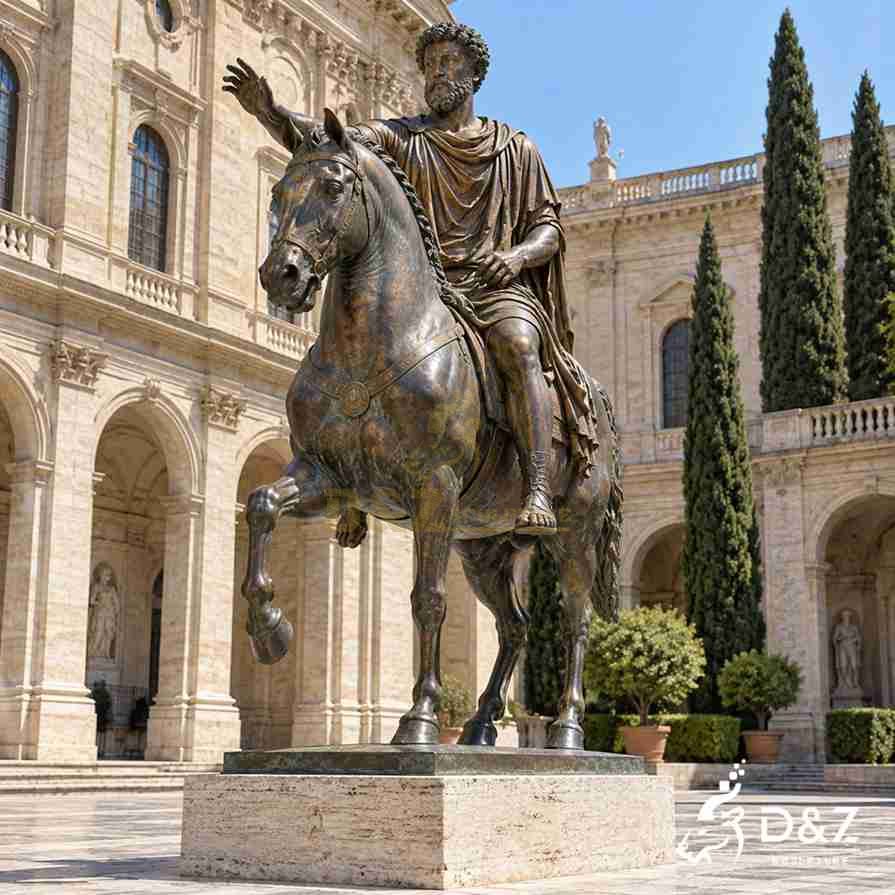
The Marcus Aurelius Equestrian Statue is draped in a classical robe and cape, with curly hair and a beard that accentuate his features. He extends his right arm forward, palm naturally open, gesturing to the crowd. The horse raises one foreleg, maintaining a stable posture. The figure's graceful gestures and the horse's composed gait complement each other, giving the work a dignified and authoritative feel. Click to customize the Marcus Aurelius Equestrian Statue

2. Equestrian Statue of Gattamelata
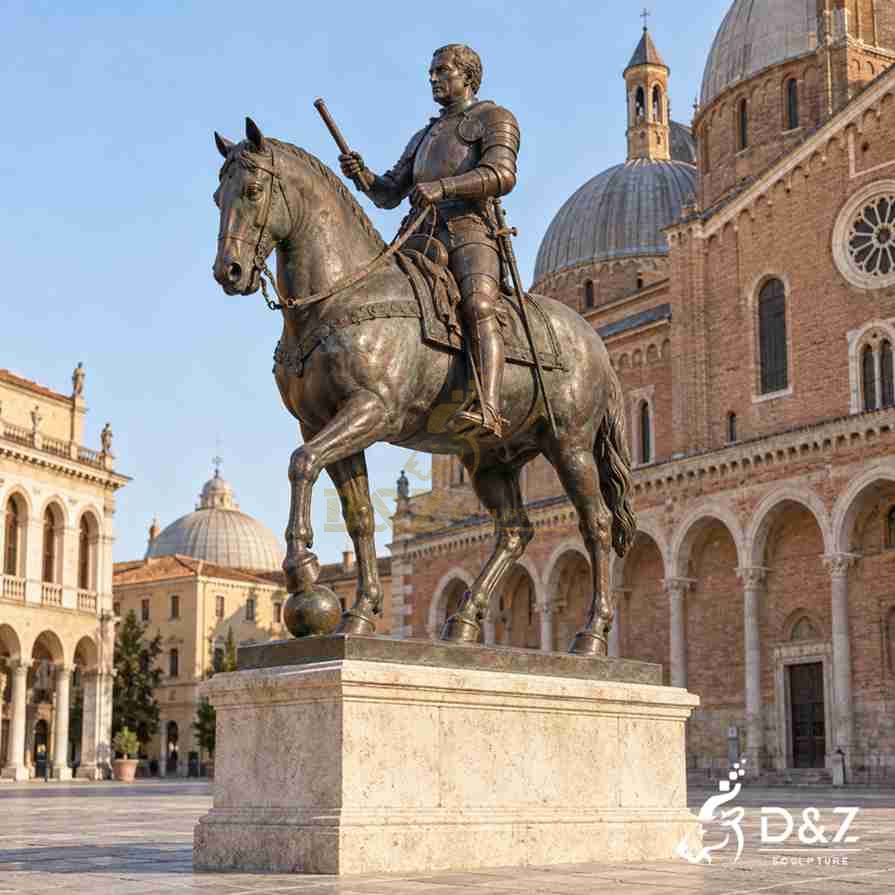
The Equestrian Statue of Gattamelata wears armor, but no helmet, revealing a clearly visible facial expression. He holds a baton in one hand and the reins in the other, sitting upright. The horse's neck and chest are thick and powerful, and the spherical structure beneath its hooves is a striking styling detail. The figure's stable posture and the horse's leisurely gait together emphasize the calm and confident image of a commander. Click to customize the Equestrian Statue of Gattamelata

3. Equestrian Statue of Bartolomeo Colleoni
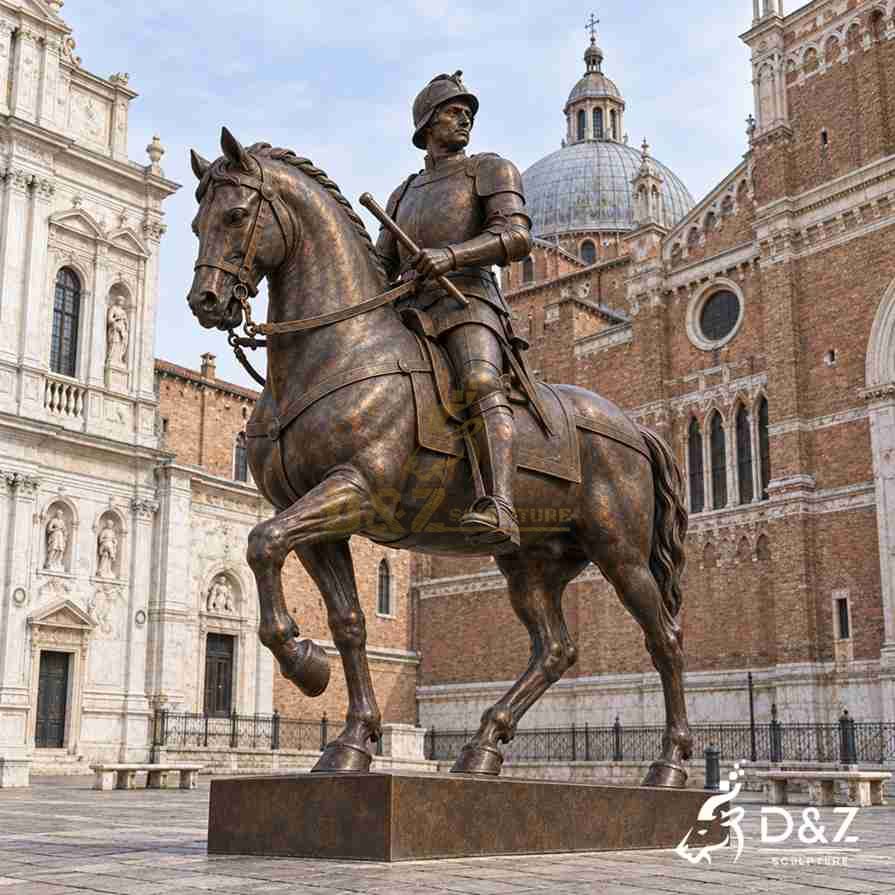
The Equestrian Statue of Bartolomeo Colleoni wears a helmet and layered armor, his head slightly turned to the side. He holds a short baton at an angle in front of him, his expression serious. The horse raises one foreleg, puffs out its chest, and assumes a powerful stride. The figure's head-turning motion adds to the sense of alertness, and the horse's clearly defined muscles enhance its power. Click to customize the Equestrian Statue of Bartolomeo Colleoni

4. Equestrian Statue of Henri IV
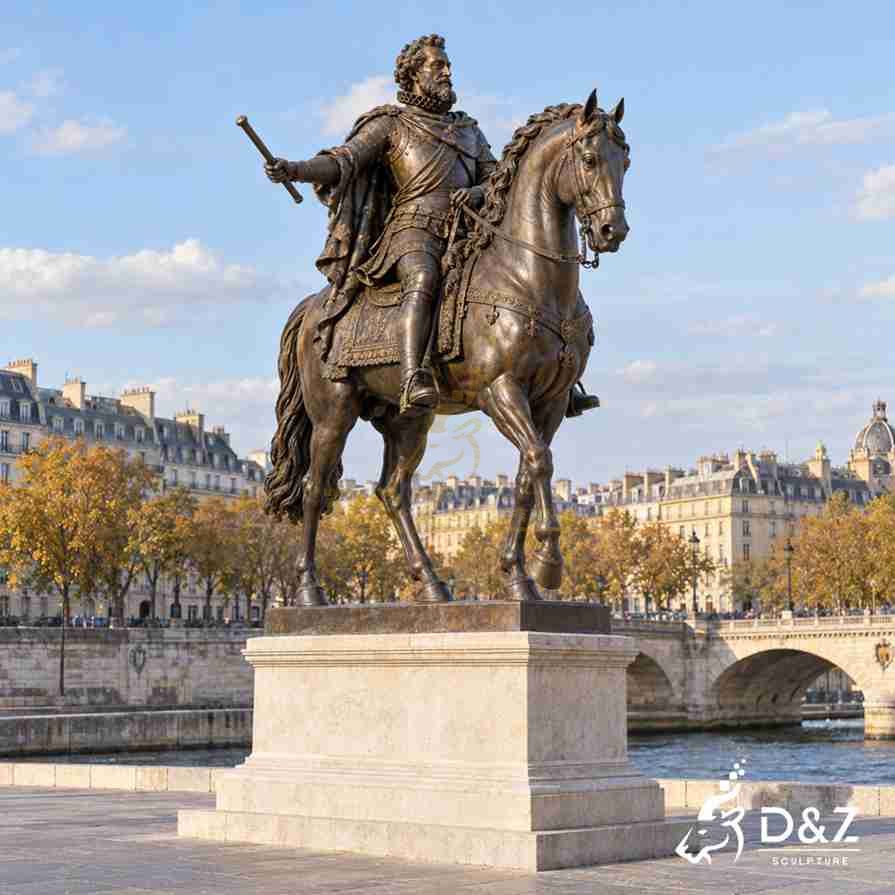
The Equestrian Statue of Henri IV has curly hair and a beard, and the pleated collar around his neck adds a distinctive feature to his attire. He extends a short staff to the side with one hand, while holding the reins with the other, his body remaining upright. The horse slightly raises its forelegs, displaying a composed gait. The lily patterns on the cloak and harness reinforce the royal theme. Click to customize the Equestrian Statue of Henri IV

5. Equestrian Statue of King Charles I
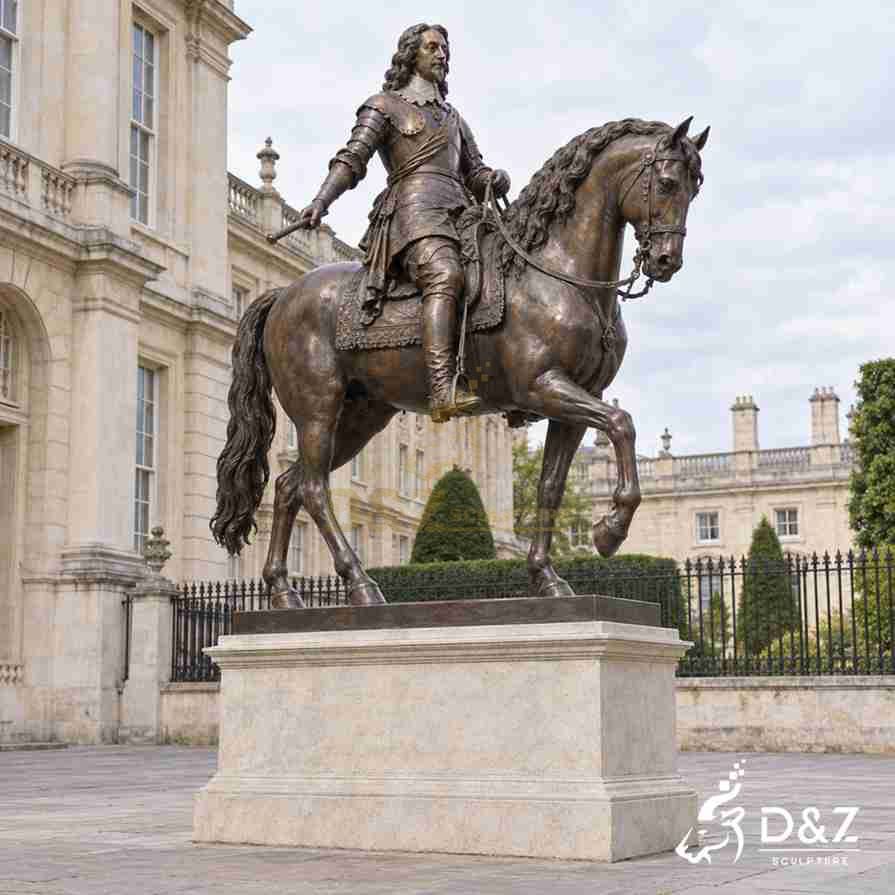
The Equestrian Statue of King Charles I features long, curly hair and a pointed beard, wearing armor with delicate lace trim on the collar. He holds the reins in one hand and holds the short staff diagonally downwards with the other, his movements restrained. The horse slightly tucks its head in, raises one foreleg, and its neck forms a smooth arc. The figure's upright posture and the horse's rhythmic gait give the work a composed and dignified air. Click to customize the Equestrian Statue of King Charles I

6. Louis XIV Equestrian Statue
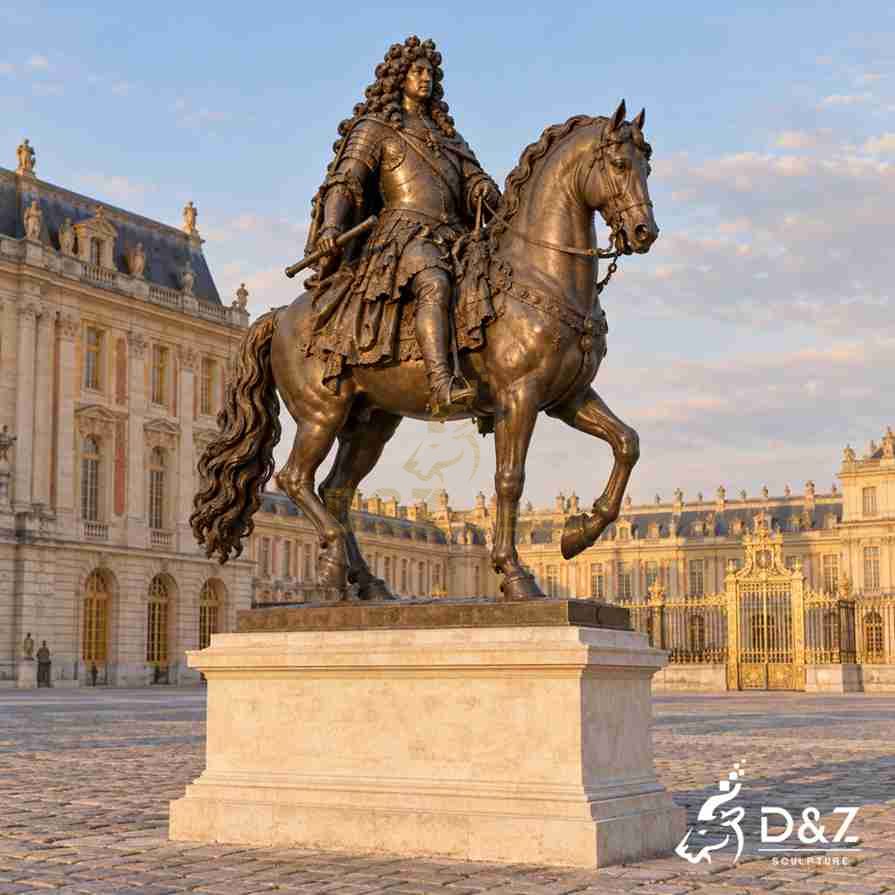
The Louis XIV Equestrian Statue features long, curly hair cascading to his shoulders, with decorative armor and a cloak creating a magnificent appearance. He holds the reins in one hand and a short staff at his side in the other, his expression solemn. The horse strides with its head held high, its long tail flowing backward, its overall silhouette elegant and full. The details on the figure's clothing and tack enhance the courtly atmosphere. Click to customize Louis XIV Equestrian statue

7. Peter the Great Equestrian Statue
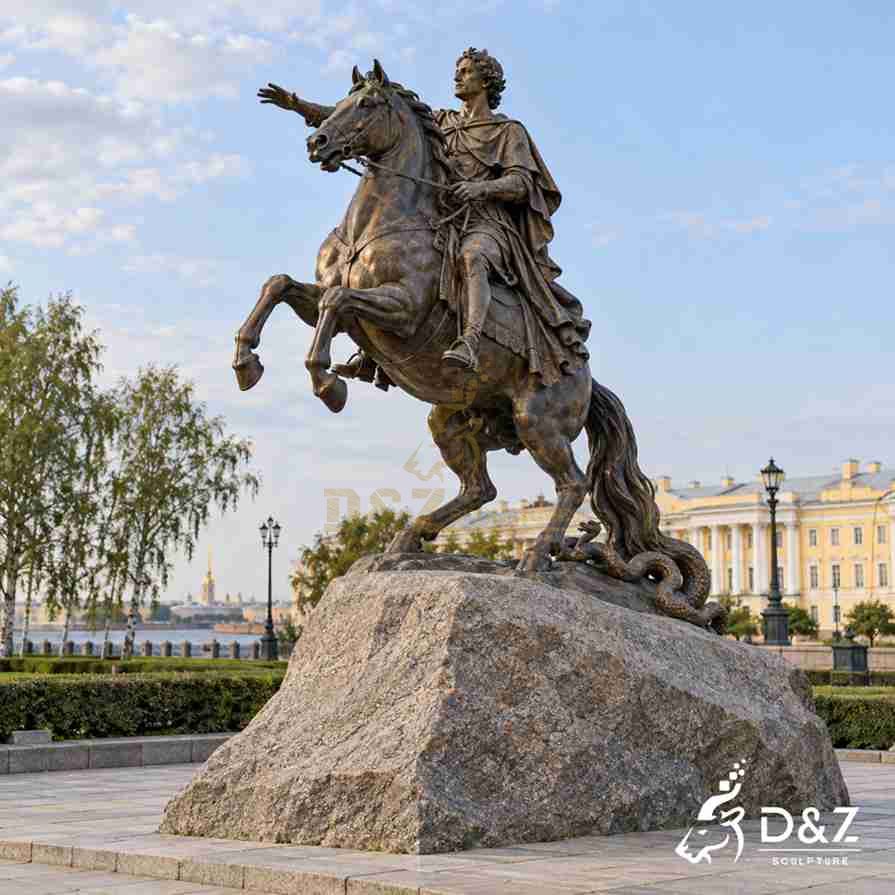
Peter the Great Equestrian statue features a figure draped in a wide cloak, his right arm outstretched, his gaze fixed on the distance. The horse's forelegs are off the ground, its body arched upward, creating a strong upward momentum. The serpentine details near the horse's tail add variation to the composition. The figure's stable posture echoes the horse's vigorous movement, giving the work a sense of determination, courage, and forward-moving spirit. Click to customize Peter the Great Equestrian statue

8. King Edward VII Equestrian statue
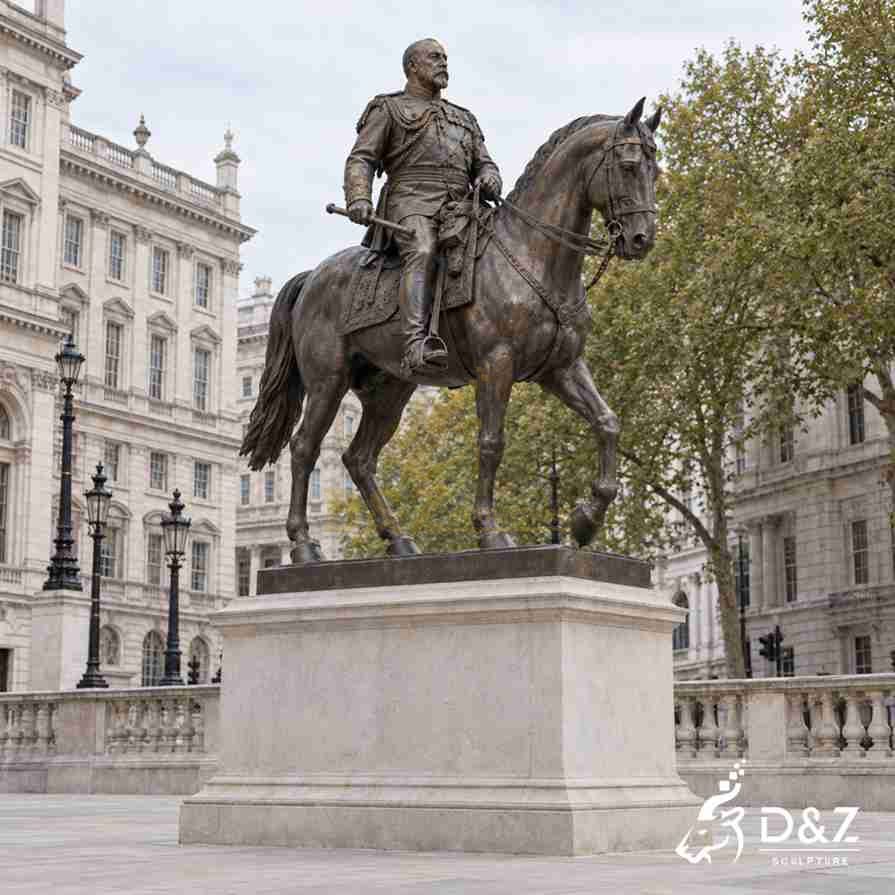
The King Edward VII Equestrian statue depicts a figure in military uniform, with epaulettes, medals, and a braided tunic forming the main details of his attire. He holds the reins in one hand and a staff at his side in the other, sitting upright. The horse moves slowly forward, the head slightly tucked in, the overall movement steady. The figure's solemn expression and the neat uniform together emphasize a sense of dignity. Click to customize King Edward VII Equestrian statue

9. Equestrian statue of Alexander the Great
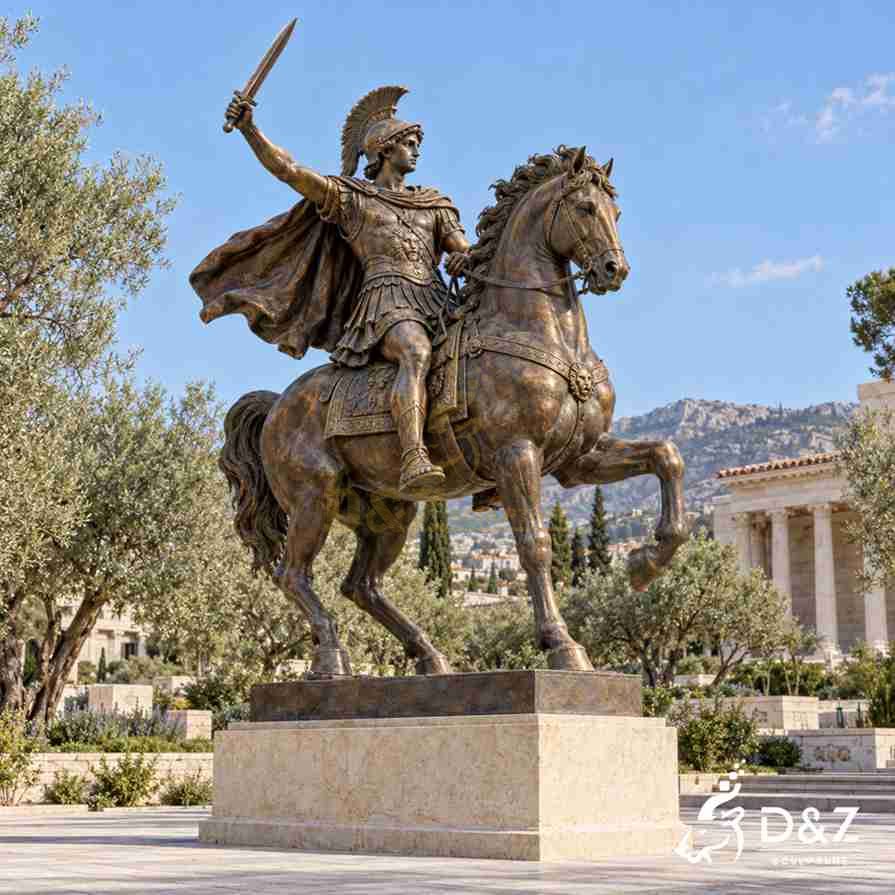
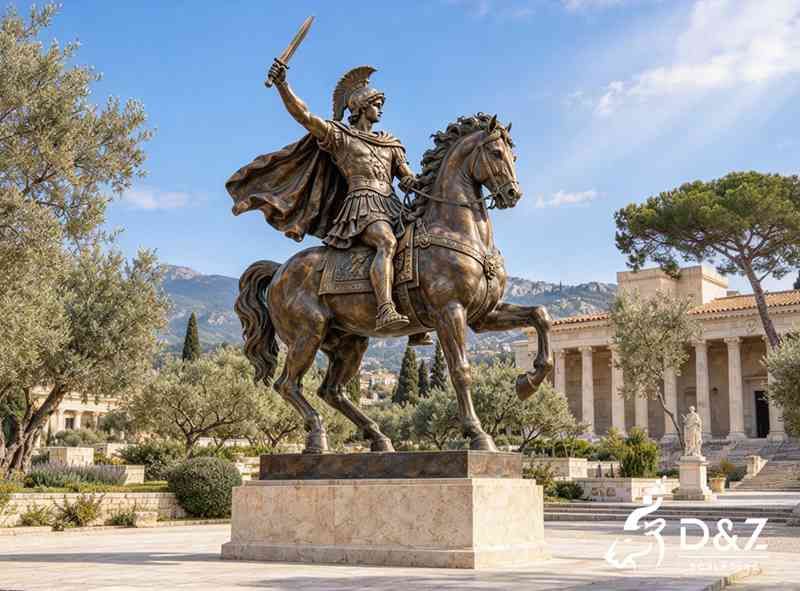
The Equestrian statue of Alexander the Great features a helmet with towering ornaments and classical-style armor. He raises his longsword, controlling the reins with the other hand, his cloak billowing behind him. The horse's head is raised, its hooves hoofed, the muscles of its chest and neck prominently displayed. The raised sword and the billowing cloak expand the silhouette of the work and enhance its sense of movement. Click to customize the equestrian statue of Alexander the Great

10. Joan of Arc Equestrian Statue
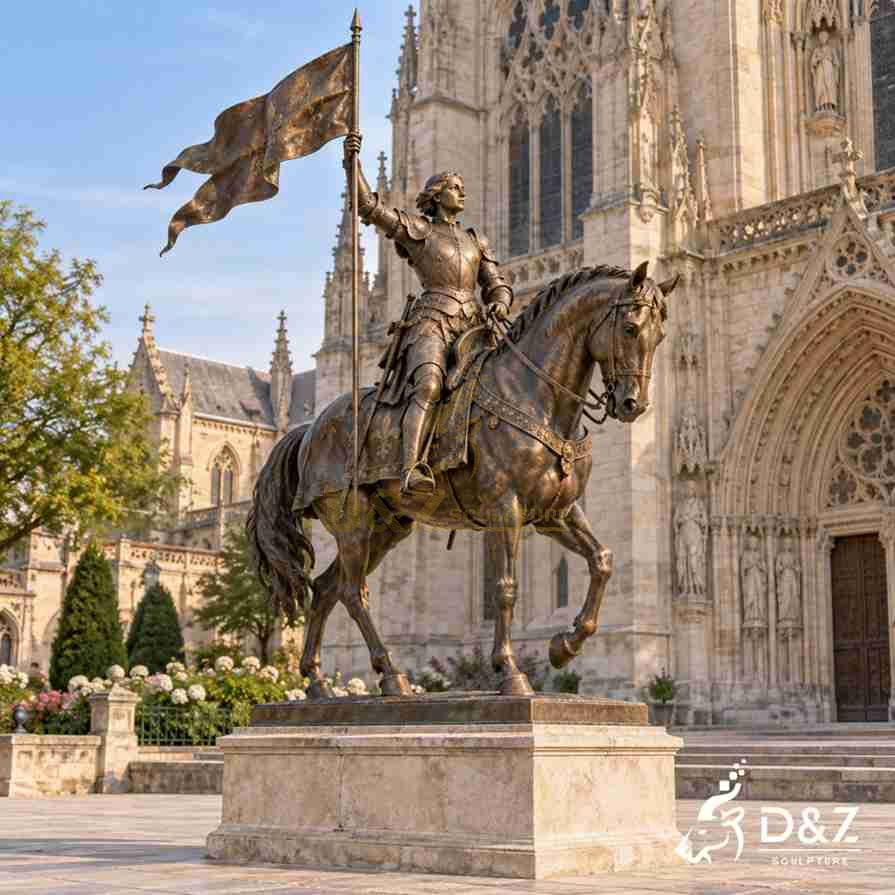
The Joan of Arc Equestrian statue depicts a woman clad in armor, her short hair revealing her facial features, and her expression resolute. She holds a flag in one hand aloft and grasps the reins in the other, her body upright. The horse's steady gait further emphasizes the figure's gesture of raising the flag. The flagpole draws the viewer's eye upward, and the unfurled flag enriches the work's silhouette. Click to customize the Joan of Arc Equestrian statue

11. Napoleon Equestrian Statue
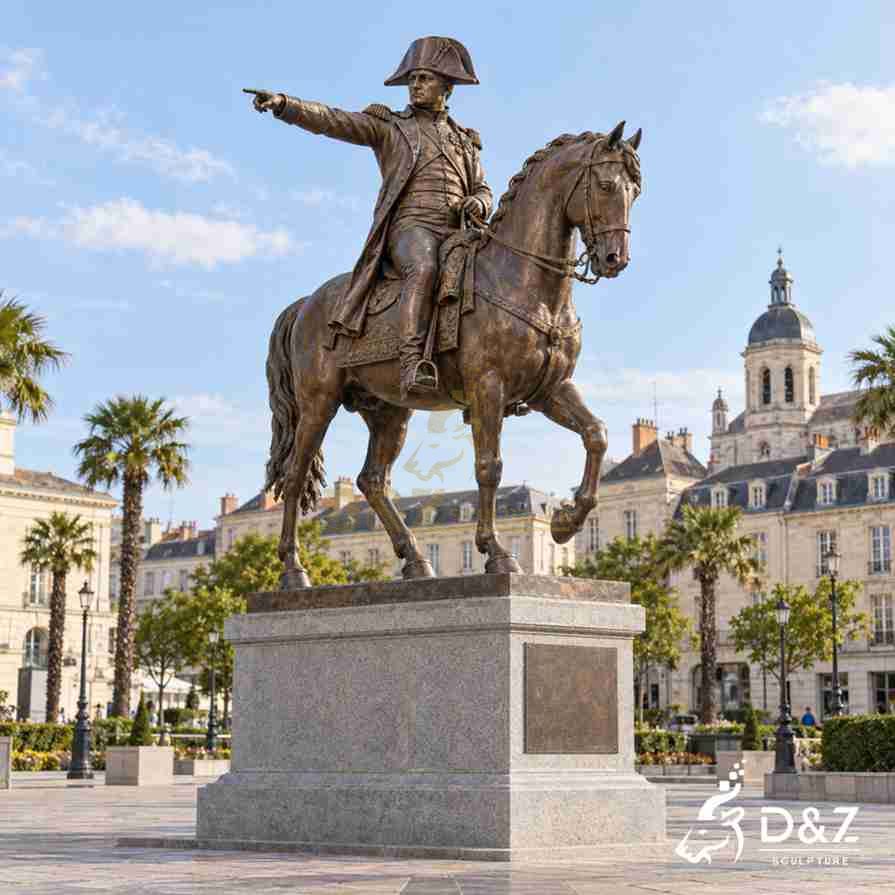
The Napoleon Equestrian statue depicts a figure wearing a bicorn hat and a military uniform with epaulettes and medals. He extends his right arm, pointing into the distance, his gaze following the direction of his gesture. The horse raises one foreleg, maintaining a steady forward stance. The clear pointing gesture gives the image a strong sense of direction and emphasizes the figure's commanding posture. Click to customize the Napoleon Equestrian statue

12. Equestrian Statue of the Duke of Wellington
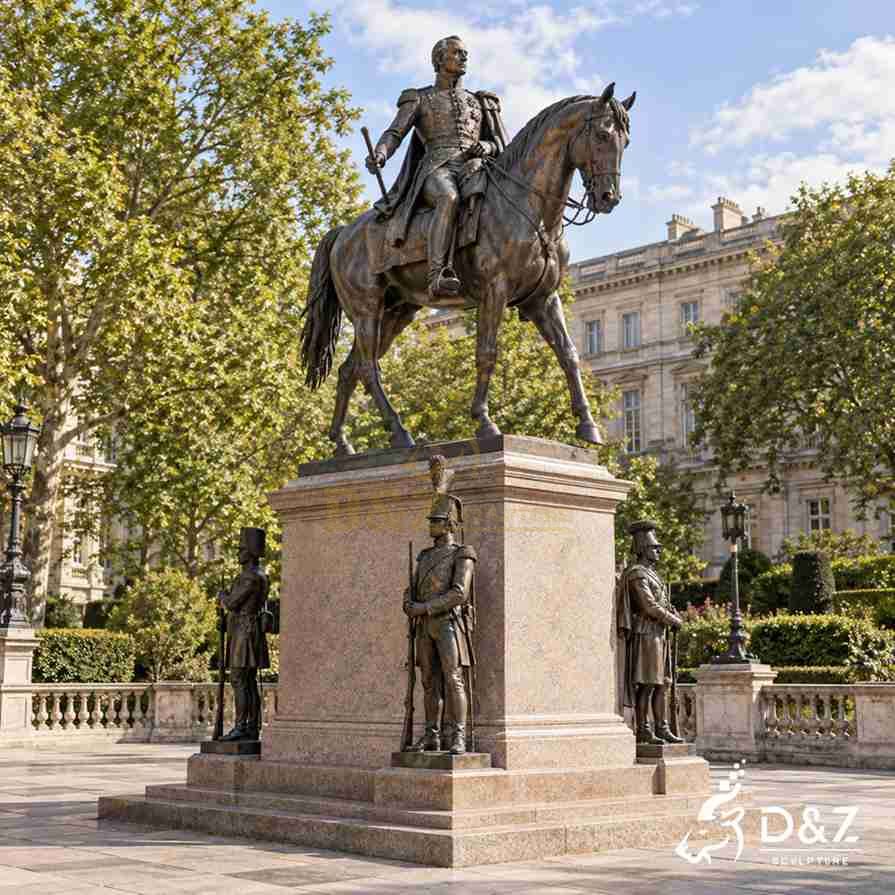
The Equestrian statue of the Duke of Wellington depicts a figure in military uniform and a cloak, holding a cane in one hand and the reins in the other, with a serene expression. The horse moves with a steady gait, complementing the figure's upright posture. The tall pedestal places the equestrian figure at the visual center, while the surrounding soldier statues enrich the commemorative content. Click to customize the Equestrian statue of the Duke of Wellington

13. George Washington Equestrian Statue
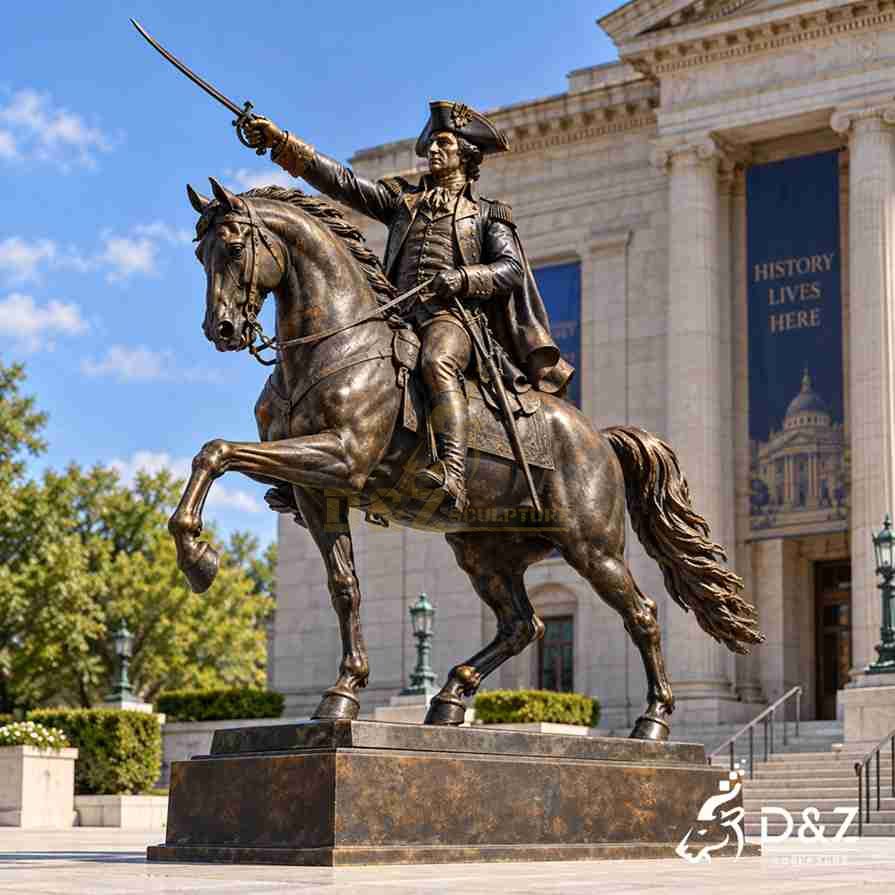
The George Washington Equestrian statue depicts a figure wearing a tricorn hat, a long military uniform, and high boots. He holds his sword aloft in one hand and grips the reins in the other, his expression resolute. The horse raises one foreleg, its mane and long tail displaying flowing lines. The sword, angled upwards, extends the figure's pose and enhances the sense of direction in the image. Click to customize the George Washington Equestrian statue

George Washington Equestrian Statue | Large Bronze Monument DZJ-863
14. Andrew Jackson Equestrian Statue
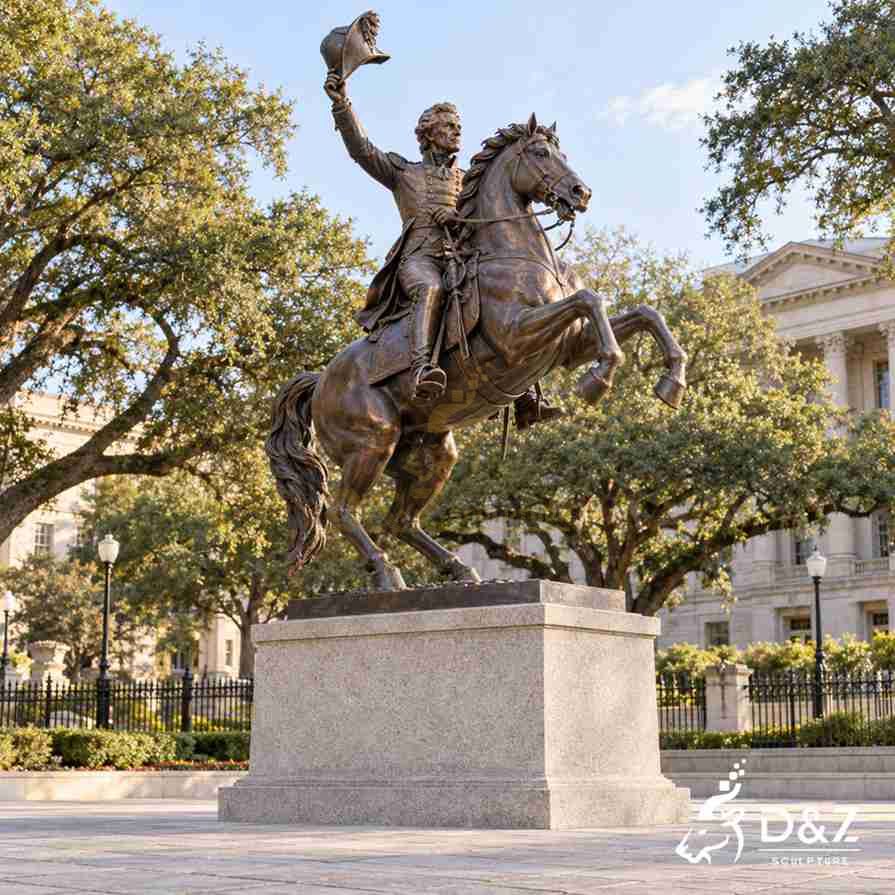
The Andrew Jackson Equestrian statue depicts him in military uniform, one hand holding his cap aloft, the other controlling the reins. The horse's forelegs are bent and raised, its body arched upwards, creating a striking leaping posture. The figure's gesture of raising his cap lends the work a sense of homage and response to the crowd, imbuing the statue with vitality. Click to customize an Andrew Jackson equestrian statue

15. Sam Houston statue on horseback
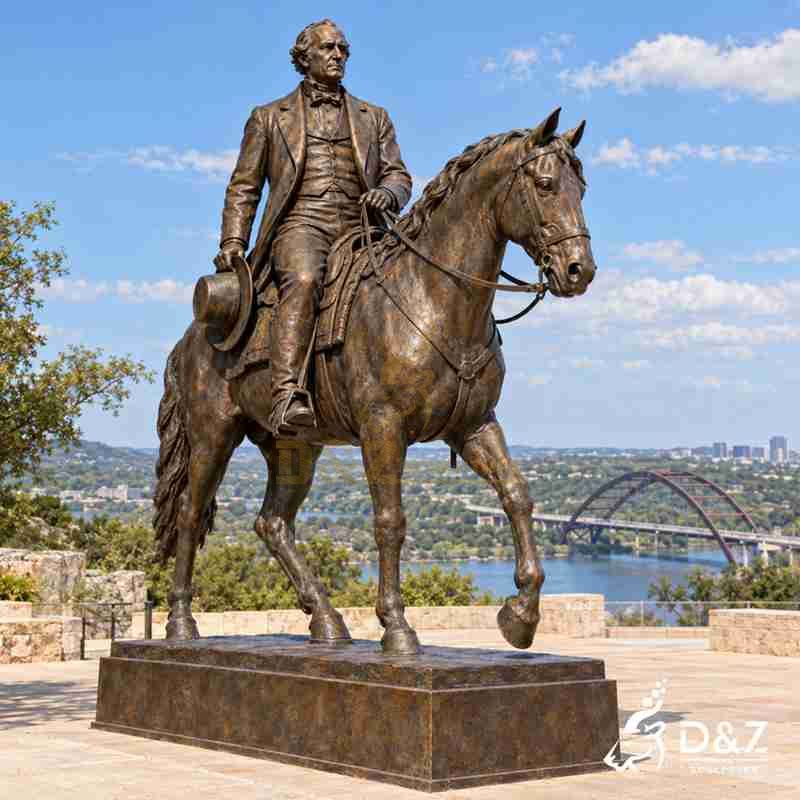
Sam Houston, dressed in a long coat, waistcoat, and high boots, wears a bow tie that adds detail to his attire. He holds the reins in one hand and rests his top hat at his side in the other, his expression calm and serious. The horse slightly raises its forelegs, moving forward at a slow pace. The drooping top hat and upright posture give the figure a dignified and composed air. Click to customize a Sam Houston statue on horseback
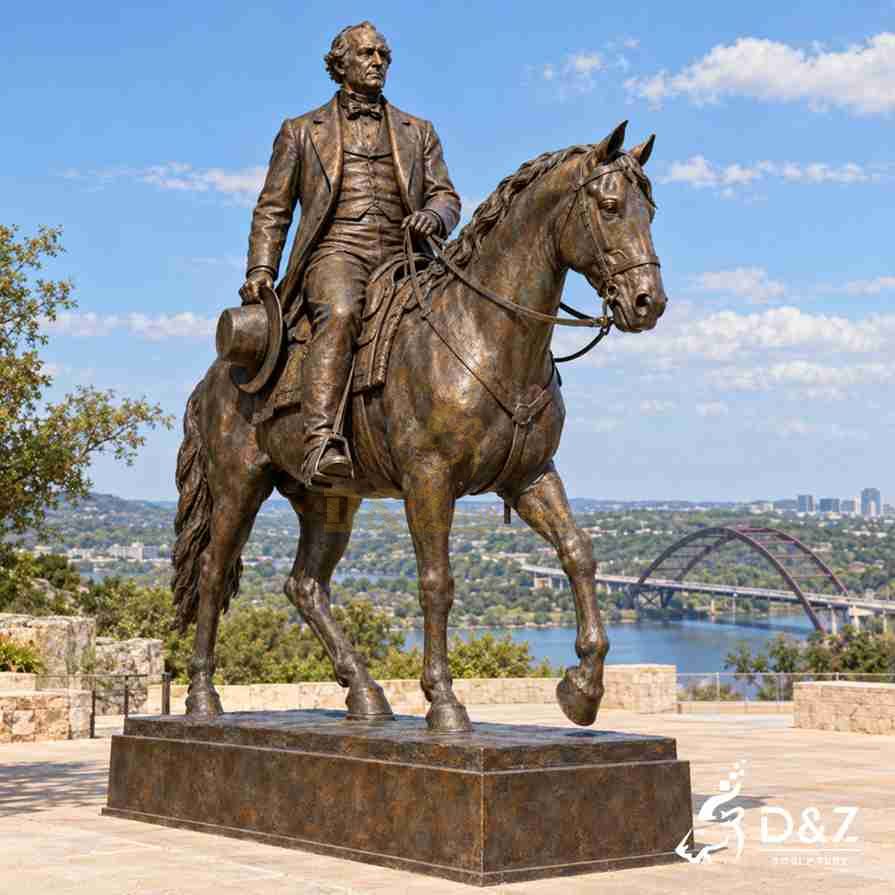
Sam Houston Statue on Horse | Large Bronze Equestrian Statue DZJ-860
Bronze Materials, Casting, and Patina
Bronze is the preferred material for equestrian sculptures due to its high malleability, allowing for precise reproduction of intricate details such as armor patterns, muscle lines, and horse mane. Its robust structure supports the horse's leaping motion and dynamic poses across a wide span, making it suitable for long-term outdoor display.
Bronze equestrian statues are mostly cast using the lost-wax method. First, a life-size clay model is created, finalizing the rider and horse's posture and details. After creating a wax model and casting, the statues are assembled and welded, and finally, a unified surface treatment is applied to complete the sculpture.
Common aging effects include original bronze color, dark brown patina, and verdigris. When coloring, highlights can be applied to specific areas to emphasize the rider's armor, muscle contours, and the relief layers of the horse's harness. The contrast of light and shadow enhances the three-dimensionality of the figures and horses.
Where Can Bronze Equestrian Statues Be Installed?
City squares and memorial parks: Used to commemorate heroes and historical figures, becoming city landmarks, carrying historical respect, and providing a place for citizens and tourists to appreciate and remember.
Museums and cultural parks: Showcasing the artistic lineage of ancient Rome and Renaissance sculpture, serving as landscape exhibits to enhance the cultural atmosphere.
High-end resorts and hotel courtyards: Showcasing style and grandeur, the equestrian hero sculptures exude a majestic and dignified quality, enhancing the luxurious feel and artistic taste of the venue.
Corporate headquarters and industrial parks: Symbolizing pioneering spirit, leadership, and courage, these sculptures align with the company's vision, conveying strength, foresight, and ambition.
University campus landscapes: Paying homage to predecessors, conveying the spirit of struggle, and inspiring students, these sculptures become culturally rich and artistic nodes within the campus.
Private estates and villa courtyards: Classic and grand, reflecting the owner's aesthetic taste and complementing spacious courtyard layouts.
Custom Bronze Equestrian Statues
Theme and pose customization: Character images, horse poses, rider gestures, and clothing/armor can be customized to meet specific needs, such as charging forward, sitting steadily, or gazing intently.
Size and proportion customization: Full-size customization is supported. The proportions of the statue and base can be adjusted according to the placement space to ensure visual harmony and structural stability.
Details and Color Selection: Armor patterns, horse harness designs, and facial features can all be adjusted as needed; multiple patina finishes are also available: antique bronze, dark brown, and verdigris, which can be used to highlight specific areas and enhance the three-dimensional effect.
FAQs About Bronze Equestrian Statues
Q: What is a bronze equestrian statue?
A: A bronze equestrian statue features a rider and horse as the main elements, primarily cast in bronze. The figure's clothing, riding posture, horse's movements, and the base all contribute to the overall design.
Q: How is structural safety ensured?
A: An internal steel support frame is installed, with mechanical calculations determining the horse's load-bearing points to meet outdoor wind and load-bearing requirements.
Q: Is a bronze sculpture suitable for installation in high-salt-fog environments near the sea?
A: Yes, but the internal frame undergoes heavy anti-corrosion treatment, and the exterior uses a salt-fog-resistant protective coating. It is also recommended to shorten the regular maintenance cycle.
Q: Are all bronze equestrian statues solid?
A: No. Large bronze statues are often hollow-cast to control weight and material usage.
Q: Is it suitable for long-term outdoor placement?
A: Yes, but the statue, connectors, internal structure, and foundation all need to be considered in light of the local environment.
Q: How to clean and maintain an outdoor bronze equestrian statue?
A: Routine maintenance mainly includes removing dust, bird droppings, and other deposits, and checking the protective layer, connectors, and drainage.
Q: What factors determine the price?
A: These include size, complexity of the design, material usage, casting and surface treatment requirements, as well as the scope of the base, packaging, shipping, and installation.
Q: What after-sales guarantees are provided?
A: D&Z Sculpture offers a lifetime warranty, lifetime maintenance, and long-term after-sales support. Services include maintenance consultation, surface care, and repair assistance.
Contact Us
WhatsApp: 0086 13613220352
Email: info@dzsculpture.com
If you wish to create a bronze equestrian statue that embodies power, glory, and commemorative significance, please feel free to contact D&Z Sculpture regarding any aspects, including theme conception, size planning, color and craftsmanship, and site suitability. We will provide professional suggestions, renderings, and detailed quotes based on the spirit and meaning you wish to convey in your project.