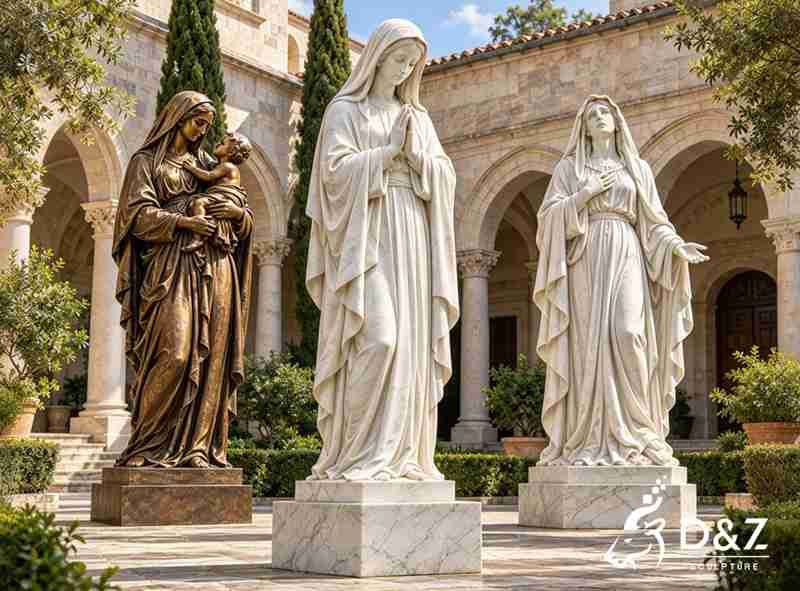
The meaning of Virgin Mary statues is closely related to their figure design and religious background; different poses, expressions, and decorations can express different themes of faith. For example, the Virgin Mary's clasped hands usually represent prayer and trust in God. Her image holding the infant Jesus emphasizes maternal love, care, and protection. In sculptures of the Pietà, Mary holds the deceased Jesus, expressing the pain of a mother losing her child and also evoking the suffering and sacrifice of Christ. Therefore, understanding the meaning of Virgin Mary statues requires not only examining the figure's pose but also understanding the religious story and artistic tradition behind the statue.
This article will introduce ten representative marble and bronze statues of the Virgin Mary, focusing on analyzing their stylistic features, religious significance, and key differences.
Table of Contents
What Does a Virgin Mary Statue Represent?
Virgin Mary Statue Meanings at a Glance
10 Virgin Mary Statue Forms and Their Meanings
3. Our Lady of Grace Virgin Mary Statue
4. Pregnant Virgin Mary Statue
5. Virgin Mary Statue with Baby Jesus
8. Guadalupe Virgin Mary Statue
How to Identify a Virgin Mary Statue from Its Details
Does Marble or Bronze Change the Meaning?
Choosing a Statue for Prayer, Motherhood, or Remembrance
In the Catholic faith, the Virgin Mary is not only the mother of Jesus Christ, but also represents humility, trust, and faithfulness to God. Believers revere the Virgin Mary and believe she can intercede for people in God's eyes. Statues of the Virgin Mary, through their concrete human figures, make these religious concepts easier to understand.
The posture of a statue of the Virgin Mary often reflects the religious theme the work intends to express. The image of the Virgin Mary with her hands clasped in prayer emphasizes prayer and trust. The Virgin Mary holding the infant Jesus expresses maternal love and evokes the story of Jesus' coming to earth. The Weeping Virgin Mary expresses compassion and sorrow through her grief. The Pietà statue depicts Mary holding the deceased Jesus, allowing viewers to feel the mother's sorrow and reflect on Christ's sacrifice and redemption. Different religious sites can choose appropriate statues based on these themes.
When understanding statues of the Virgin Mary, three important details need to be considered: the Virgin Mary's actions and posture, the religious symbols within the statue, and the religious tradition behind the work. For example, clasped hands are usually associated with prayer, the infant Jesus in her arms helps people identify the Virgin and Child, and specific clothing and decorations may represent different titles of the Virgin Mary. The marble, bronze, and different surface colors primarily influence the artistic style and viewing experience of the work; the true religious significance of the Large Virgin Mary statue still needs to be understood in conjunction with the figure's image and specific historical context.
From clasped hands in prayer to holding the Christ Child, the following ten large statues of the Virgin Mary present their respective themes and symbolic meanings through different poses, relationships, and religious symbols.
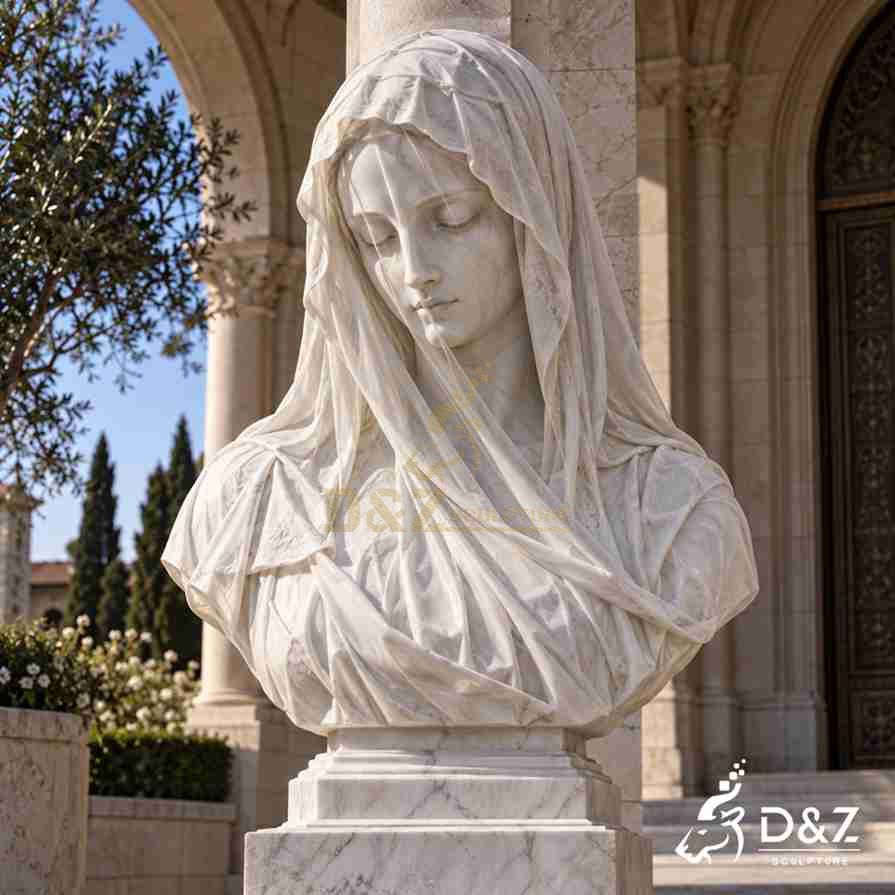
1. Veiled Virgin Mary Statue
The veiled Virgin Mary statue focuses the visual attention on the face and veil. The veil-like stone carving undulates along the forehead, bridge of the nose, and cheeks, with the outer veil extending to the shoulders. The downturned eyes, closed lips, and soft shoulder lines create a quiet and introspective viewing experience.
These works draw the viewer's attention to the expression. The veil diminishes outward movement, making the lowered gaze and subtle facial changes more prominent. Viewers can sense silence and contemplation; this is an emotional expression established through form in sculpture. Click to customize a veiled Virgin Mary statue
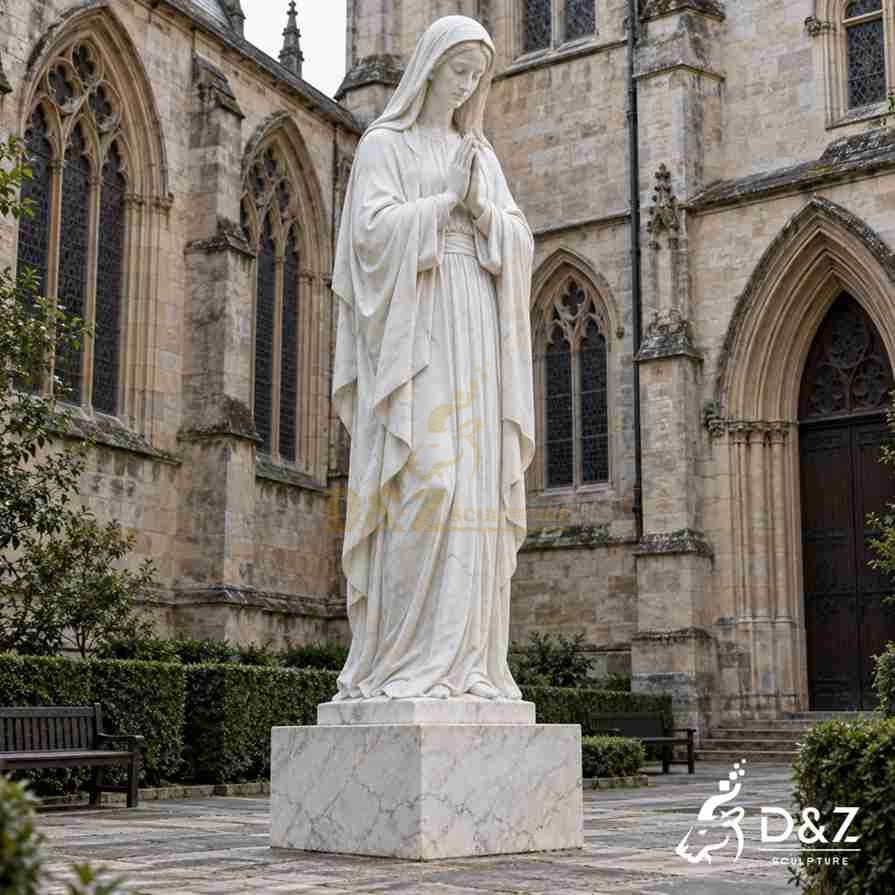
2. Virgin Mary Praying Statue
The Virgin Mary Praying Statue depicts hands clasped at the chest, head slightly lowered, and a robe draped naturally from the shoulders. The hands and face form a compact visual center, and the vertical folds of the robe further enhance the figure's stability.
The clasped-hands posture expresses focused prayer. The close-knit hands bring the body's movements to a more restrained state, drawing the viewer's gaze to the chest and face. This composition is suitable for expressing trust, silence, and responsiveness to God. Click to customize a Virgin Mary Praying Statue
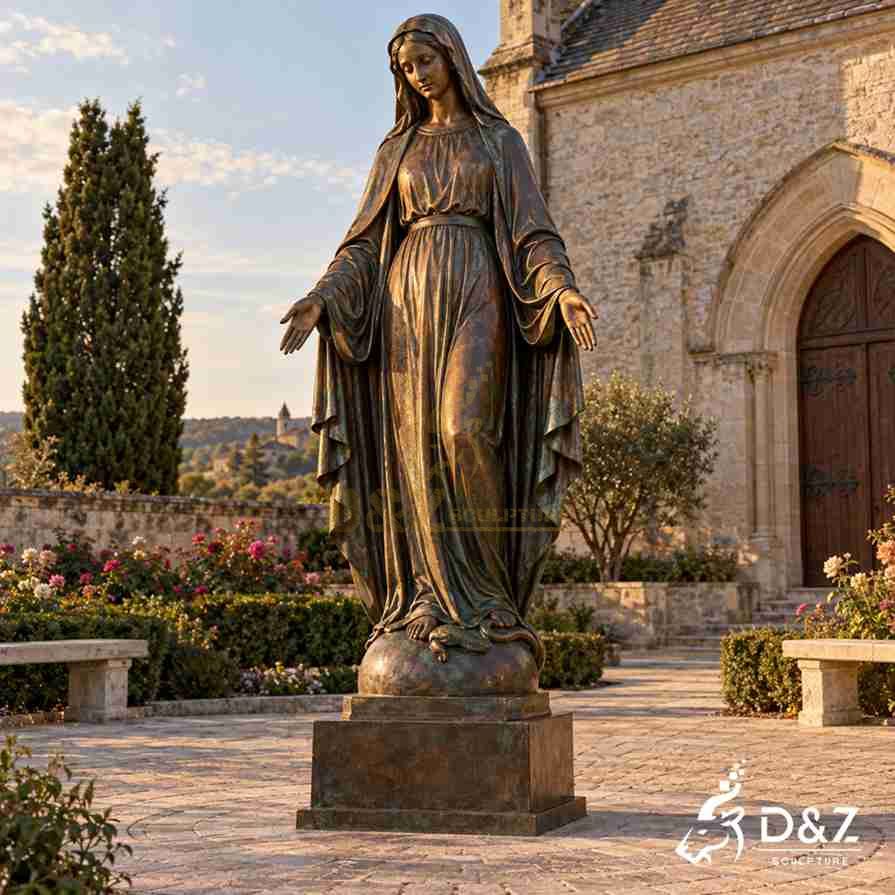
3. Our Lady of Grace Virgin Mary Statue
Our Lady of Grace Virgin Mary Statue depicts arms outstretched downwards, palms facing the viewer, a cloak draped from the sides, and the earth and snake visible beneath the feet. The outstretched arms create an open relationship between the figure and the viewer.
The theme is presented through the combination of outward-facing palms, the earth, and a snake. The earth points to the world, while the snake connects to religious imagery of overcoming evil. The outstretched arms give visible expression to grace and intercession. Click to customize Our Lady of Grace Virgin Mary statue
4. Pregnant Virgin Mary Statue
The pregnant Virgin Mary statue depicts the anticipation of Jesus' birth through a prominently swollen abdomen. With one hand placed above the abdomen and the other gently supporting it below, attention is focused on the developing life. The Virgin Mary gazes down, her drapery flowing around her abdomen.
The act of protecting the abdomen gives anticipation a clear physical expression. The figure establishes a connection through the outline of the abdomen, the position of the hands, and the downward gaze. The serene expression conveys a sense of peace and focus during the wait. Click to customize a Virgin Mary statue
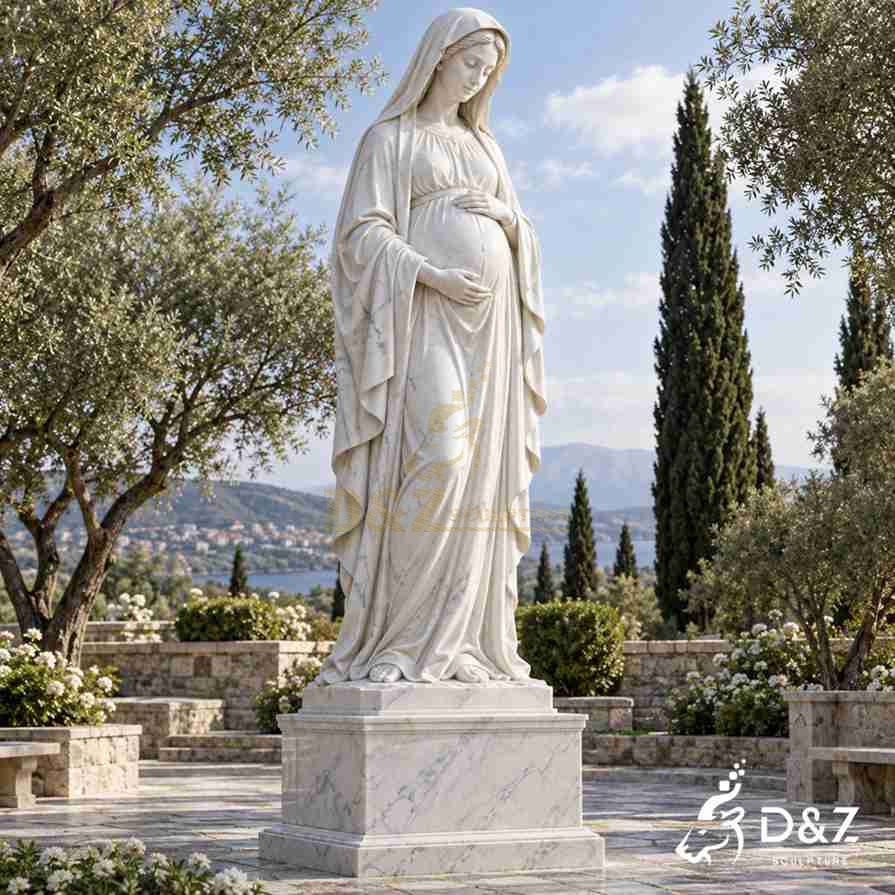
Virgin Mary Statue | Custom White Marble Sculpture DZJ-868
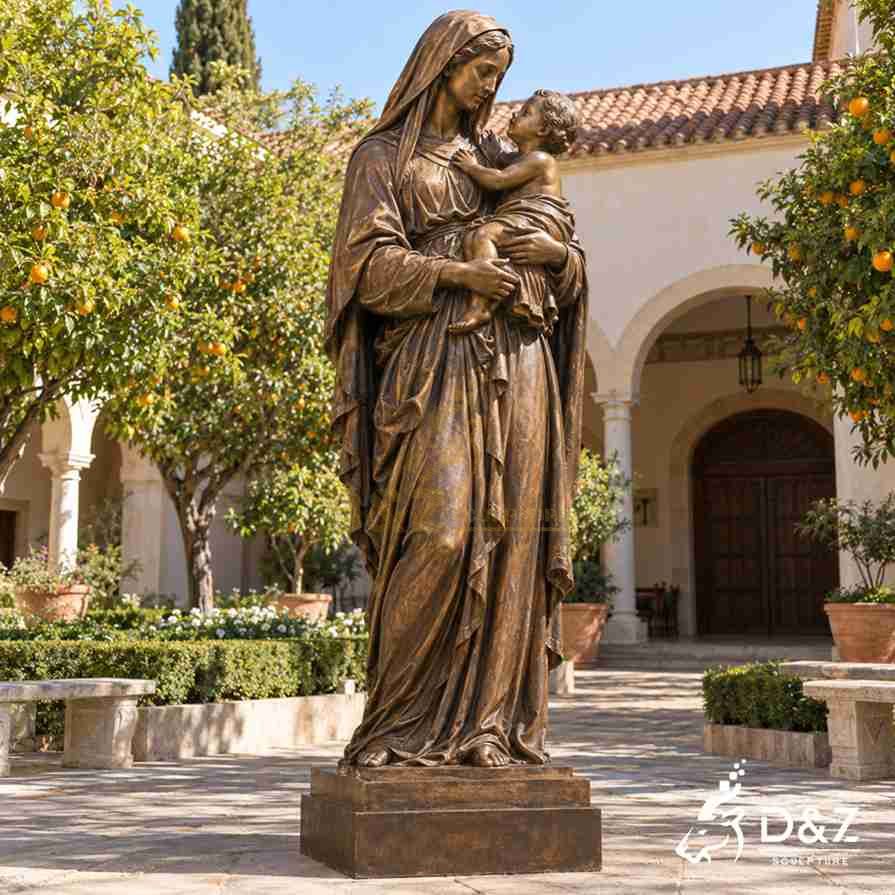
5. Virgin Mary Statue with Baby Jesus
The Virgin Mary Statue with Baby Jesus expresses the relationship between the figures through embracing and eye contact. The Virgin Mary steadily supports the infant Jesus with her arms, and the infant looks up at his mother, placing his hand near her chest. The actions of the two figures create a mutual response, shifting the focus of the viewer from individual faces to the connection between mother and child.
In Christian art, the infant Jesus Christ is represented by the Virgin Mary. Therefore, the Virgin Mary statue not only presents the intimacy between mother and child but also points to the Incarnation of Christ and Mary's identity as the Mother of Christ. Click to customize the Virgin Mary statue with Baby Jesus
6. Crying Virgin Mary Statue
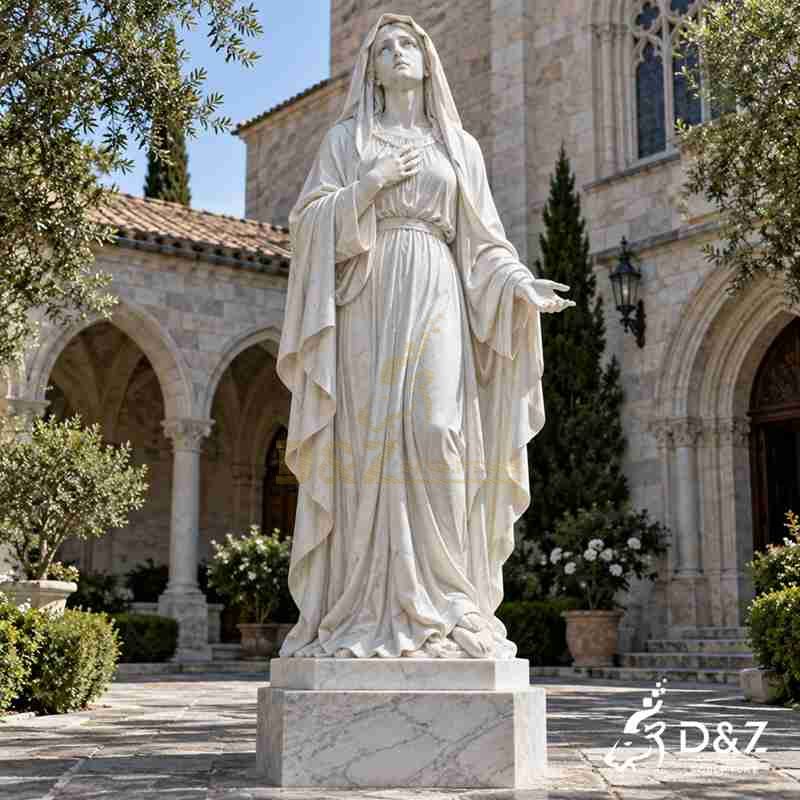
The Crying Virgin Mary statue expresses sorrow through tear stains, brows, and body movements. The Virgin Mary slightly tilts her head back, one hand close to her chest, the other outward. The sorrow on her face and the open gestures work together to maintain a connection with the viewer while expressing suffering.
The Crying Virgin Mary can evoke the image of a mother in a crucible of suffering, and can also express companionship and compassion in religious memorial spaces. Through visible sorrow, the statue transforms abstract compassion into an emotion that the viewer can understand. Click to customize the Crying Virgin Mary statue
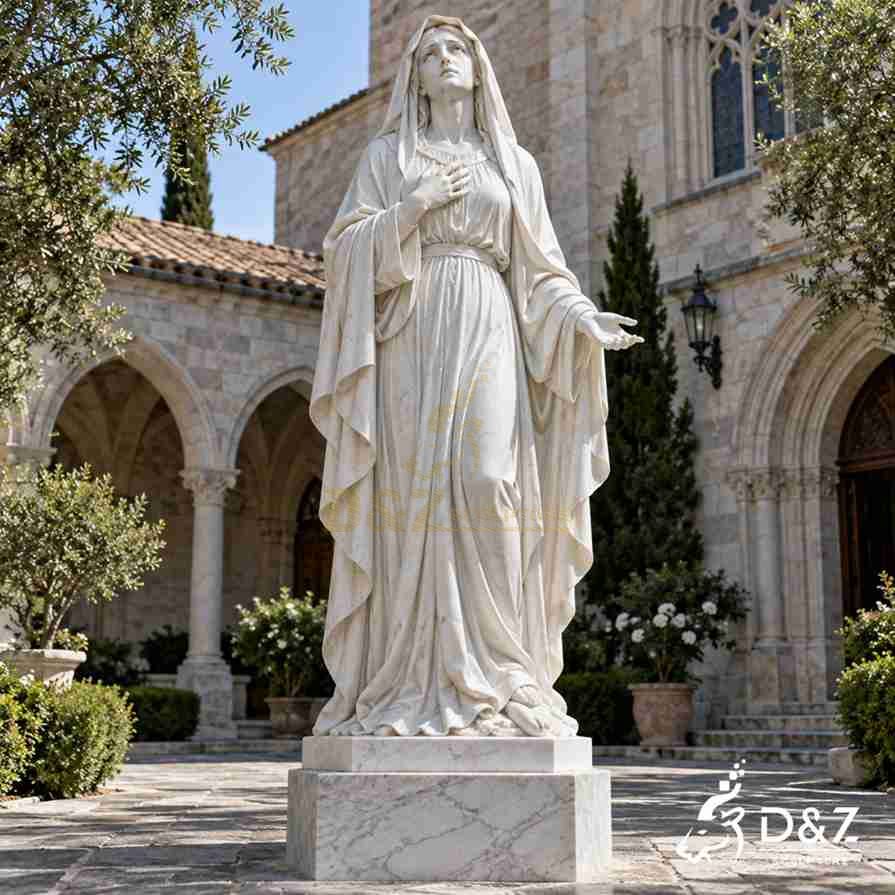
Crying Virgin Mary Statue | Large White Marble Art DZJ-869
7. Pieta Virgin Mary Statue
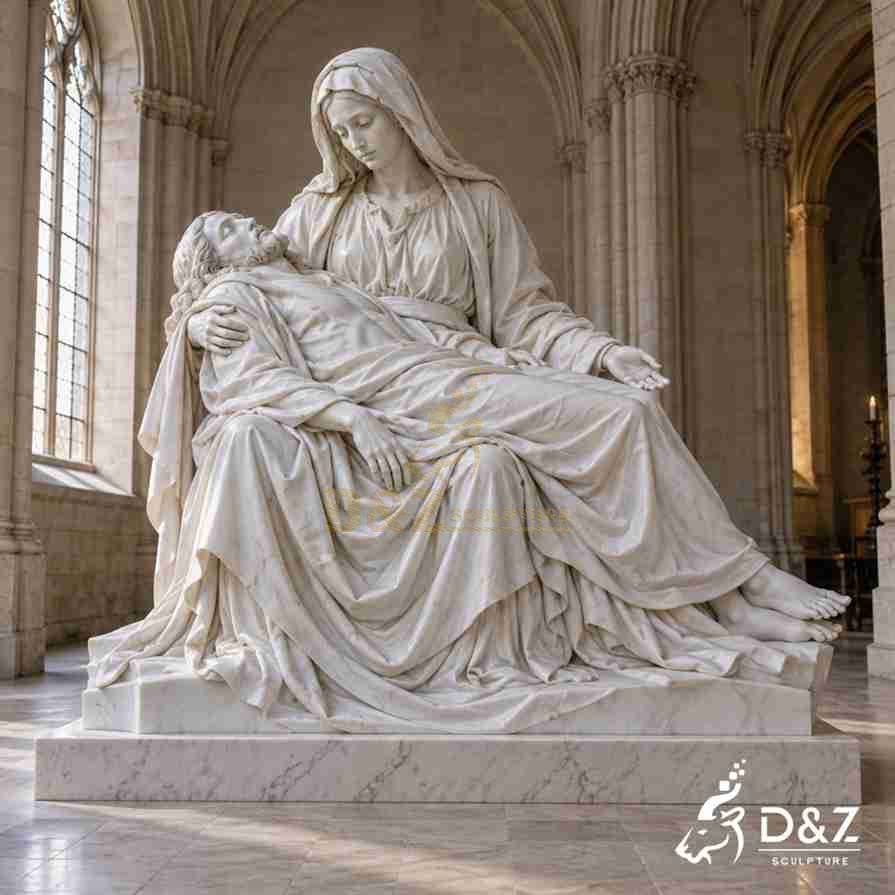
The core of the Pieta Virgin Mary statue is the Virgin Mary cradling the deceased adult Christ, whose body is covered by the Shroud of Turin. The reclining posture of Christ contrasts with the relatively upright upper body of the Virgin Mary, and the Virgin Mary's cradling action conveys grief through this physical relationship.
The Virgin Mary still embodies the nurturing actions of a mother, but the object she holds in her arms is the deceased Jesus, making the work extremely moving and prompting reflection on companionship in suffering and the expression of the mother-child relationship in the face of death. Click to customize the Pieta Virgin Mary statue
8. Guadalupe Virgin Mary statue
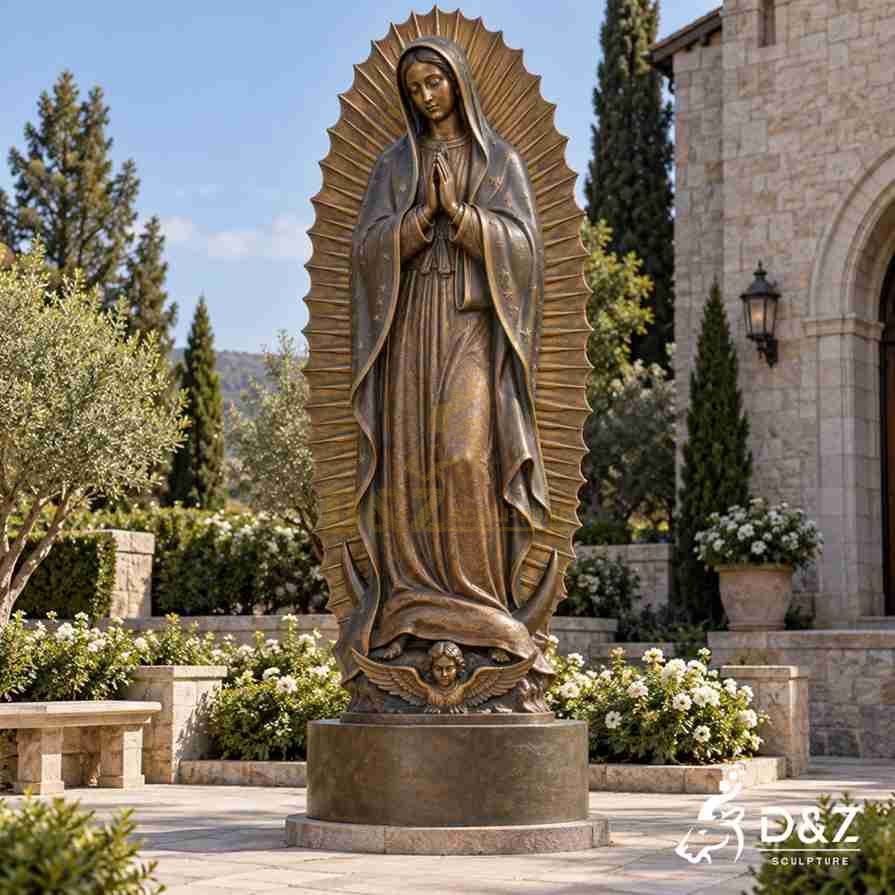
The Guadalupe Virgin Mary statue retains the clasped hands, the star-patterned cloak, the radiating rays surrounding the body, and the crescent moon element and angel below the feet. Multiple details work together to form the theme; the clasped hands alone are insufficient to express the same identity.
The clasped hands maintain the figure's prayer posture, while the star-patterned cloak and surrounding rays expand the visual field. The angel and crescent moon element below connect the figure, giving the entire composition a clear vertical structure. Click to customize the Guadalupe Virgin Mary statue
9. Lourdes Virgin Mary statue
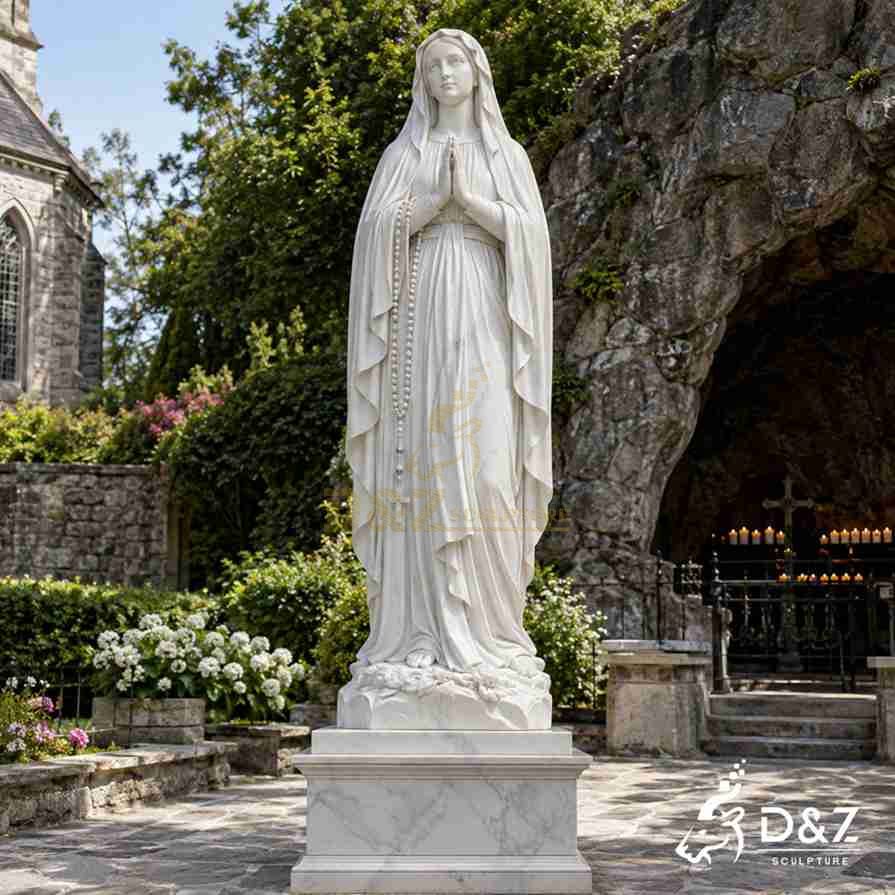
The Lourdes Virgin Mary statue's clasped hands and upward-reaching posture create a focused viewing experience, while the rosary suggests Rosary prayer. These details together make prayer the visual center of the work.
The rosary is not unique to the Lourdes figure; therefore, it needs to be considered in conjunction with the belt, foot ornaments, the work's title, and the relevant background. The cave environment can help understand the theme, but the background itself cannot replace the statue's identifying attributes. Click to customize the Lourdes Virgin Mary statue
10. Fatima Virgin Mary statue
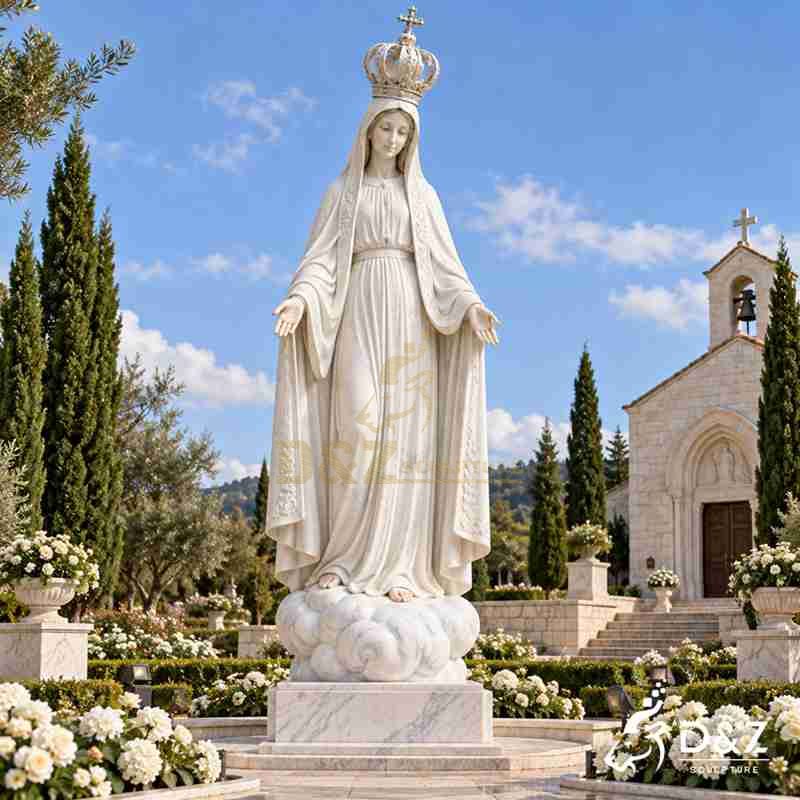
The Fatima Virgin Mary statue presents a crowned, outstretched-arms, cloud-shaped marble figure, representing a modern design expression that differs from the common image of a woman holding rosary beads with hands clasped. When used for specific Fatima veneration projects, the form should be confirmed with a selected image reference to maintain consistency in theme and attributes.
The rosary provides a visible expression of the prayer theme, while the crown connects to the tradition of the Virgin Mary. Both complement each other in a specific work, but Fatima's identity cannot be confirmed solely by the crown, as other depictions of the Virgin Mary may also wear crowns. Click to customize the Fatima Virgin Mary statue
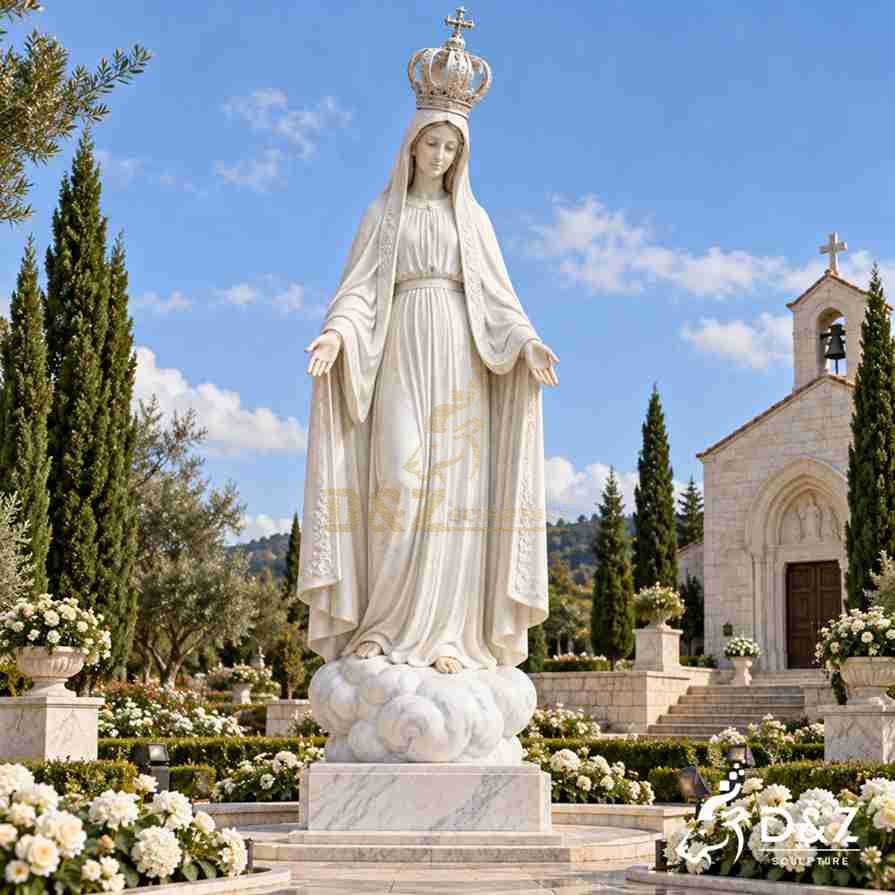
Fatima Virgin Mary Statue | Custom White Marble Art DZJ-871
Different statues of the Virgin Mary often share similar appearances, but their religious meanings may differ. We can distinguish these works through their composition, body language, religious symbols, and historical context.
Composition: A Virgin Mary statue depicts Mary cradling the infant Jesus, primarily expressing maternal love and care. A Pietà statue depicts the Virgin Mary cradling the deceased adult Jesus, symbolizing sorrow, mercy, and the Passion of Christ.
Body Language: Clasped hands represent prayer; hands placed on the abdomen may symbolize pregnancy; outstretched arms often express care and acceptance. Downcast eyes can express humility, while an upward gaze may convey hope and trust.
Religious Symbols: Our Lady of Guadalupe is typically draped in a star-patterned cloak surrounded by rays and a crescent moon. Our Lady of Lourdes often wears a white robe, a blue sash, and a rosary. Crowns, veils, and cloud-like decorations are common but cannot be used to determine the statue's type alone.
Historical Context: The design of Virgin Mary statues is usually related to specific religious stories and artistic traditions. Modern works may also simplify traditional forms or combine different religious elements; it's essential to understand the work's title, design origin, and related history.
The religious significance of a Madonna statue primarily comes from the figure and associated religious story, not the material itself. Marble and bronze can offer different visual effects without directly altering the work's theme.
White marble is suitable for depicting soft, flowing lines. Utilize the stone's fine texture to sculpt the Madonna's face, hands, and robes. After polishing, the statue's surface can create natural light and shadow variations; each piece of marble has different natural textures, resulting in a unique appearance.
Bronze is suitable for showcasing clear sculpted details and rich variations in light and shadow. Surface coloring can give bronze effects such as bronze, dark brown, or green. Darker colors can highlight folds and decorative patterns, while brighter areas attract the viewer's attention.
For places of prayer, choose a statue of the Madonna with hands clasped and a serene expression. These forms convey piety, humility, and trust in God.
For themes of motherhood and life: Both the Pregnant Madonna and the Madonna and Child can express maternal love. The Pregnant Madonna is suitable for depicting the gestation of life, hope, and waiting, while the Madonna and Child emphasizes the mother's care and companionship.
For remembrance and compassion: The Weeping Madonna expresses grief as a single figure, while the Pietà presents a more explicit context of suffering in a group portrait of mother and child.
For specific Madonna venerations: The themes of Guadalupe, Lourdes, and Fatima should retain consistent identifying characteristics.
Q: What do statues of the Virgin Mary usually represent?
A: Firstly, they represent Mary's identity as the mother of Jesus Christ, but can also express faith, prayer, motherhood, and compassion.
Q: What is the difference between the Madonna holding the Infant and the Pietà?
A: The former depicts Mary with the infant Jesus, while the latter depicts the Virgin Mary holding the deceased adult Christ. The narrative stages, physical relationships, and emotional emphases differ.
Q: What do the rosary beads in a statue of the Virgin Mary represent?
A: Rosary beads symbolize Rosary prayer and meditation on the mysteries of Jesus and Mary's life; they appear in various depictions of the Virgin Mary.
Q: How to distinguish between Our Lady of Lourdes and Our Lady of Fatima?
A: The image of Our Lady of Lourdes often incorporates a sash and a rose at her feet, while some versions of Fatima wear a crown.
Q: Do the Virgin Mary's bowed head and upward gaze have fixed meanings?
A: Bowing the head can emphasize contemplation or care, while an upward gaze can evoke a sense of supplication or expectation, but the specific emotion must be determined by considering facial features, gestures, and the relationships between the figures.
Q: What is the difference between the halo and crown on a statue of the Virgin Mary?
A: The halo indicates the figure's divine status, while the crown can be associated with the Queen's status or coronation traditions.
Q: Can a marble Virgin Mary statue be displayed long-term outdoors?
A: Yes, but for long-term use, ensure proper drainage around the base and regularly inspect the surface and joints of the statue.
Q: How should a bronze Virgin Mary statue be cleaned daily?
A: You can gently remove surface dust with clean water and a soft tool. If necessary, you can use a neutral detergent to wipe it clean.
Q: Can the large Virgin Mary Statue be shipped internationally?
A: Before providing a quote, we usually need to confirm the country, city, postal code, and road and unloading conditions at the receiving location to determine the appropriate shipping and delivery method.
Q: How are the fingers, rosary, and crown protected?
A: During packaging, avoid direct weight-bearing on them and prevent cushioning materials from squeezing the details during transportation.
WhatsApp: 0086 13613220352
Email: info@dzsculpture.com
D&Z Sculpture provides design and production services for marble and bronze Virgin Mary statues. You can share with us the themes of prayer, motherhood, or commemoration you wish to express, and provide reference images to jointly confirm the figure's posture and religious attributes.
Whether for a church, prayer garden, or religious memorial space, the design should begin with a clear theme and appropriate imagery.
Leave a message

Any landscape ideas in your mind, describe to D&Z sculpture team directly, you can imagine we can create.


Copyright © 1996-2026 D&Z Sculpture Co., Ltd. All Rights Reserved | Sitemap |