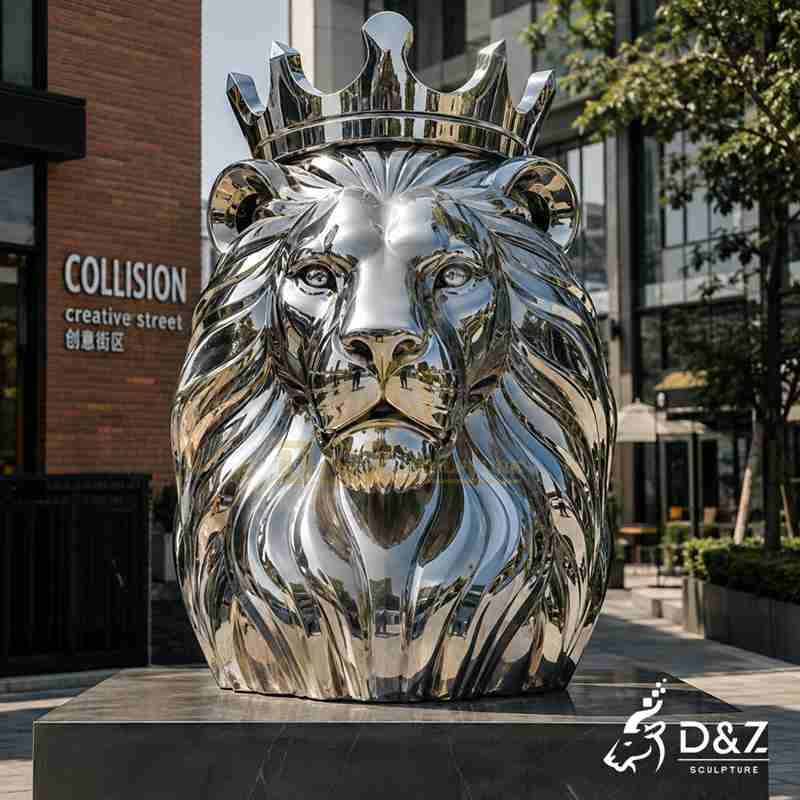
Roman Venus statues represent one of the most influential traditions in classical sculpture. They are not only symbols of beauty and elegance but also embody the artist's profound understanding of human proportions, balance, dynamism, and artistic expression.
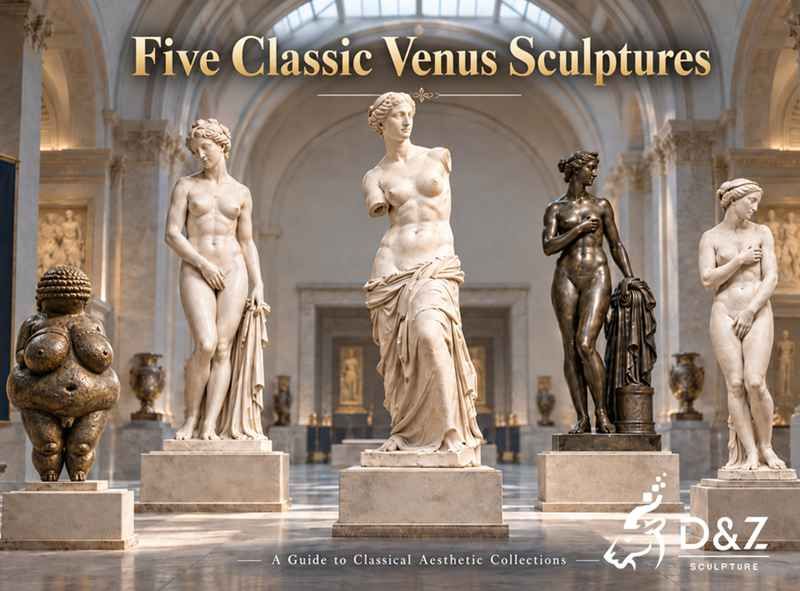
Roman Venus sculptures draw inspiration from earlier Greek masterpieces, developing a unique Roman interpretation of them. From the graceful Capitoline Venus Statue to the vibrant Callygian Venus statue, each classical sculpture presents a different interpretation of beauty and harmony through elegant poses, flowing drapery, exquisite hairstyles, and carefully designed supporting elements.
In this guide, D&Z Sculpture explores 10 classical Roman Venus statues, examining their unique design features, the materials used, and how these ancient artistic concepts continue to shape modern sculpture projects.
Table of Contents
What Makes Roman Venus Statues Unique?
Why Did These Statues Influence Modern Art?
10 Classic Roman Venus Statues
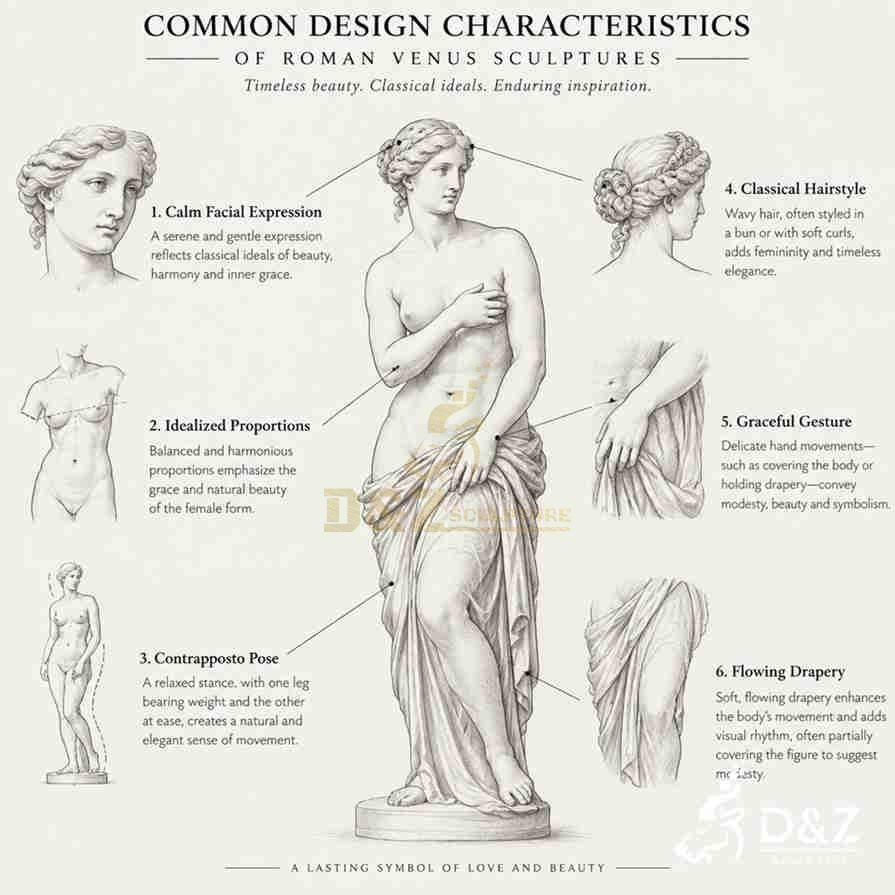
Common Design Characteristics of Roman Venus Sculptures
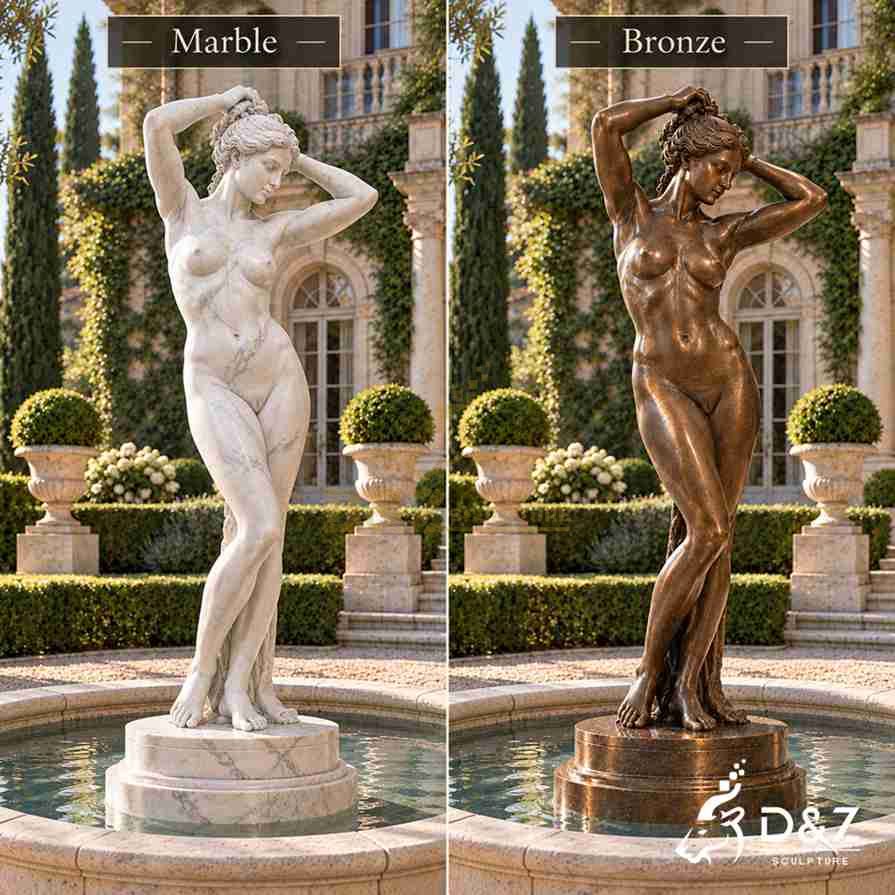
Marble and Bronze Materials for Roman Venus Statues
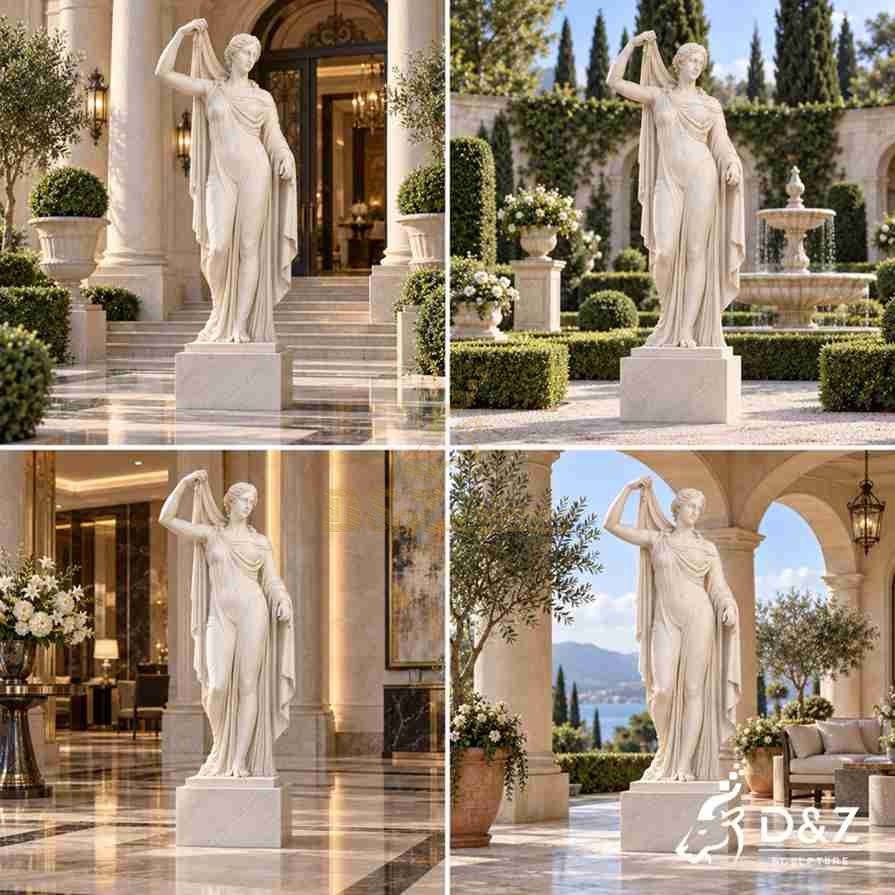
Modern Applications of Roman Venus Statues
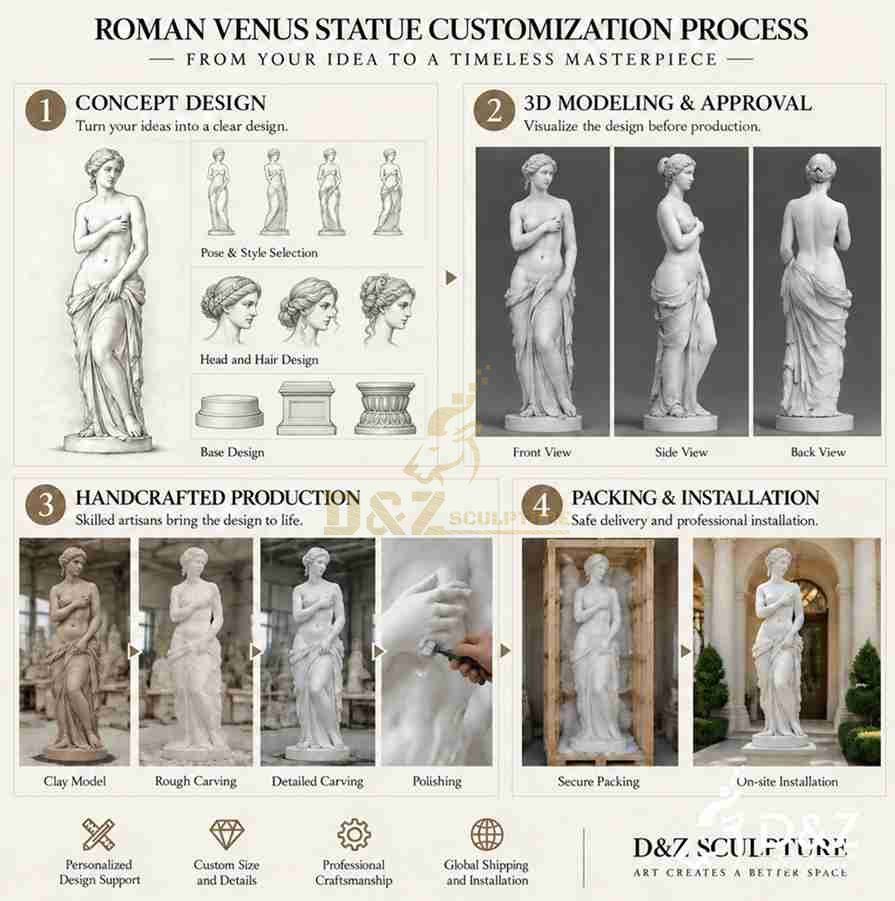
How Does D&Z Create Custom Roman Venus Statues?
The value of Roman Venus statues comes not only from the elegant appearance of the female figure, but also from the sculptor's in-depth study of human anatomy and artistic expression. Roman artists, drawing upon the aesthetic standards of classical Greek sculpture and combining them with their own artistic characteristics, expressed idealized feminine beauty through proportionate figures, flowing lines, delicate clothing textures, and symbolic decorative elements.
Many Venus statues employed the Contrapposto design, allowing one side of the figure to bear more weight, creating natural variations in the shoulders, waist, and legs, thus reducing the stiffness of static sculptures.
Roman Venus statues combined human beauty, natural movement, and cultural symbolism. This approach provided an important reference for later classical sculpture and influenced the design of figures in modern marble, bronze, and spatial art.
The influence of Roman Venus statues on modern art is not only because they showcased the beauty of the female form, but also because they established a classic method of sculptural design. Modern artists still study the proportions, body relationships, and visual balance in these works, applying these creative concepts to new sculptures.
These classical statues also changed how artists expressed ideal beauty. Artists don't simply reproduce the real human body; instead, they adjust body proportions, simplify certain details, and emphasize the figure's posture and lines to create a more harmonious visual effect. These design languages are not only applied to marble and bronze sculptures but also integrated into hotel, garden, public space, and architectural design.
D&Z Sculpture's 10 classic Venus statues showcase the elegant proportions, natural postures, and unique designs of classical art, providing important inspiration for modern marble and bronze sculpture.
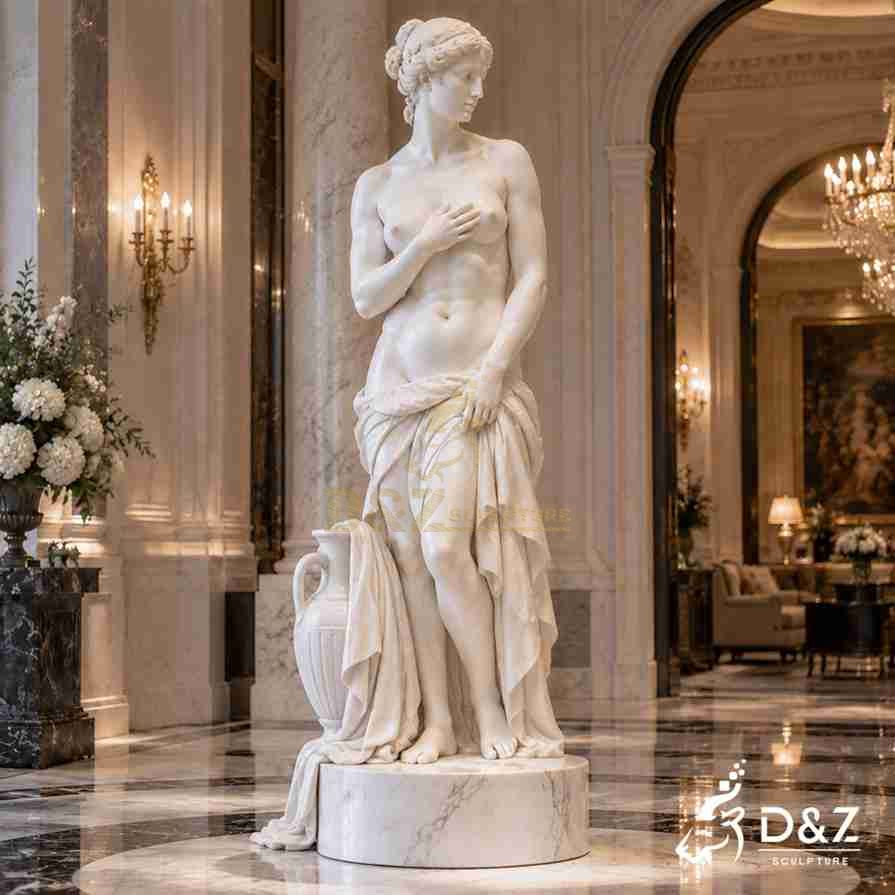
1. Capitoline Venus Statue
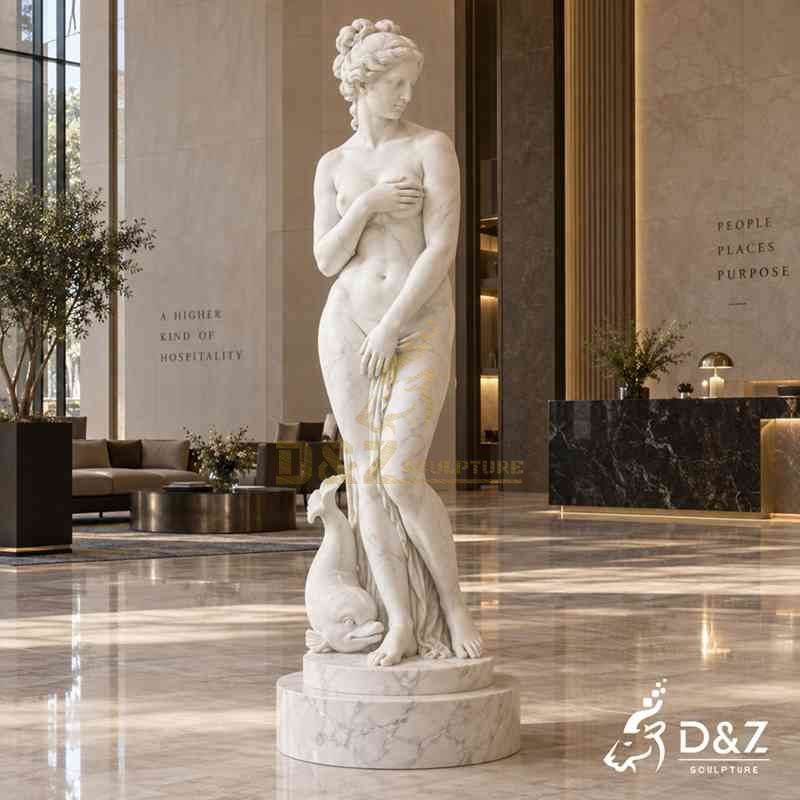
The Capitoline Venus Statue is one of the most representative works of Roman Venus sculpture and a typical Venus Pudica statue. The statue depicts Venus after bathing, with her hands covering her body, expressing elegant and subtle feminine beauty, and reflecting Roman art's pursuit of ideal beauty and harmonious proportions. Click to customize the Capitoline Venus Statue
2. Venus de Medici Statue
The Venus de Medici Statue is one of the important representatives of classical Venus sculpture. The artwork showcases a woman's elegant standing posture, with a natural and flowing curve created by a slight twist of the body. The body proportions, head direction, and supporting elements work together to create a sense of balance, reflecting classical art's understanding of feminine beauty, graceful posture, and dynamic balance. Click to customize the Venus de Medici Statue
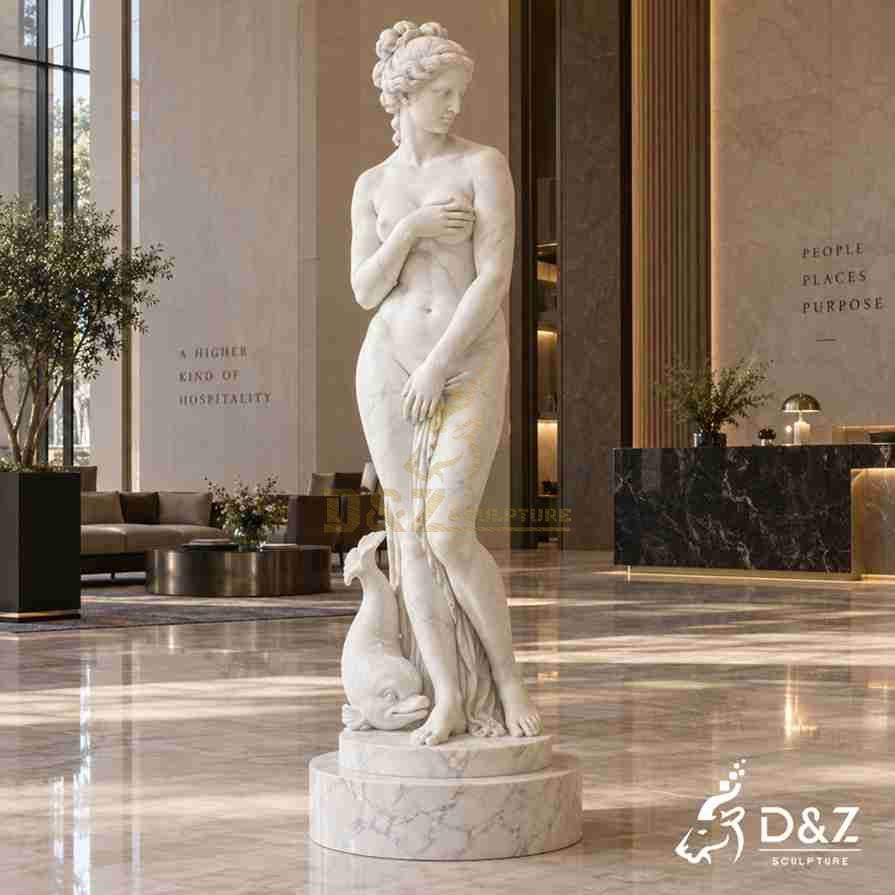
Venus de Medici Statue | Large Marble Venus Sculpture DZJ-849
3. Callipygian Venus Statue
The Callipygian Venus Statue is renowned for its unique turning-over pose and body curves. The statue depicts Venus turning back, showcasing the natural lines of her back, waist, and hips. Breaking away from the traditional frontal view, the rotating body adds visual variation, demonstrating classical art's meticulous observation of human beauty. Click to customize the Callipygian Venus Statue
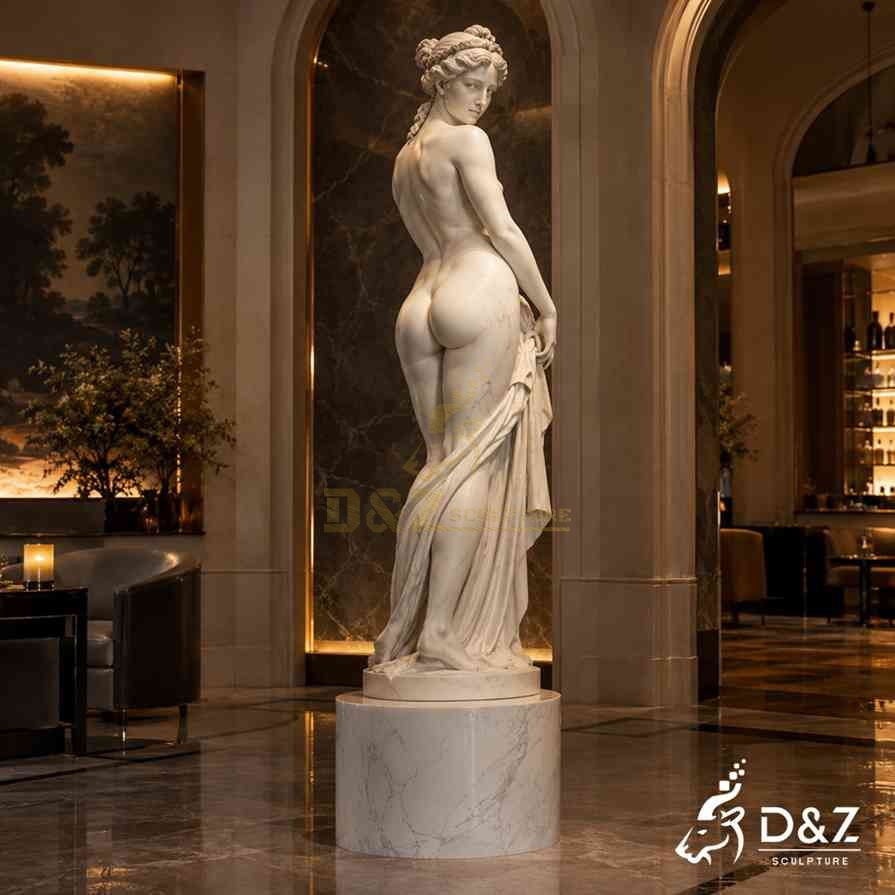
Large Marble Callipygian Venus Statue | Venus Callipyge DZJ-844
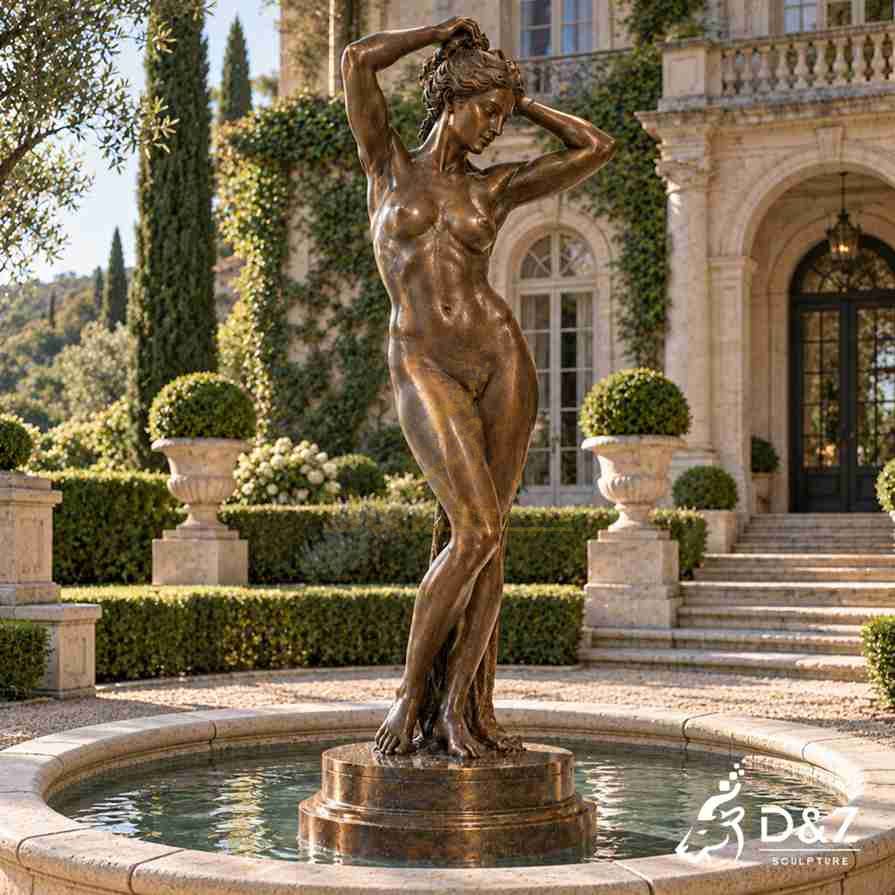
4. Crouching Venus Statue
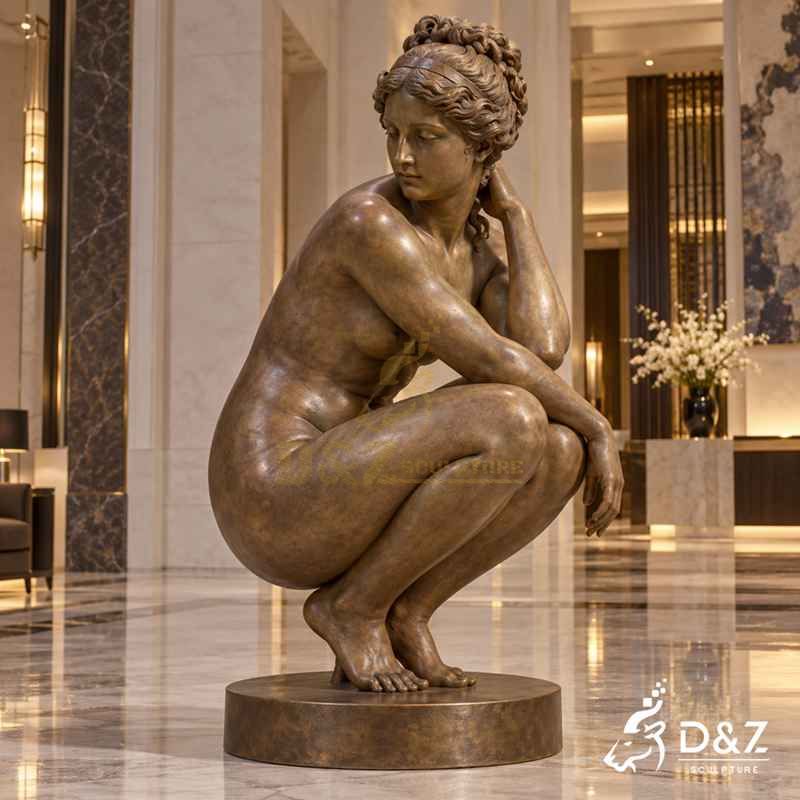
The Crouching Venus Statue depicts Venus in a dynamic pose while bathing. Unlike the traditional standing Venus, this work creates a more compact spatial structure through its bent body and contracting posture. This dynamic composition reflects the classical sculpture's exploration of the relationship between space and the human body. Click to customize the Crouching Venus Statue
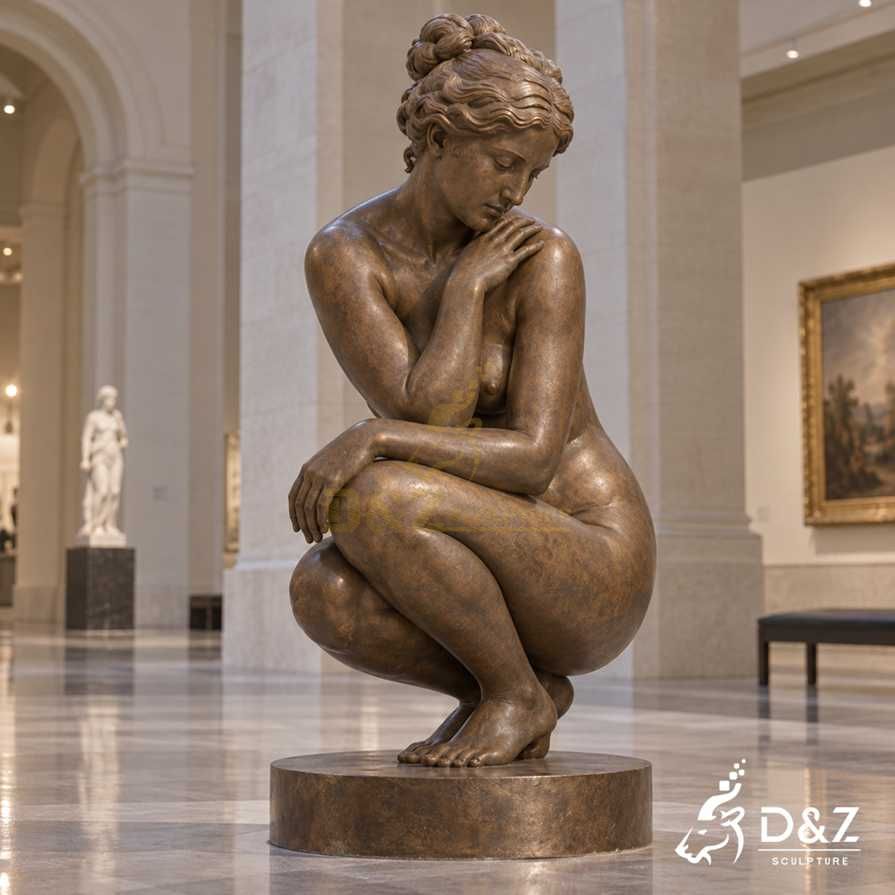
Bronze Crouching Venus Statue | Classical Goddess Sculpture DZJ-847
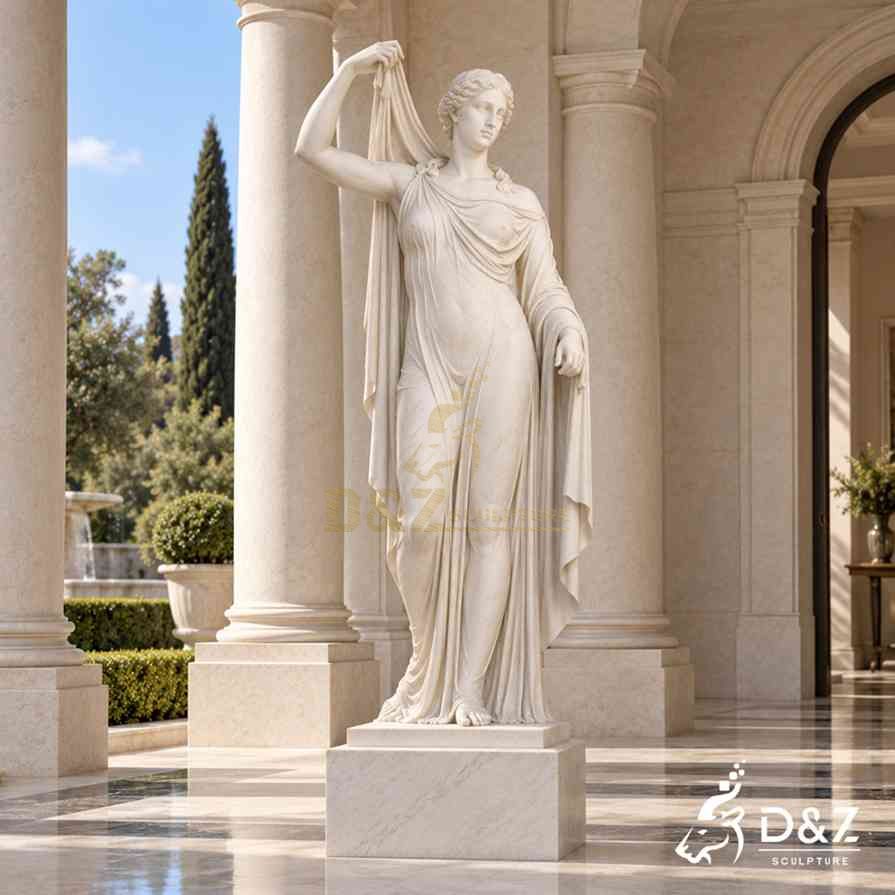
5. Venus Genetrix Statue
The Venus Genetrix Statue depicts Venus as a mother and creator, typically using drapery to portray a more dignified and noble female figure. Through drapery folds, posture, and expression, it conveys strength and elegance, reflecting the connection between Venus and family, origin, and protection in Roman culture. Click to customize the Venus Genetrix Statue
6. Venus Victrix Statue
The Venus Victrix Statue showcases a more powerful side of Venus. The work combines feminine beauty with symbols of victory and glory, creating a confident and powerful female figure, demonstrating how Roman art imbued Venus with more symbolic meaning. Click to customize Venus Victrix Statue
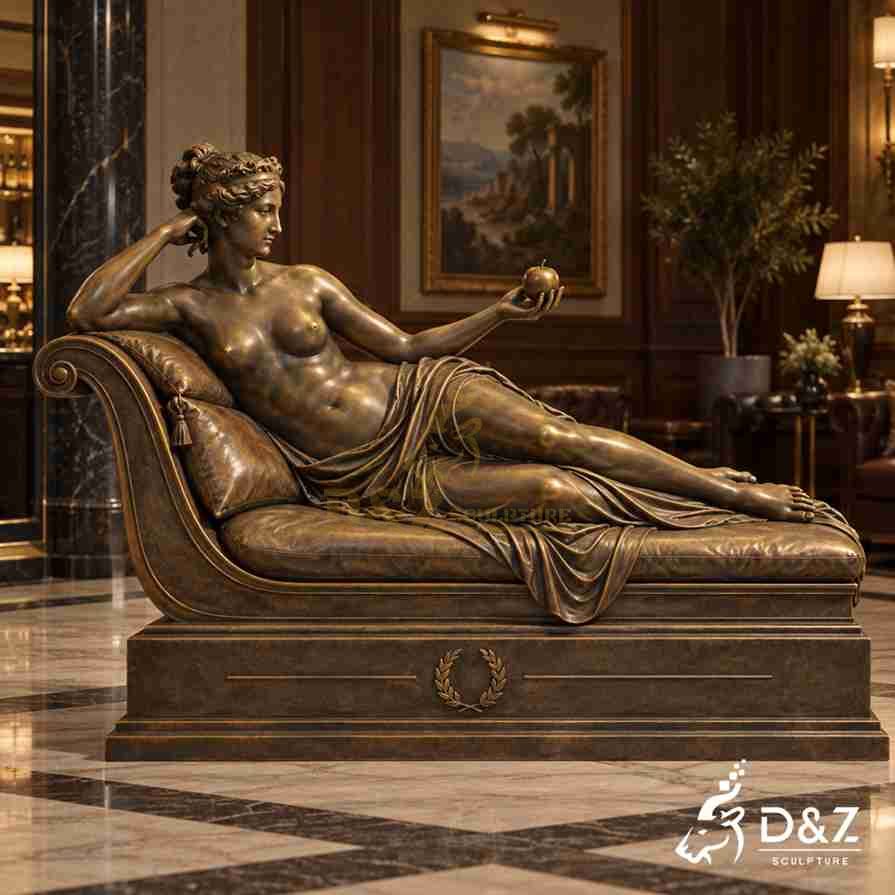
Venus Victrix Statue | Large Bronze Roman Goddess Sculpture DZJ-846
7. Venus Anadyomene Statue
The Venus Anadyomene Statue depicts Venus's birth from the sea or her emergence from the water. The work typically uses wet hair, flowing postures, and natural body lines to express the moment of life's birth, giving the static stone or metal a sense of light movement. Click to customize Venus Anadyomene Statue
8. Venus and Cupid Statue
The Venus and Cupid Statue explores the themes of love and intimacy. The inclusion of Cupid gives the work a stronger narrative and emotional expression. It not only expresses feminine beauty but also conveys love, companionship, and emotional connection through the interaction of the figures, enriching the image of Venus. Click to customize the Venus and Cupid Statue
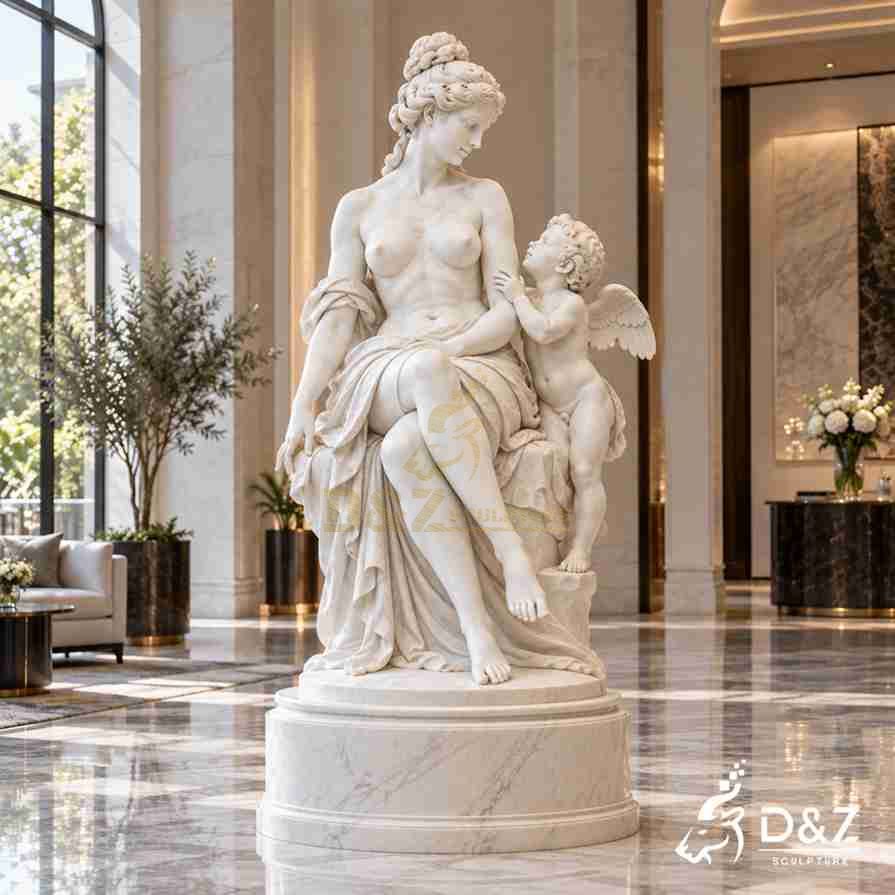
Venus and Cupid Statue | Marble Roman Goddess Art DZJ-848
9. Mars and Venus Statue
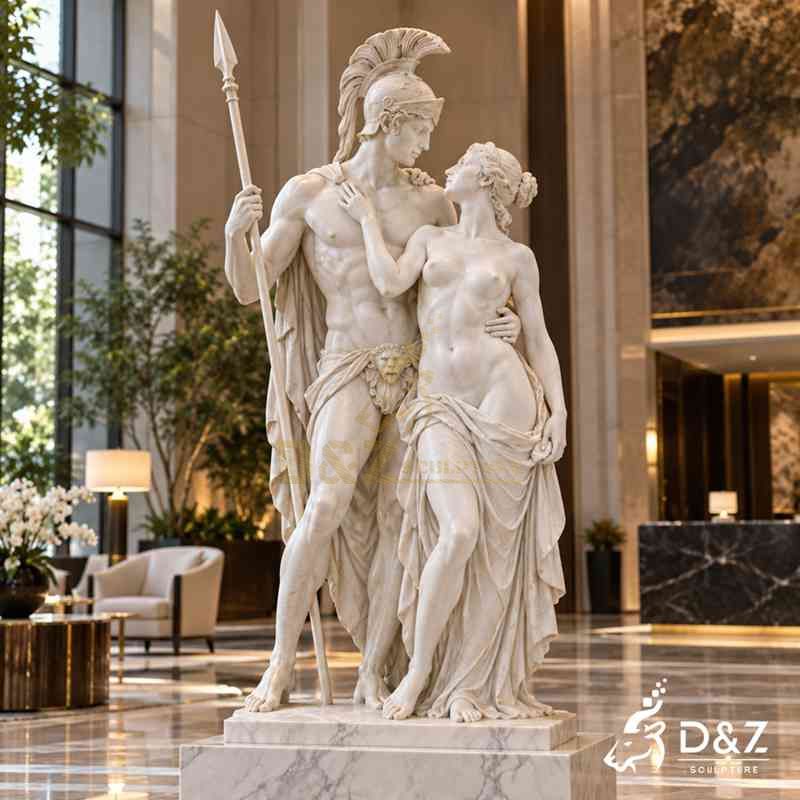
The Mars and Venus Statue showcases the relationship between love and power. It typically combines Mars, representing war and strength, with Venus, representing beauty and love, creating a striking contrast and reflecting classical art's exploration of the relationships and symbolic meanings between figures. Click to customize the Mars and Venus Statue
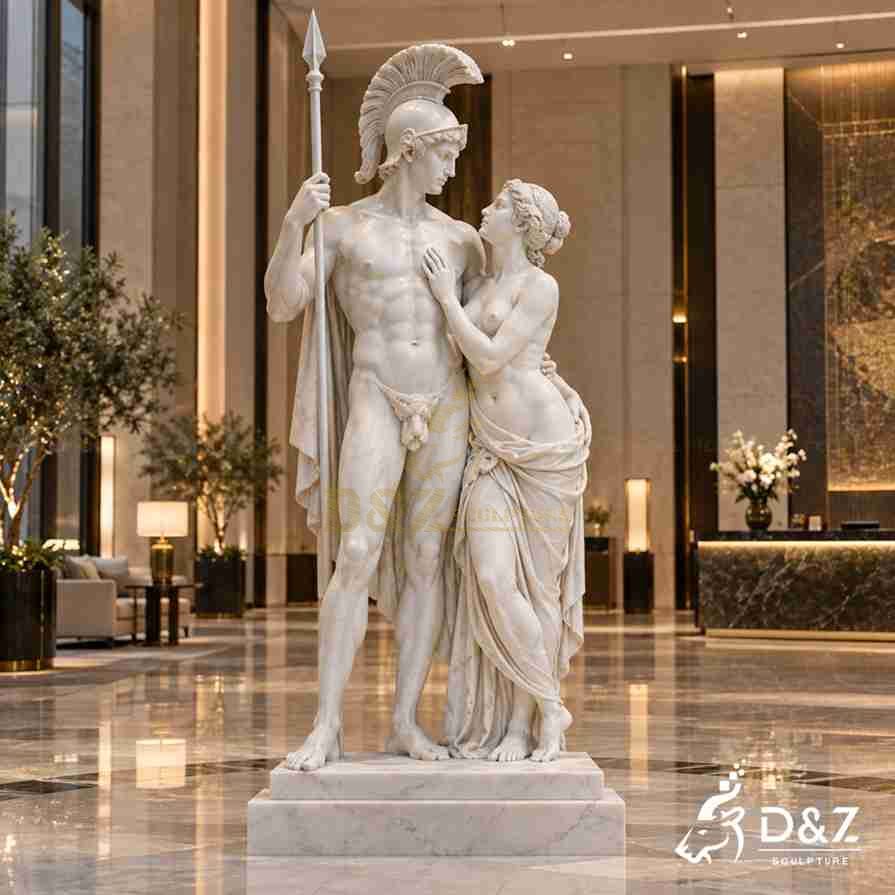
Mars and Venus Statue | Marble Roman Love and War Statue DZJ-845
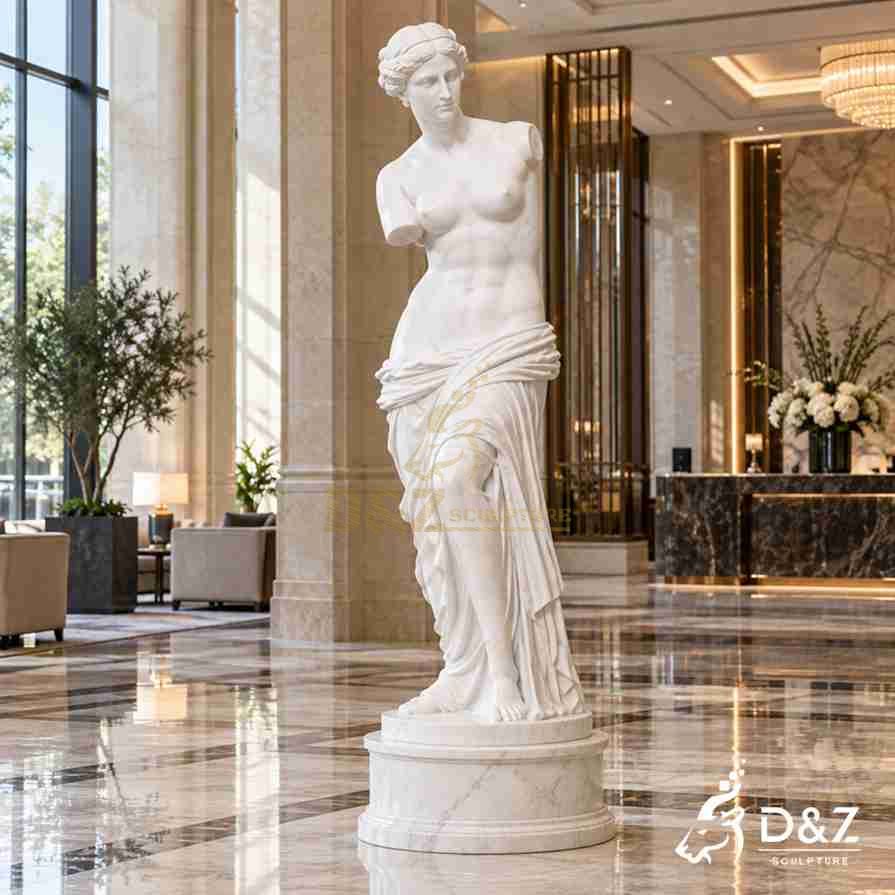
10. Venus de Milo Statue
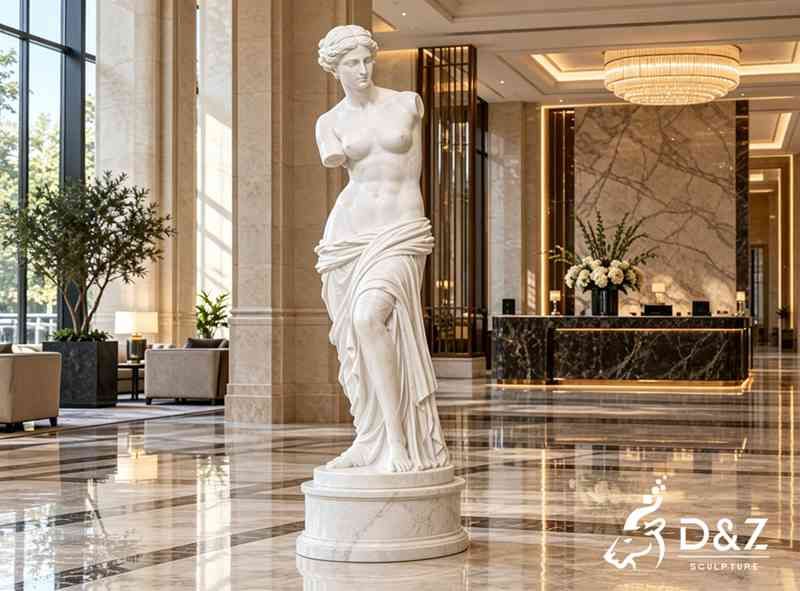
The Venus de Milo Statue is one of the world's most famous classical female sculptures, renowned for its missing arms, elegant body curves, and serene facial expression. It showcases how classical art expresses beauty through proportion, posture, and negative space. Click to customize the Venus de Milo Statue
While Roman Venus statues vary in pose and theme, they typically share some common artistic characteristics. These design principles reflect the classical sculptural pursuit of human proportions, natural movement, and visual balance.
Idealized Human Proportions: Emphasis is placed on the harmonious relationship between different parts of the body, resulting in an elegant and balanced visual effect.
Anticipated Center of Gravity: Many Venus statues employ the Contrapposto pose.
Elegant Body Dynamics: Roman Venus statues often convey a sense of movement through slight turns, tilts, or natural gestures.
Detailed Hair and Clothing Folds: Fine carving depicts the layers of hair and variations in clothing folds, enhancing the realism and artistic expression of the work.
Symbolic Elements: Many Venus statues incorporate elements such as dolphins, Cupid, apples, and armor.
Roman Venus statues were frequently made of marble and bronze throughout art history. Different materials present different visual effects and are suitable for different sculptural styles.
Marble Venus Statues: Marble is one of the most representative materials for classical Venus sculptures. White marble can accentuate the soft lines of the human body, delicate facial expressions, and flowing drapery.
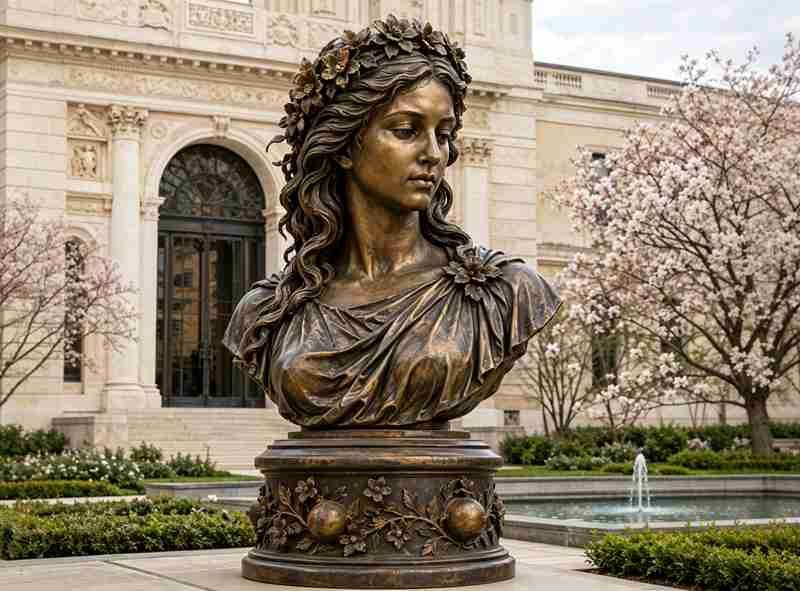
Bronze Venus Statues: Bronze possesses greater visual weight and expressiveness, suitable for depicting the powerful and dynamic theme of Venus. It can be achieved through different surface treatments to present bronze, dark, or special textured effects.
Luxury Villas and Private Gardens: The elegant proportions and classical temperament of Venus sculptures can add an artistic atmosphere to private courtyards.
Hotels and Resorts: Large Venus sculptures can serve as a significant visual focal point in hotel lobbies, leisure areas, and resort spaces.
Museums and Cultural Spaces: Venus sculptures represent the classical art tradition, helping to showcase the connection between historical art and modern design.
Commercial and Public Spaces: Integrating Venus elements into commercial centers, art plazas, and high-end clubs enhances spatial recognizability with classic forms.
D&Z Sculpture offers a one-stop customization service for Roman Venus statues, including:
Design Development: Our design team will create a design based on your needs, installation environment, and artistic theme. You can refer to classic Venus poses or adjust the posture, size, base, and details.
3D Modeling and Approval: We create 3D renderings to help you understand the statue's proportions, spatial effect, and overall visual appeal.
Sculpture Production: Marble statues are crafted using professional hand-carving techniques, while bronze statues utilize traditional casting processes, including model making, casting, polishing, and surface finishing.
Installation Support: D&Z provides structural design, shipping packaging, and on-site installation support to ensure the safe application of large statues in various projects.
Q: What is the difference between Roman Venus statues and Greek Venus statues?
A: Roman Venus statues largely inherit the traditions of Greek art but place greater emphasis on cultural symbolism, the figure's identity, and decorative details.
Q: Can Roman Venus statues be used in outdoor environments?
A: Yes. Choosing the right materials and protection methods based on environmental conditions is crucial. Both marble and bronze Venus statues can be used for environmental protection.
Q: What does Contrapposto mean in Venus statues?
A: Contrapposto is a classic human pose. By adjusting the body's center of gravity, the figure is presented in a natural standing position, making the statue more dynamic.
Q: Why do many Venus statues retain tulle fabric?
A: Tulle is a symbol of classical art, not merely decoration. It symbolizes divine dignity while highlighting the idealized beauty of the human form.
Q: Why are Roman Venus statues often depicted nude?
A: In classical art, the nude is used to showcase human proportions, strength, and natural beauty. It expresses beauty, harmony, and praise for life forms through an idealized human structure.
Q: Why are facial expressions usually serene?
A: Classical sculpture emphasizes inner balance and ideal beauty; therefore, it avoids expressing strong emotions, highlighting elegance, tranquility, and timeless beauty.
Q: How is structural stability ensured in statues?
A: Large statues require internal support structures, connection methods, and foundation fixing systems designed according to their size, weight, and installation environment.
Q: How should the Roman Venus statue be maintained?
A: Regular cleaning is usually required. Avoid using strong acid or alkali cleaning agents, and take appropriate protective measures depending on the outdoor environment to maintain the statue's long-term beauty.
WhatsApp: 0086 13613220352
Email: info@dzsculpture.com
If you are looking for a classic Roman Venus statue, a custom marble sculpture, or a large bronze artwork, D&Z Sculpture offers a one-stop service from design and production to installation.
Leave a message

Any landscape ideas in your mind, describe to D&Z sculpture team directly, you can imagine we can create.


Copyright © 1996-2026 D&Z Sculpture Co., Ltd. All Rights Reserved | Sitemap |