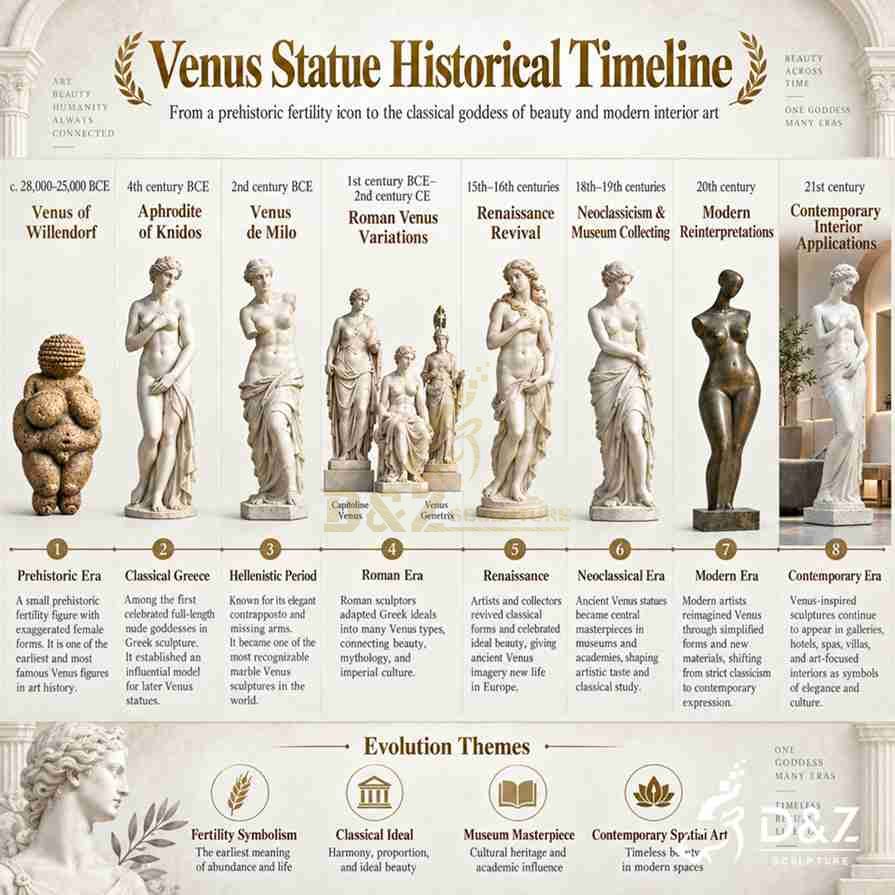
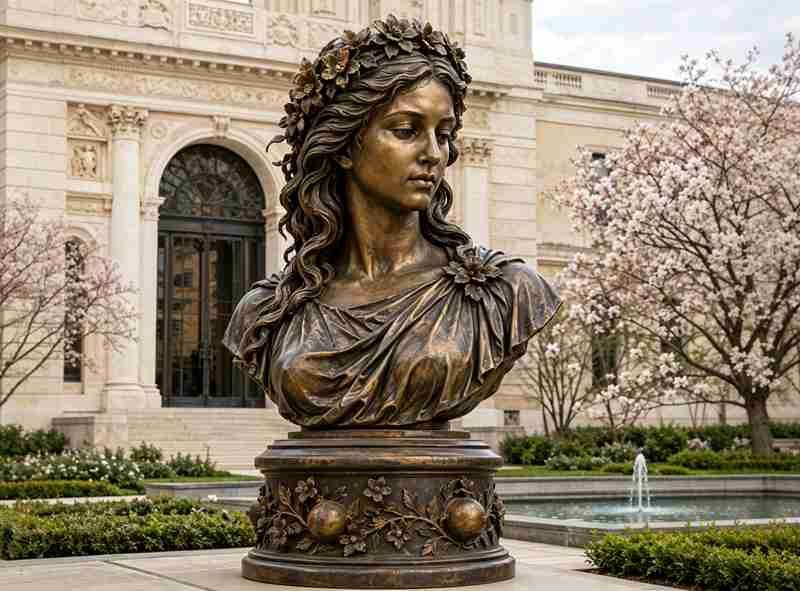
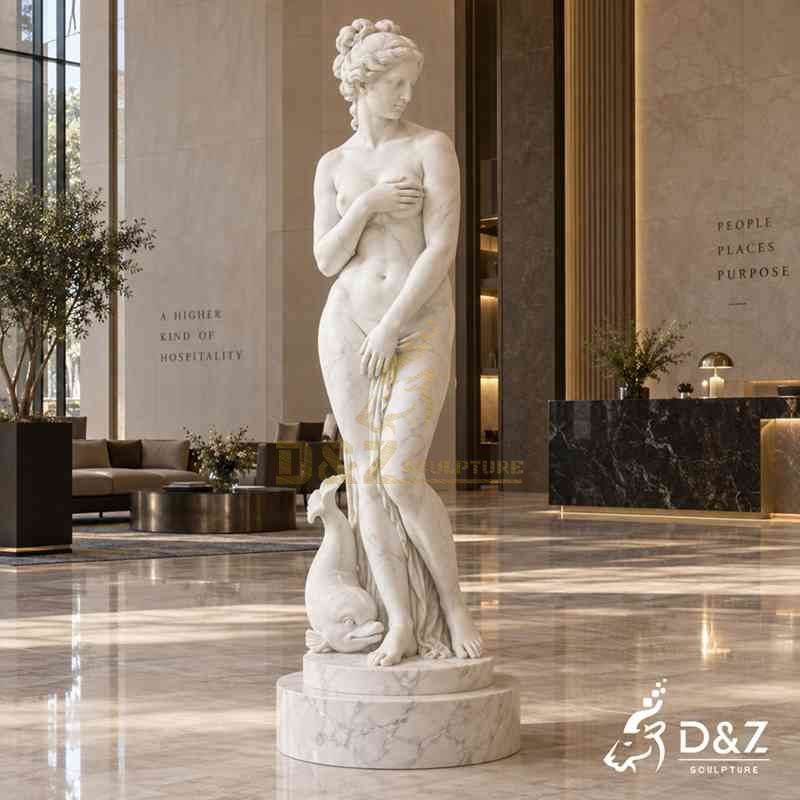
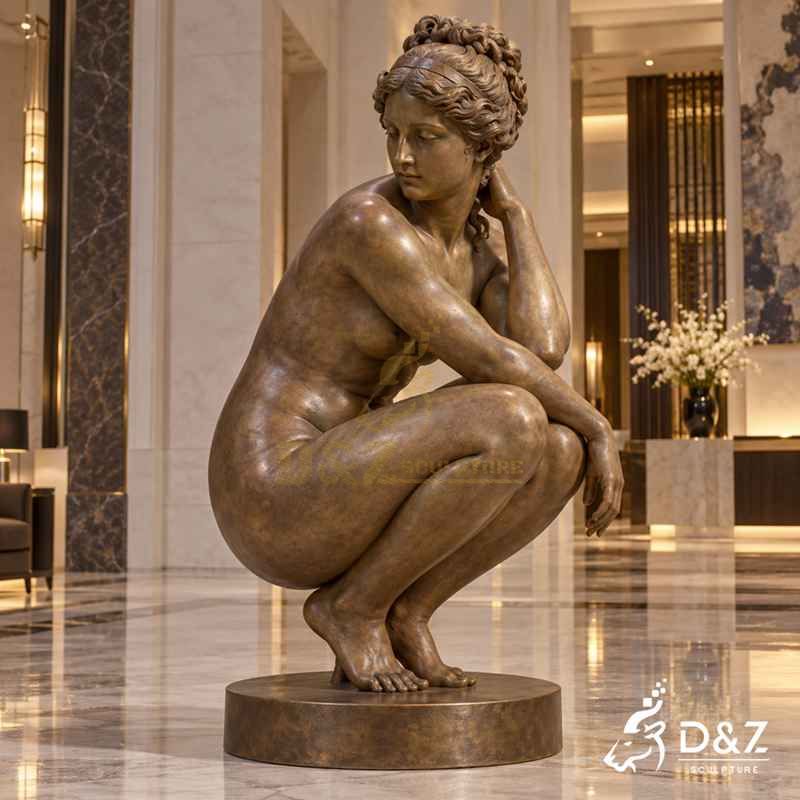
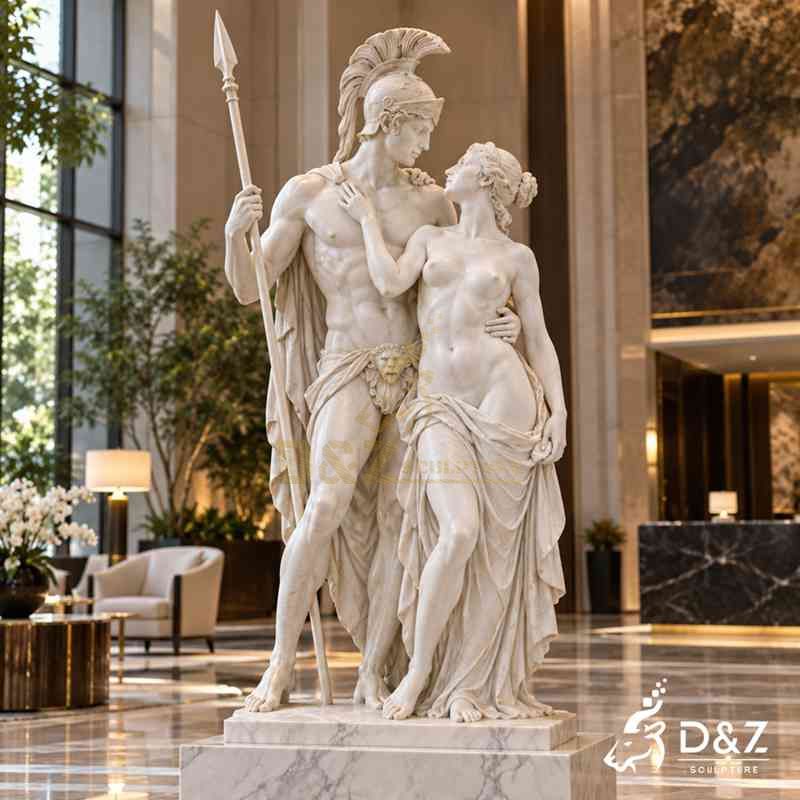
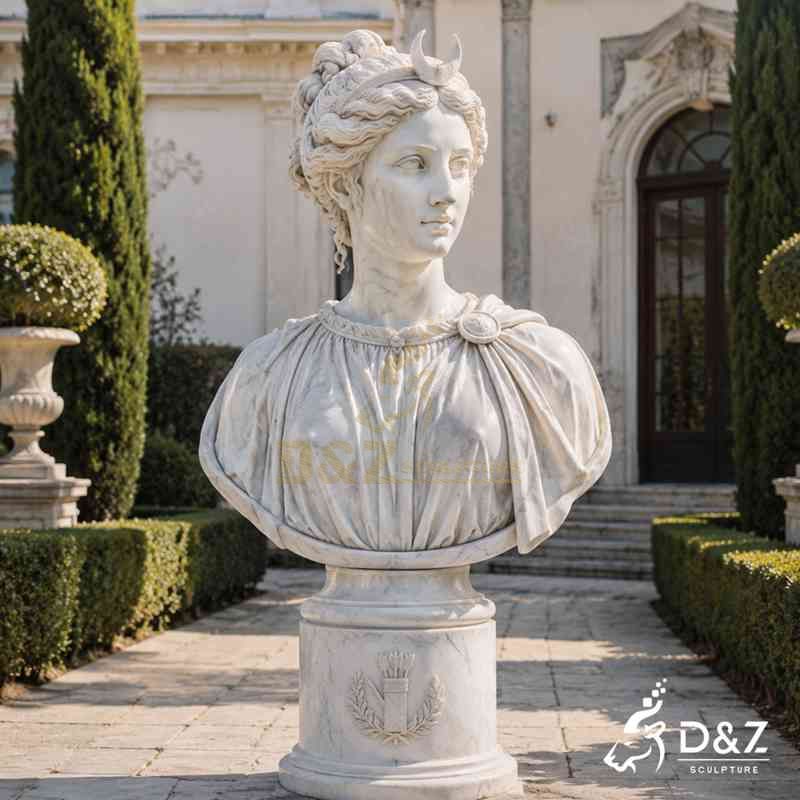
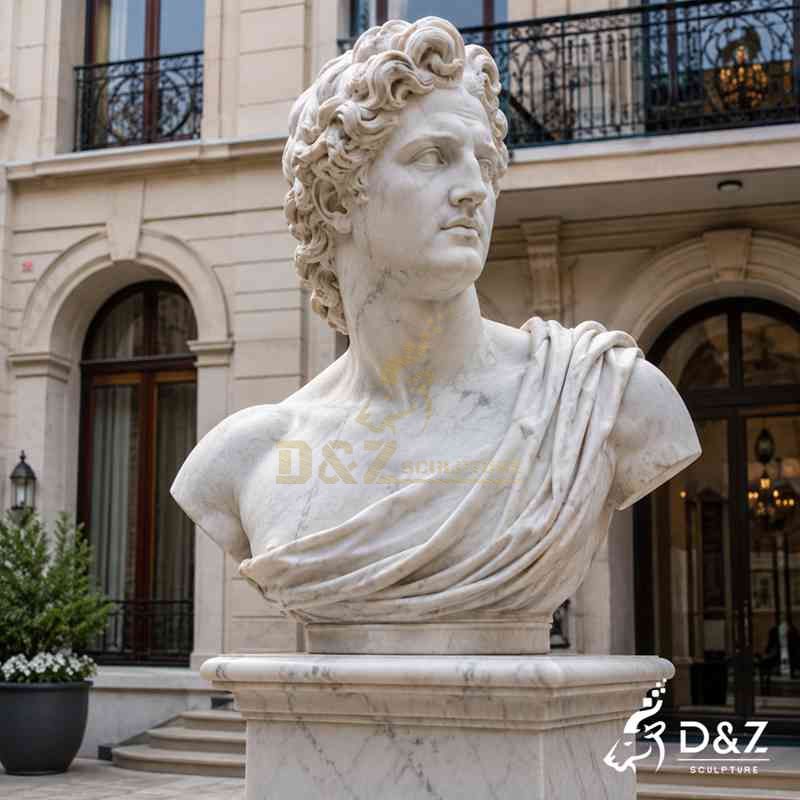
The Venus goddess statue is more like an evolving art system than a single work that can be summarized by a single form. Artists from different historical periods reshaped Venus according to their contemporary aesthetics, religious beliefs, and methods of representation. Therefore, even though they are all goddesses representing love and beauty, different statues exhibit completely different characteristics in body posture, gestures, drapery folds, and relationships between figures.
When creating a Venus goddess statue, D&Z Sculpture focuses on analyzing the figure's proportions, center of gravity, drapery folds, and viewing angle. They also determine the required details and structure based on the installation location.
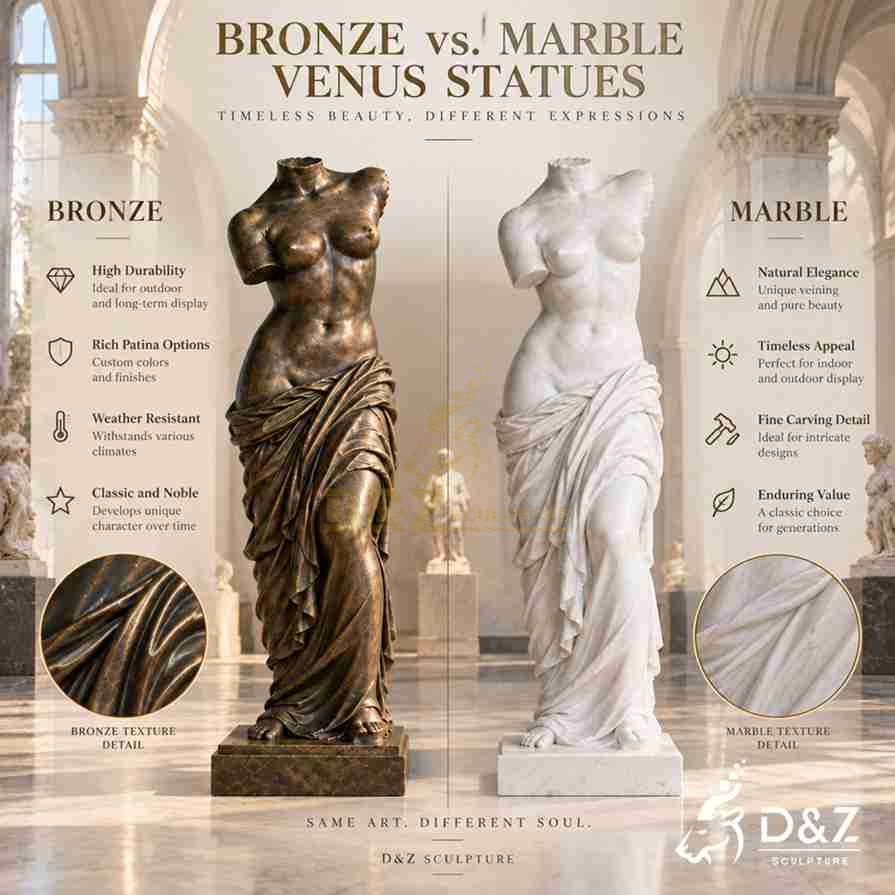
Natural white marble is suitable for depicting soft body curves, skin texture, and intricate drapery folds, so it is often used for classical-style marble Venus statues. Bronze has better structural performance and outdoor adaptability, making it more suitable for dynamic figure compositions, large-scale statues, and public landscape projects. Bronze Venus statues can also achieve different visual effects through various surface treatments, such as bronze, dark brown, or highlights.
Table of Contents
The History of the Venus Statue
Venus Statue Meaning: What Does a Venus Statue Symbolize?
How to Distinguish Between Different Types of Venus Goddess Statues?
Bronze or Marble: Which Material Fits a Venus Statue?
Customization Service for Venus Goddess Statue
FAQ about Venus Goddess Statue
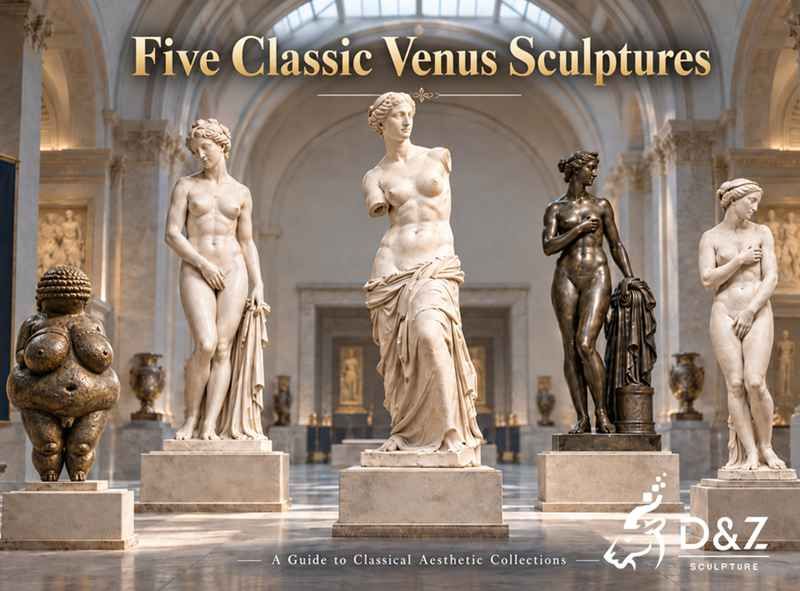
The development of Venus statues underwent a continuous process of change, initially influenced by the image of Aphrodite in ancient Greece. Ancient Greek artists used human proportions, postures, and movements to express idealized female beauty. Later, ancient Roman artists preserved and adapted many Greek sculptural types, allowing these figures to spread more widely. During the Renaissance and Neoclassical periods, artists again drew inspiration from ancient works while incorporating new aesthetic approaches. Works like Venus de Milo, Aphrodite of Knidos, Capitoline Venus, and Venus Italica showcase different understandings of the Venusian figure and classical human beauty across different eras.
The significance of Venus statues lies not only in expressing female beauty; different works convey different meanings through postures, movements, and relationships. A stable standing posture often emphasizes body proportions and classical order. Actions such as bathing or covering the body make the figure appear more reserved and closer to a private situation. When Venus is paired with Cupid, the work typically focuses on love and intimacy. When Venus appears alongside Mars or Adonis, the theme becomes more narrative, often involving love, conflict, desire, and fate.
| Type | How to Recognize It | Best Material | Best Use | Reference Status |
|---|---|---|---|---|
| Venus de Milo | Missing arms, a strongly turned torso, and deep drapery gathered around the hips. | Best in white natural marble | Museum-style halls | Surviving ancient object |
| Aphrodite of Knidos | One hand moves toward the body while a water jar and folded garment identify the bathing context. | Best in fine-grained white marble | Classical courtyards | Lost Greek original; copies survive |
| Capitoline Venus | Both arms cross the body in a modest gesture; a vessel and drapery stand beside the figure. | Best in white marble; cast stone for traditional gardens | Formal gardens | Roman version of a type |
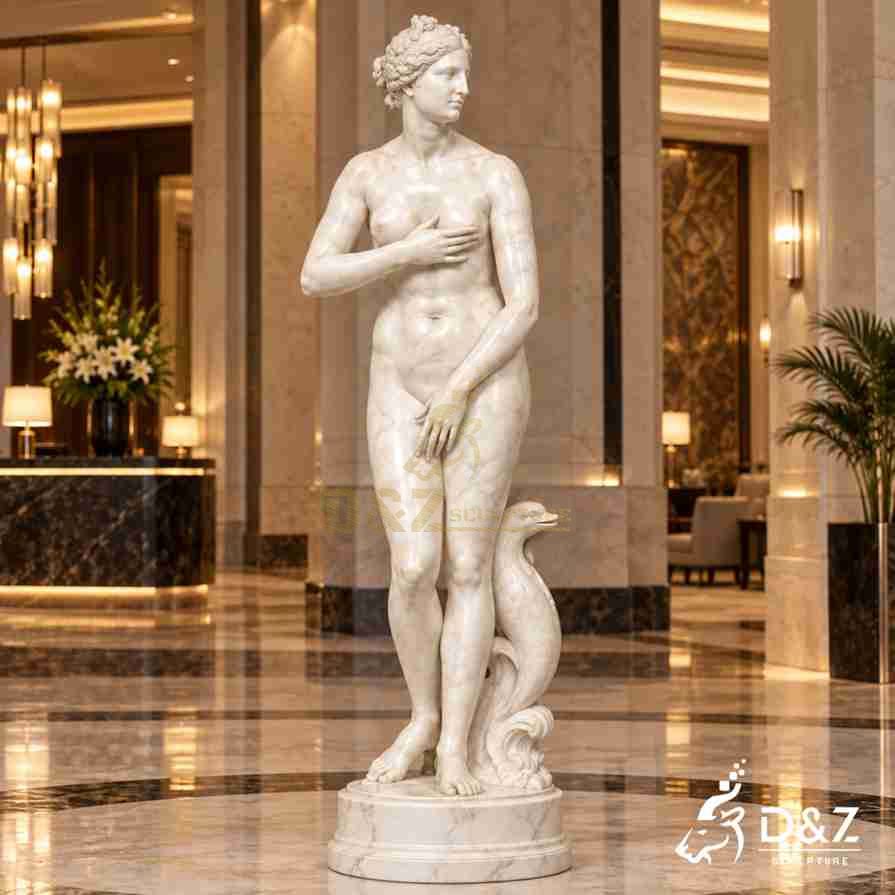
| Venus de’ Medici | A light, elegant Venus Pudica stance, usually supported by a dolphin and small Erotes. | Best in white natural marble | Grand stair halls | Ancient type; restored example |
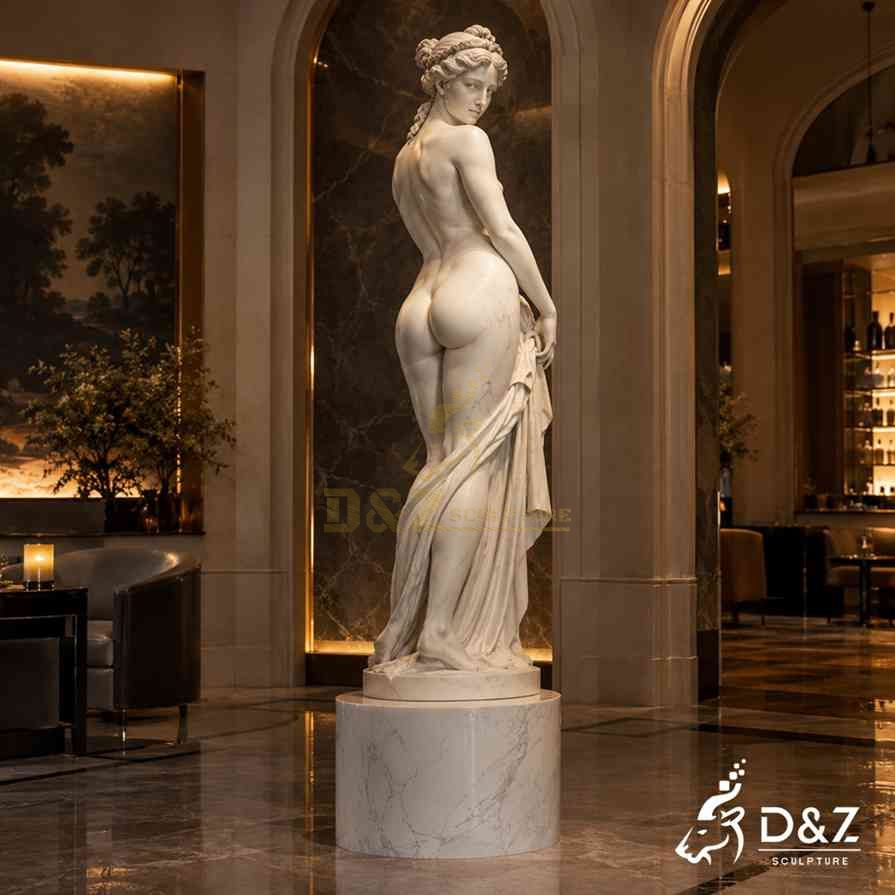
| Callipygian Venus | Venus lifts her drapery and looks back over her shoulder, making the rear view essential. | Best in marble; bronze for an outdoor 360-degree feature | Round gardens | Ancient statue with restorations |
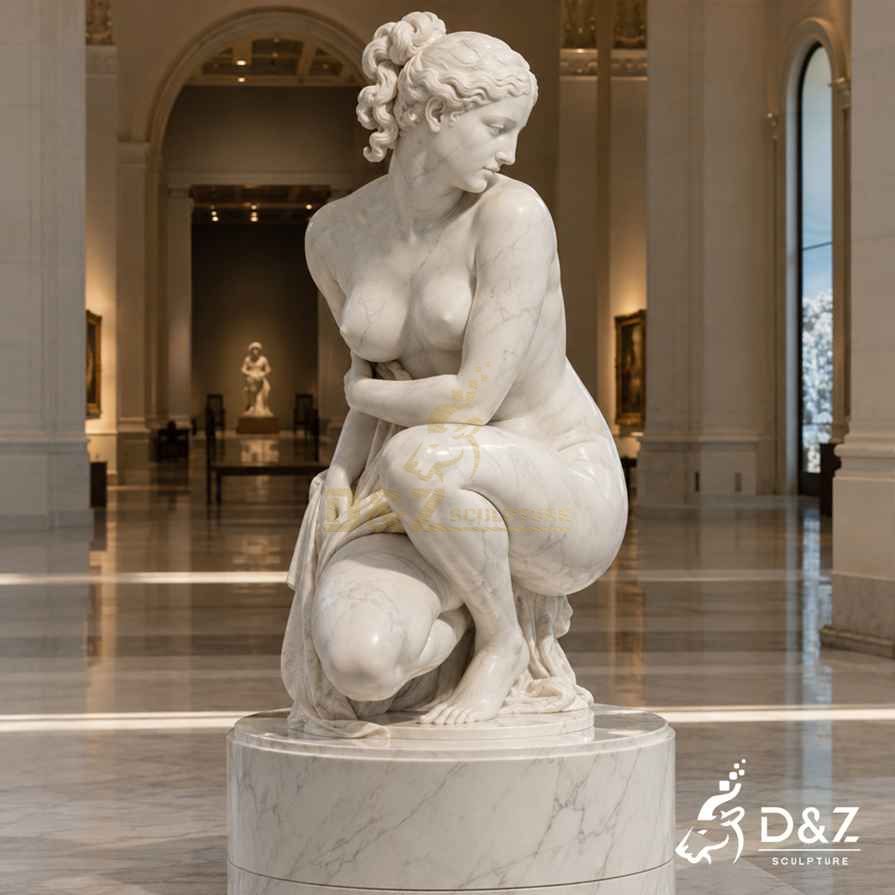
| Crouching Venus | A compressed crouch, sudden torso turn, raised arm, and complex crossed contours. | Marble for interiors; bronze for outdoor or fountain projects | Spa gardens | Type known through copies |
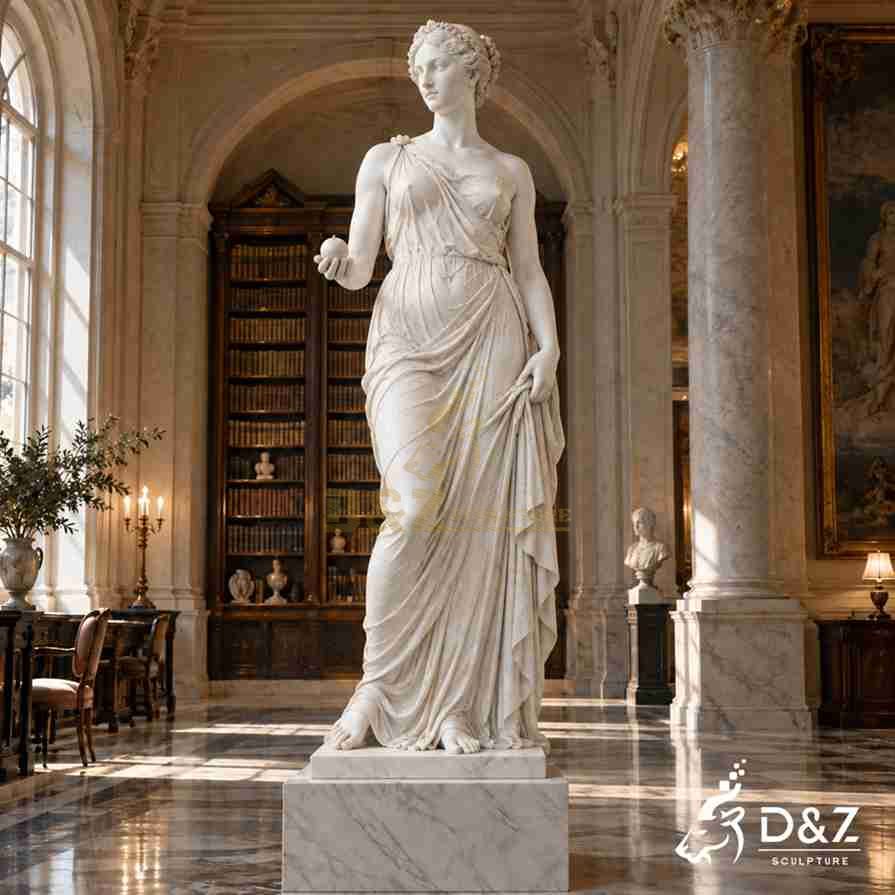
| Venus Genetrix | A clinging chiton, one shoulder or breast partly revealed, and often an apple in the hand. | Excellent in marble or bronze | Civic landscapes | Type with multiple copies |
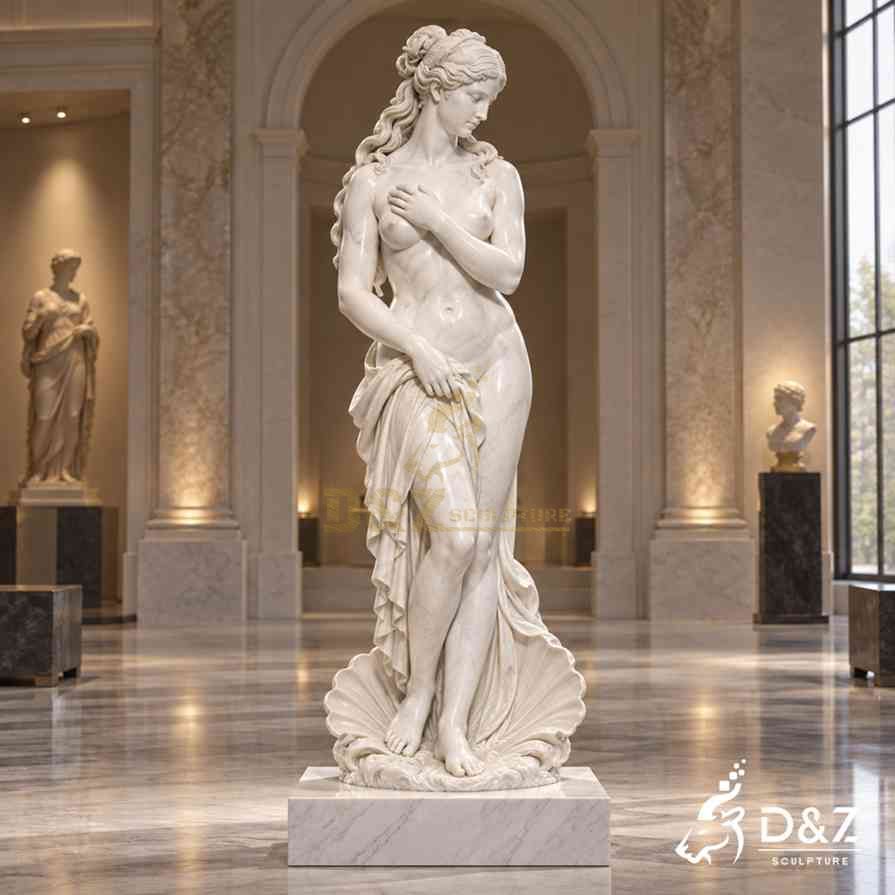
| Birth of Venus Statue | Long windblown hair, a shell or wave base, and a frontal modest pose. | Marble for luminous elegance; bronze for fountains and coastal landscapes | Resorts | Modern theme / interpretation |
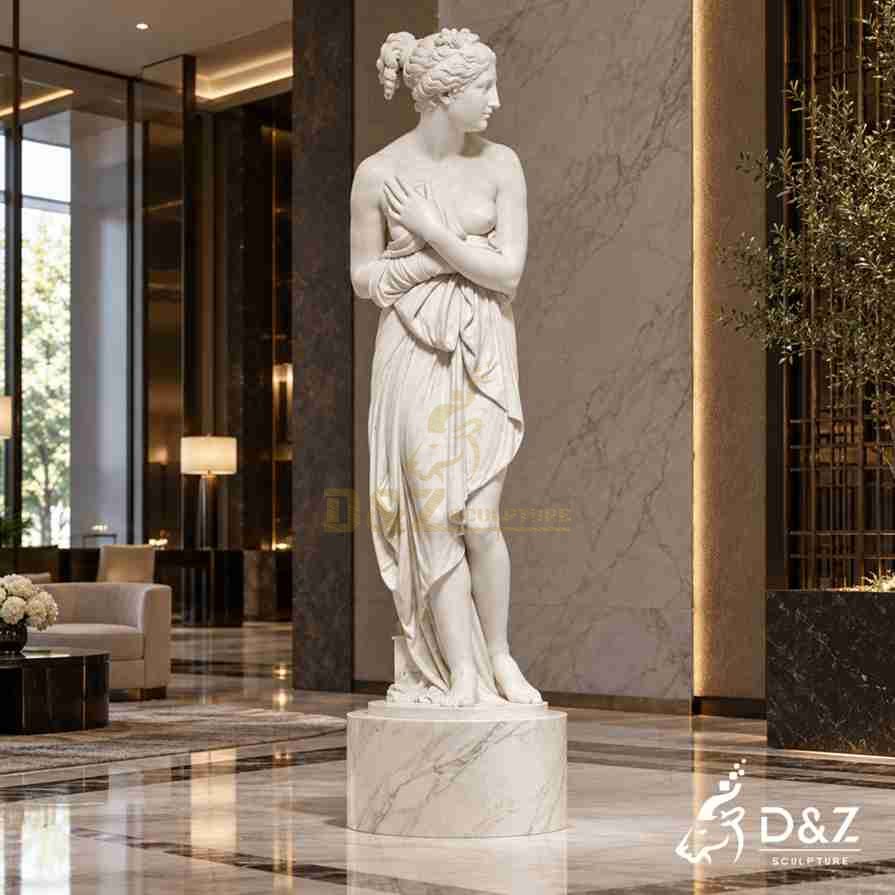
| Venus Italica | A softly modeled figure draws a long cloth around the body in a moment of surprise. | Best in high-quality white marble | Luxury interiors | Canova work; variants exist |
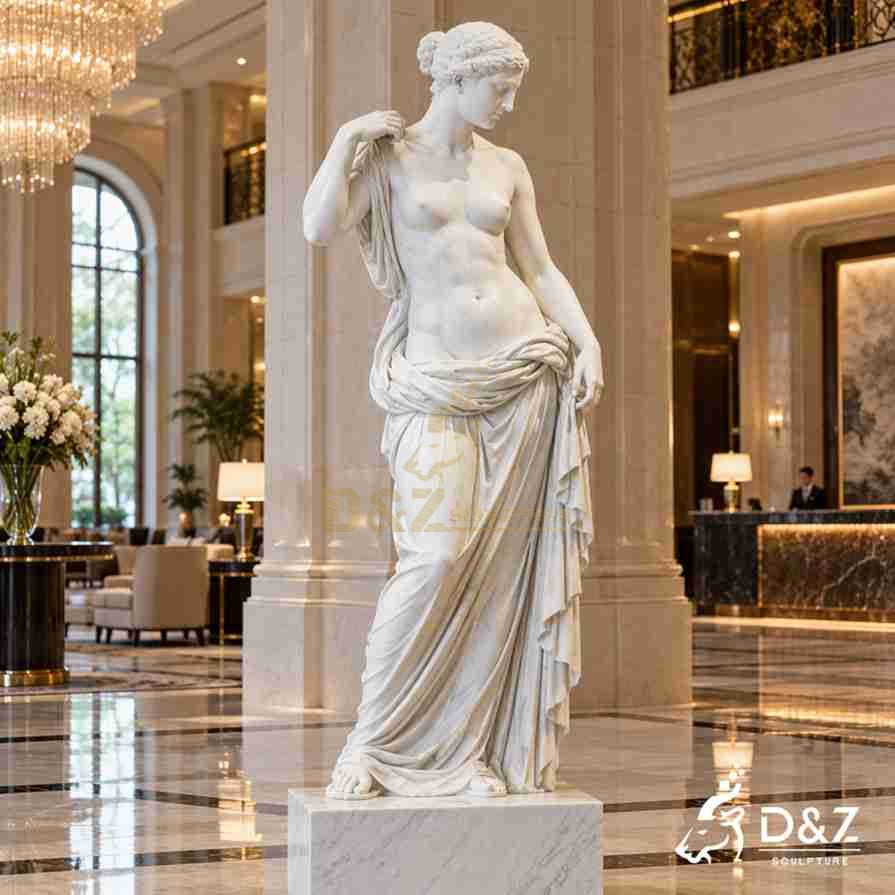
| Venus of Arles | A partially draped standing figure, commonly restored with an apple and mirror. | Best in white or lightly veined natural marble | Classical atriums | Ancient object with later arms |
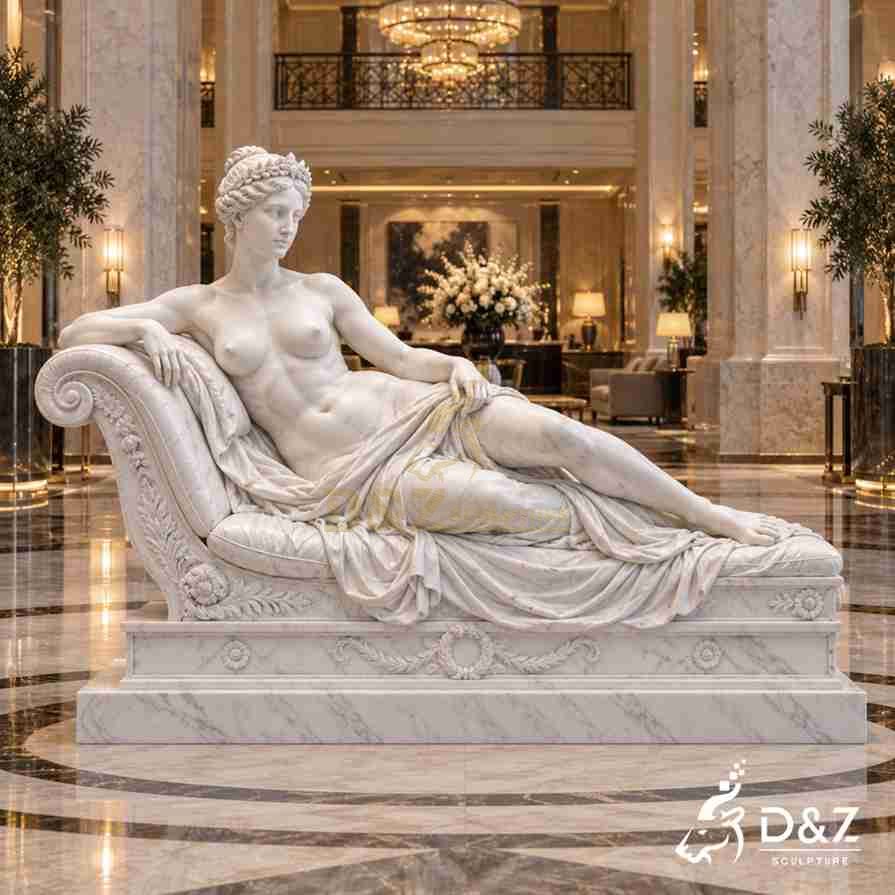
| Venus Victrix | A semi-reclining Venus holds the apple awarded in the Judgment of Paris. | Best in white marble; bronze for a freer outdoor interpretation | Grand lounges | Specific Canova portrait |
| Bathing Venus | Bathing gestures, wet or gathered drapery, hair arrangement, vessels, or water elements. | Bronze for dynamic outdoor use; marble for serene interiors | Spas | Broad theme |
| Mars and Venus Statue | Armored Mars and a softer, often partially draped Venus form a contrasting pair. | Best in bronze for monumental and outdoor projects | Hotel entrances | Broad narrative theme |
| Venus and Adonis Statue | Venus embraces or restrains Adonis as he prepares to leave for the hunt. | Best in bronze; marble for a protected collector interior | Romantic gardens | Broad narrative theme |
| Venus and Cupid Statue | Venus interacts with winged Cupid, his bow, arrows, or a tender embrace. | Bronze for exterior groups; marble for intimate classical settings | Wedding gardens | Broad narrative theme |
Venus goddess statues, through their rich poses, materials, and relationships, showcase different eras' understanding of love, beauty, and classical human figure art.
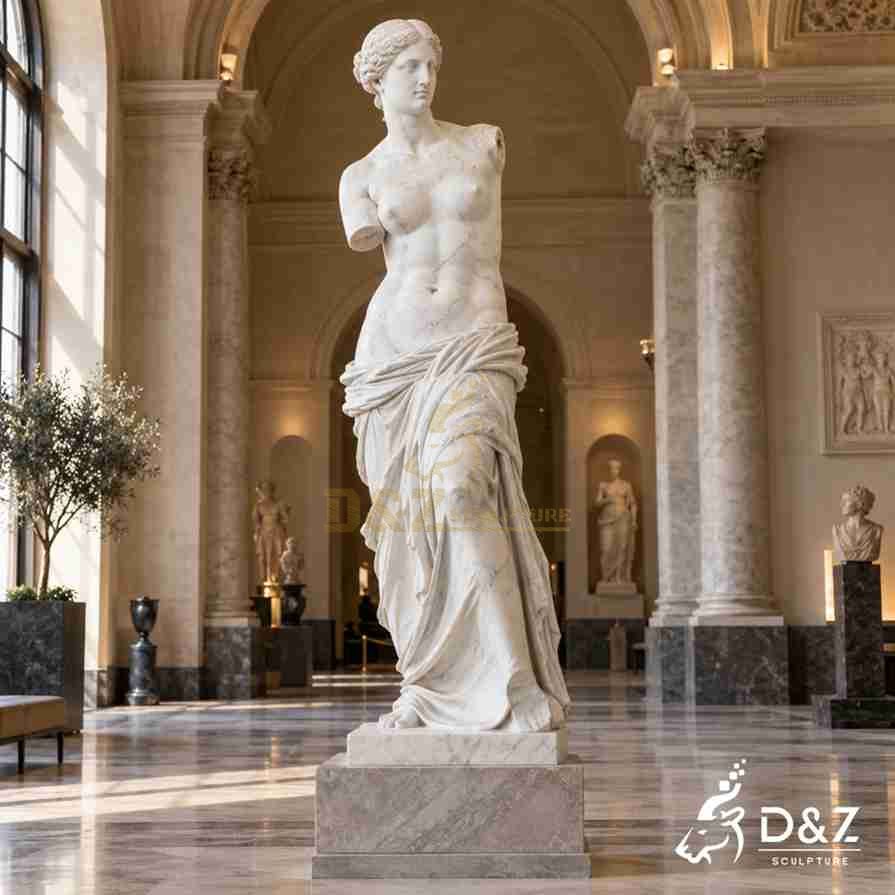
1. Venus de Milo Statue
The Venus de Milo statue is one of the most recognizable Venus statues in the world. It features a bare upper body, missing arms, a distinctly rotated torso, and large folds of drapery stacked from the hips down. The original was created around 150-130 BC and discovered in 1820 on the Greek island of Milos. Click to customize the Venus de Milo statue
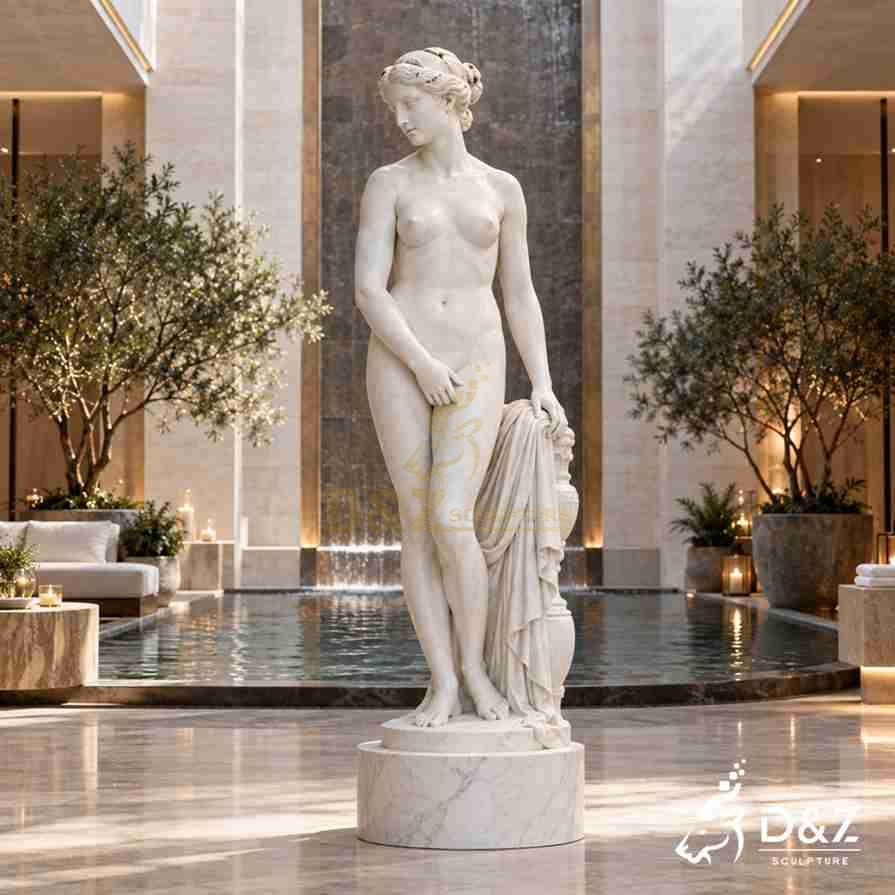
2. Aphrodite of Knidos statue
The core of the Aphrodite of Knidos statue is not simply the depiction of a nude woman, but rather the moment when the goddess is preparing to bathe or has just finished bathing. The figure moves one hand to the lower abdomen, while the other hand is close to the clothing and provides support. This is the most important identifying feature of the Knidos type. Click to customize the Aphrodite of Knidos statue
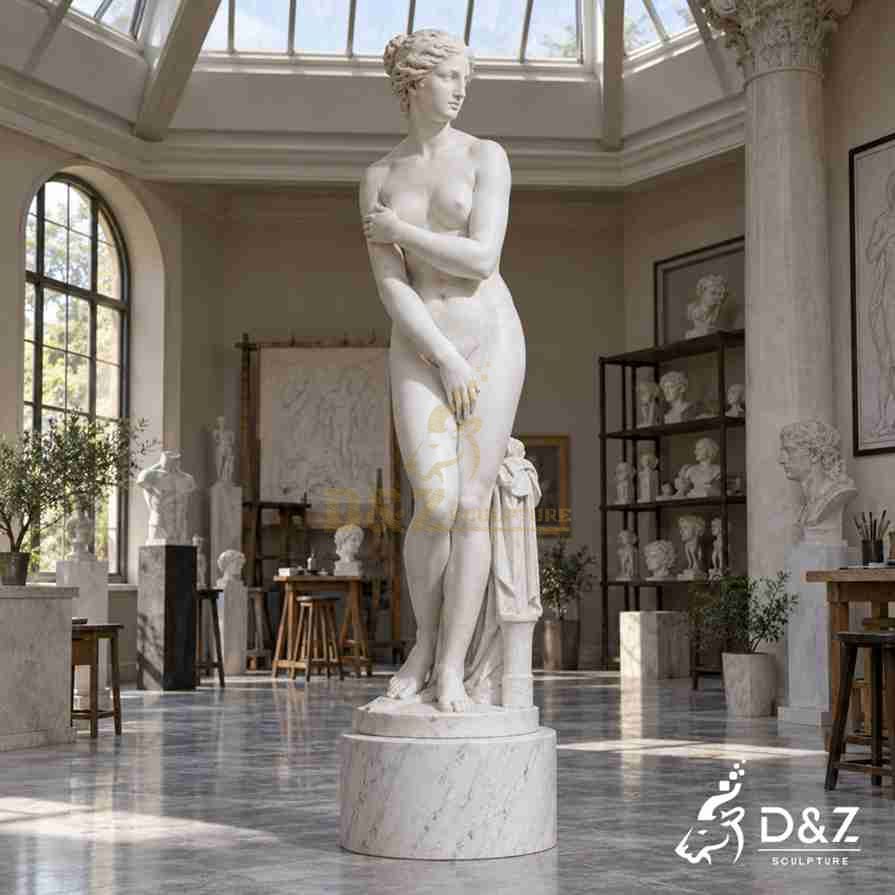
3. Capitoline Venus statue
The figure in the Capitoline Venus statue has one hand close to the chest and the other hand near the lower abdomen, with the body slightly turned. Therefore, it has both the human form of a nude statue and a distinct sense of restraint. Click to customize the Capitoline Venus statue
4. Venus de Medici statue
The figure in the Venus de Medici statue creates a restrained posture by covering the chest with one hand and the body with the other hand. The dolphin support beside the figure further strengthens the connection between the work and the sea and the myth of Venus. Click to customize a Venus de Medici statue
5. Callipygian Venus Statue
The figure in the Callipygian Venus statue turns her upper body and looks back, simultaneously lifting her dress with her hand, making her back, waist, and hips the center of the composition. This action creates a distinct spiral body structure, so the viewer naturally circles around the work. Click to customize a Callipygian Venus statue
6. Crouching Venus Statue
The figure in the Crouching Venus statue crouches with her knees bent, turning her upper body to one side while bringing her arms close to her body. This creates a complex interplay between her shoulders, waist, and legs, with a sense of compression being its most prominent feature. Click to customize a Crouching Venus statue
7. Venus Genetrix Statue
The figure in the Venus Genetrix statue adopts an upright posture, using an apple to emphasize Venus's identity, while the long dress creates a continuous line from shoulder to foot, allowing both the clothing to be seen and the body structure beneath to be felt. Click to customize the Venus Genetrix statue
8. Birth of Venus Statue
The design of the Birth of Venus statue places Venus on a seashell, incorporating long hair, a concealing pose, and a wave-shaped base. These elements quickly evoke the story of her birth from the sea. Click to customize the Birth of Venus statue
9. Venus Italica Statue
The Venus Italica statue is Antonio Canova's reinterpretation of the classical Venus tradition. The figure is wrapped in cloth, with her head slightly bowed, making the pose softer than the ancient Venus Pudica and closer to the moment a real person has just finished bathing. Click to customize the Venus Italica statue
10. Venus of Arles Statue
The typical characteristics of the Venus of Arles statue are a bare or partially bare upper body and long folds of clothing on the lower body, thus creating a clear division between the body and the clothing. The work emphasizes the natural movement of the figure adjusting her clothes. Click to customize the Venus of Arles statue
11. Venus Victrix statue
The figure in the Venus Victrix statue is in a semi-reclining posture, her body stretched out on a long couch. This horizontal composition is distinctly different from the standing Venus, combining a realistic portrait, the status of a classical goddess, and the softness of marble. Click to customize the Venus Victrix statue
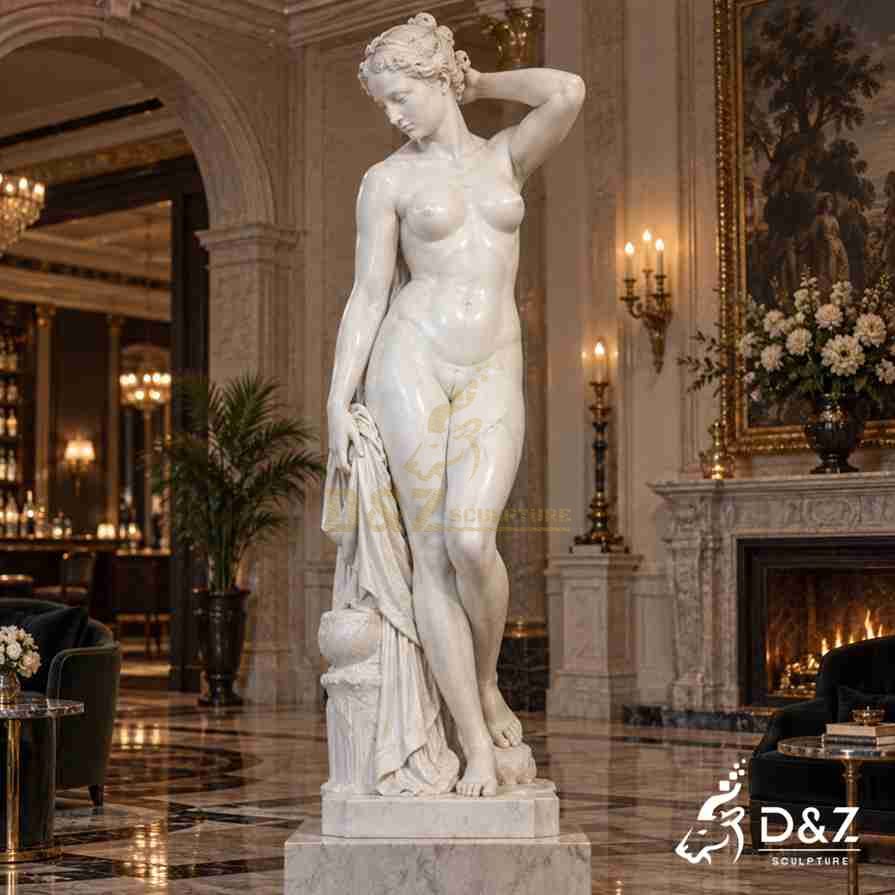
12. Bathing Venus statue
In the bathing Venus statue, the figure raises one hand to her head, while the other hand is close to her clothing and water jug, perfectly emphasizing the everyday scene before and after bathing. The water jug, robes, hair, and body movements often help the viewer identify the subject more effectively than specific facial features. Click to customize the Bathing Venus statue
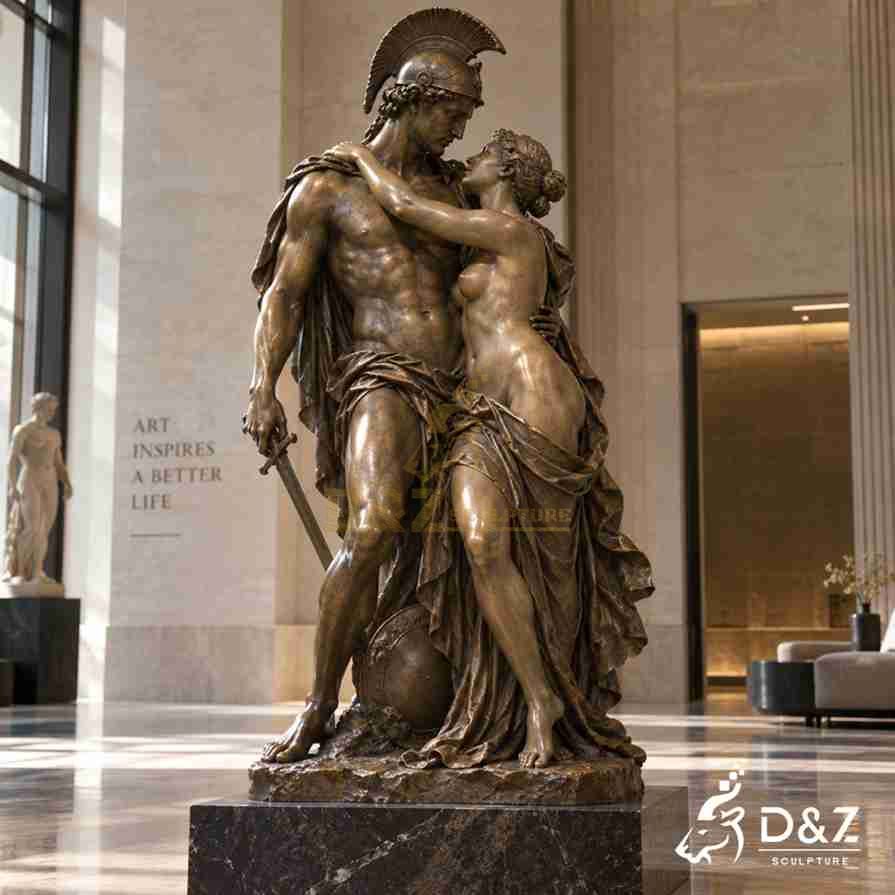
13. Mars and Venus statue
In the Mars and Venus statue, Mars wears a helmet and holds a weapon, his body structure emphasizing muscles and vertical strength. Venus is close to Mars, her soft body curves and embracing gesture breaking the rigidity of the god of war. Click to customize the Mars and Venus statue
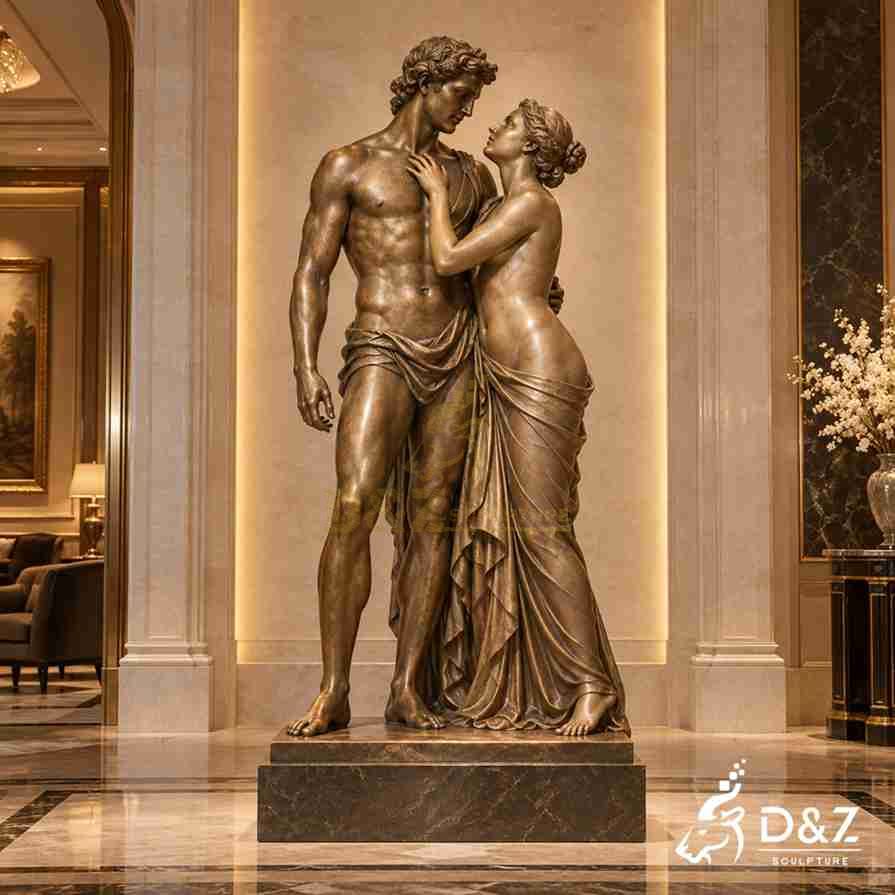
14. Venus and Adonis statue
Adonis in the Venus and Adonis statue is a handsome young hunter with well-developed, soft muscles in his chest, abdomen, and legs. Venus is half-naked, with a heavy, pleated robe draped from her waist to her hips, the layers of fabric creating a strong sense of movement. Click to customize the Venus and Adonis statue
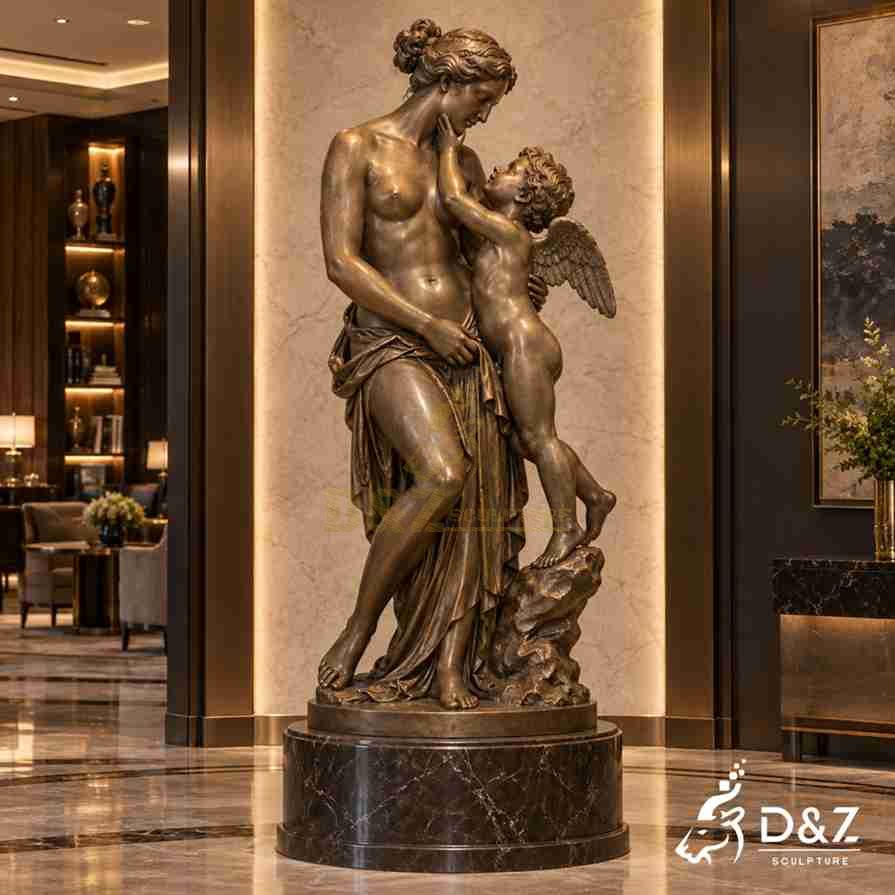
15. Venus and Cupid statue
Cupid in the Venus and Cupid statue has prominent wings and is touching Venus's face, creating a clear emotional connection between the two figures. Cupid's wings, bow, arrows, and interaction with Venus are all important elements identifying this theme. Click to customize the Venus and Cupid statue
Natural marble and bronze present strikingly different effects in the creation of the Venus goddess statue.
Marble is ideal for soft human silhouettes, delicate drapery, and classic interior décor, while bronze is better suited for dynamic poses, complex group portraits, and outdoor projects.
The table below compares these two materials from the perspective of actual projects.
tional support.
| Decision | Natural Marble | Cast Bronze | Project Implication |
|---|---|---|---|
| Visual Character | Bright, tactile, calm, and historically associated with many famous Venus works. | Warm or dark. Patina can increase contrast and develop naturally over time. | Match the surface finish to the architecture, landscape, and lighting. |
| Structure | Heavy and often solid. Projecting parts may require additional support. | Hollow casting supports complex limbs, extended forms, and multi-figure groups. | Bronze is usually more efficient for dynamic silhouettes and complex structures. |
| Outdoor Use | Suitable for outdoor use with the correct stone selection, drainage, sealing, and maintenance. | Highly durable when the correct alloy, welding process, and patina system are used. | Climate, salt exposure, freeze-thaw cycles, and irrigation conditions should be reviewed before production. |
| Detail | Excellent for soft flesh, smooth body curves, and crisp drapery, but thin edges can be more vulnerable. | Excellent for hair, fingers, complex folds, accessories, and detailed textures. | Detail design should follow the physical properties of the selected material. |
| Maintenance | Requires periodic cleaning. Avoid acidic cleaners and uncontrolled staining. | Rinse and inspect the surface regularly. Protective wax or coating should be renewed when required. | A clear long-term maintenance schedule should be prepared for the project. |
| Cost Drivers | Stone block quality, material waste, sculpture weight, carving time, packaging, and transportation affect the final cost. | Modeling, molds, wax work, casting, welding, patina, internal armature, and finishing affect the final cost. | Compare the complete installed project cost instead of looking only at the sculpture unit price. |
D&Z Sculpture offers a one-stop customization service for Venus Goddess statues, including:
Pose Customization: Adjustable standing, sitting, squatting, turning poses, gestures, head direction, and clothing folds.
Material Customization: Choose from natural white marble, light-textured marble, or bronze, matching the material to the indoor or outdoor environment.
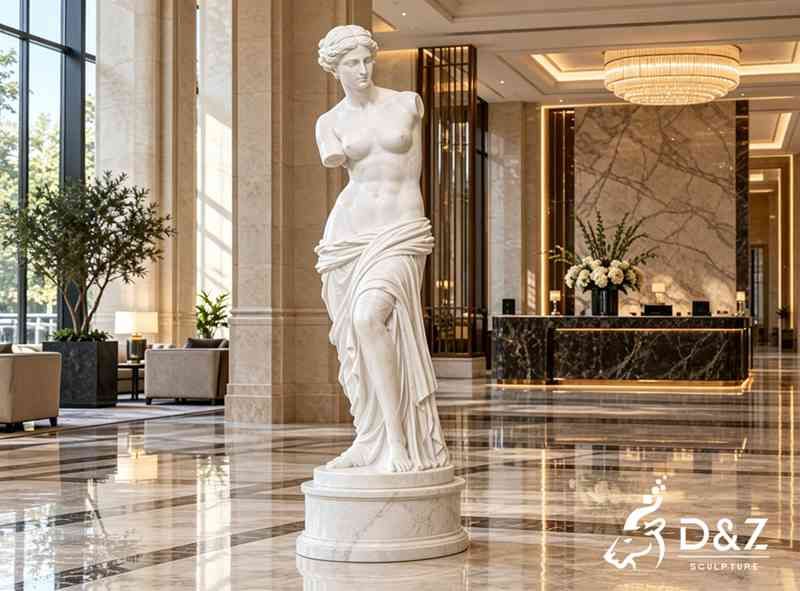
Size Customization: Can be made to indoor display size or enlarged for large gardens, hotels, plazas, and public spaces.
Surface Finish: Marble can be finely ground, polished, or finished with natural stone effects; bronze can be finished in bronze, dark brown, or black.
Base Design: Square, round, classically carved, or minimalist bases can be designed to match architectural styles, with pre-installed installation structures.
Classic Reproduction and Redesign: Choose proportions close to the historical prototype, or retain classic features while readjusting the figure's pose and details.
Q: Are Venus and Aphrodite the same goddess?
A: Aphrodite is a Greek goddess, while Venus is a Roman goddess. Roman artists borrowed many Greek art forms, but Venus also possessed unique symbolic meanings, such as representing cities, dynasties, fertility, and victory.
Q: Why do different Venus statues vary so much in style?
A: Venus statues do not have a fixed style. Some names correspond to specific historical works, some represent a type of ancient sculpture, and some are simply mythological themes.
Q: Is a white marble Venus statue suitable for long-term outdoor placement?
A: Yes, but you need to choose stone suitable for outdoor use and properly handle base drainage, installation connections, and surface maintenance.
Q: Will a bronze Venus goddess statue rust?
A: Bronze surfaces will naturally oxidize over time, but this is not considered rust. Adding a protective layer can improve outdoor stability.
Q: Aren't the complex arms, fingers, and drapery folds easily damaged?
A: The slender protrusions of marble require appropriate support and thickness. Bronze can handle more complex arms, fingers, and attachments through internal structure and casting methods.
Q: Why is bronze more recommended for Venus statues with multiple figures?
A: Multiple figures often involve outstretched arms, connections between figures, and complex centers of gravity. Bronze, with its hollow casting process, makes these structural relationships easier to handle and is suitable for large outdoor projects.
Q: What is most important during installation?
A: It's necessary to confirm the foundation dimensions, sculpture weight, connection methods, and hoisting conditions in advance. For outdoor projects, wind load, ground conditions, and on-site construction space must also be considered.
Q: How should it be cleaned daily?
A: We recommend using clean water, soft tools, and cleaning methods suitable for natural stone. Avoid using strong acids or alkalis.
WhatsApp: 0086 13613220352
Email: info@dzsculpture.com
From the ktz Venus de Milo and the kfs Aphrodite of Knidos to the Venus and Cupid Statue, Venus statues differ significantly in posture, drapery, relationships between figures, and historical background. For actual projects, choosing a Venus statue is not just about selecting a classic shape; it also involves considering materials, size, display space, and long-term usage environment.
D&Z Sculpture can provide material options, such as marble and bronze, based on classical prototypes or project requirements, allowing the Venus statue to integrate more seamlessly into the space while retaining its classical artistic characteristics.
Leave a message

Any landscape ideas in your mind, describe to D&Z sculpture team directly, you can imagine we can create.


Copyright © 1996-2026 D&Z Sculpture Co., Ltd. All Rights Reserved | Sitemap |