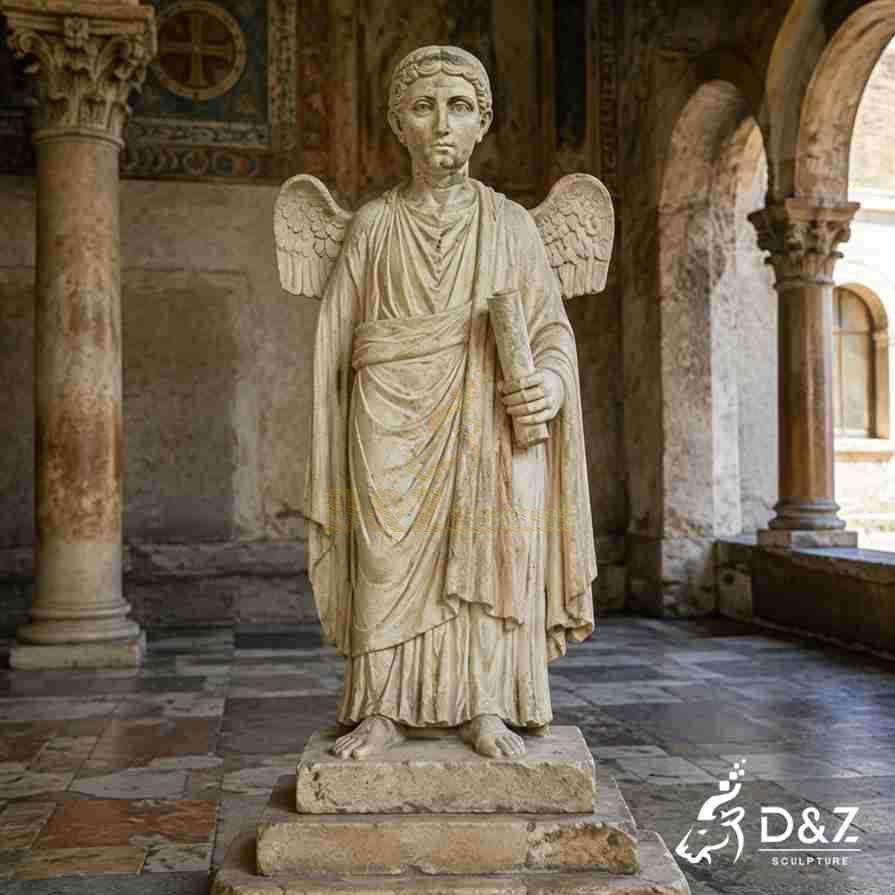
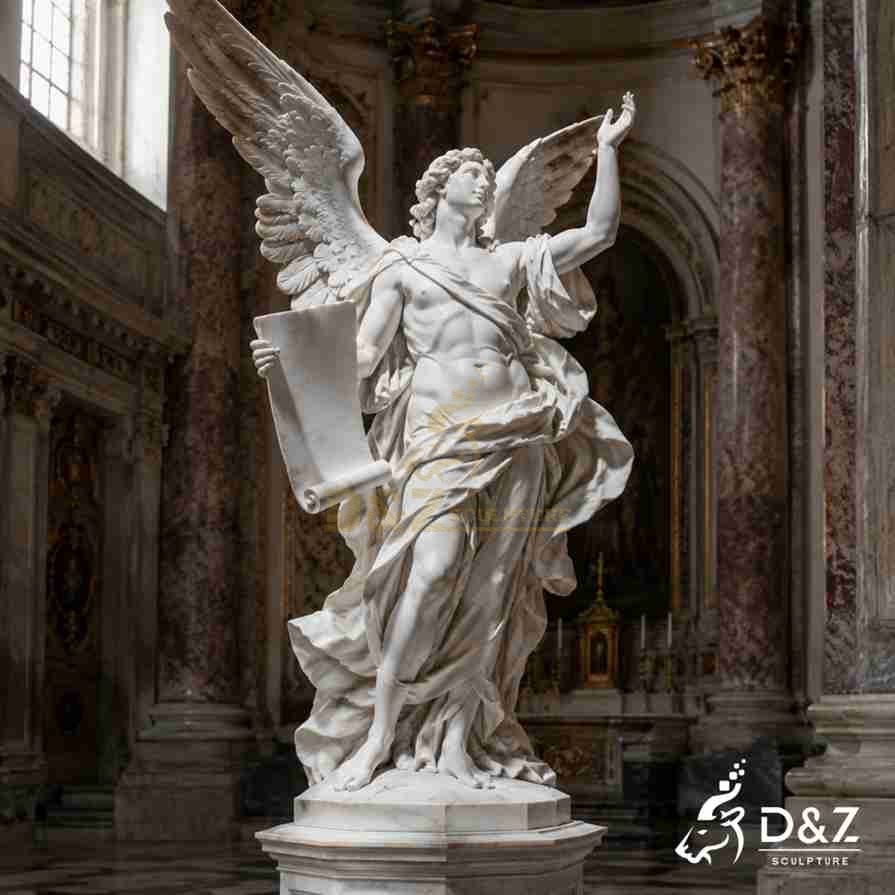
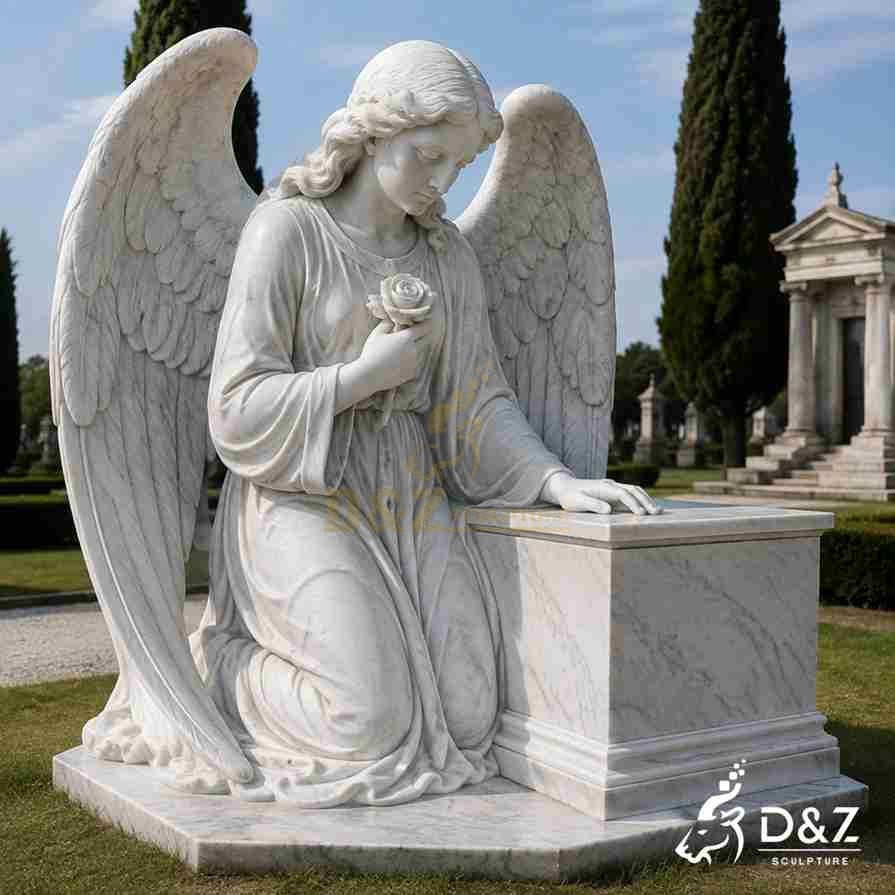
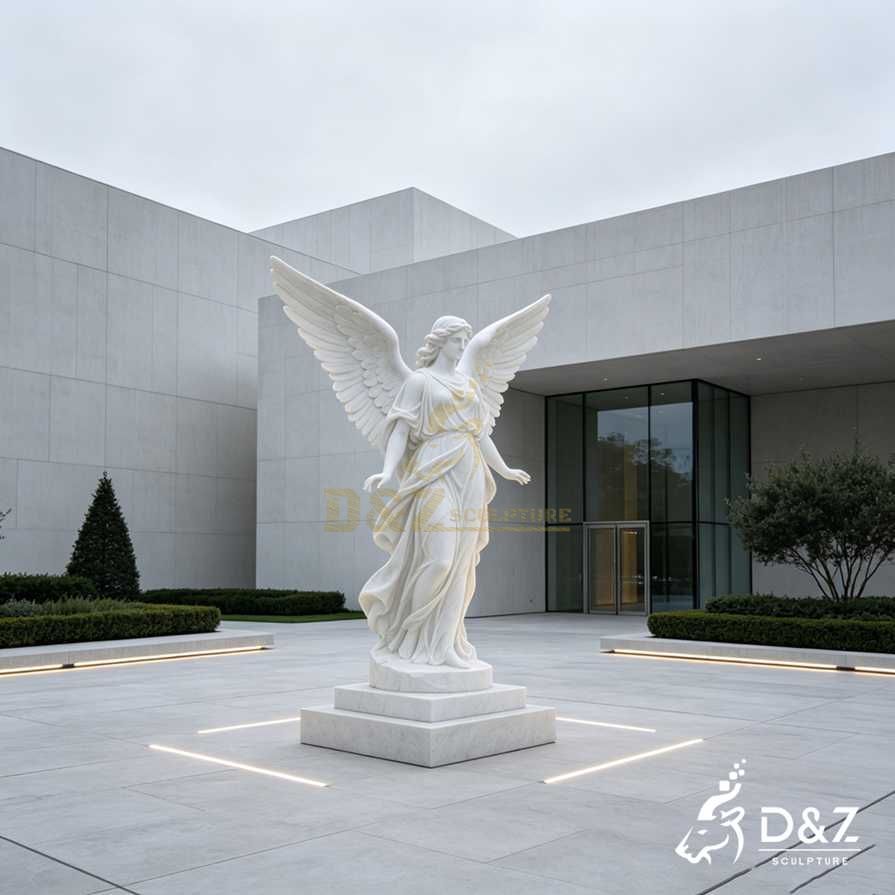
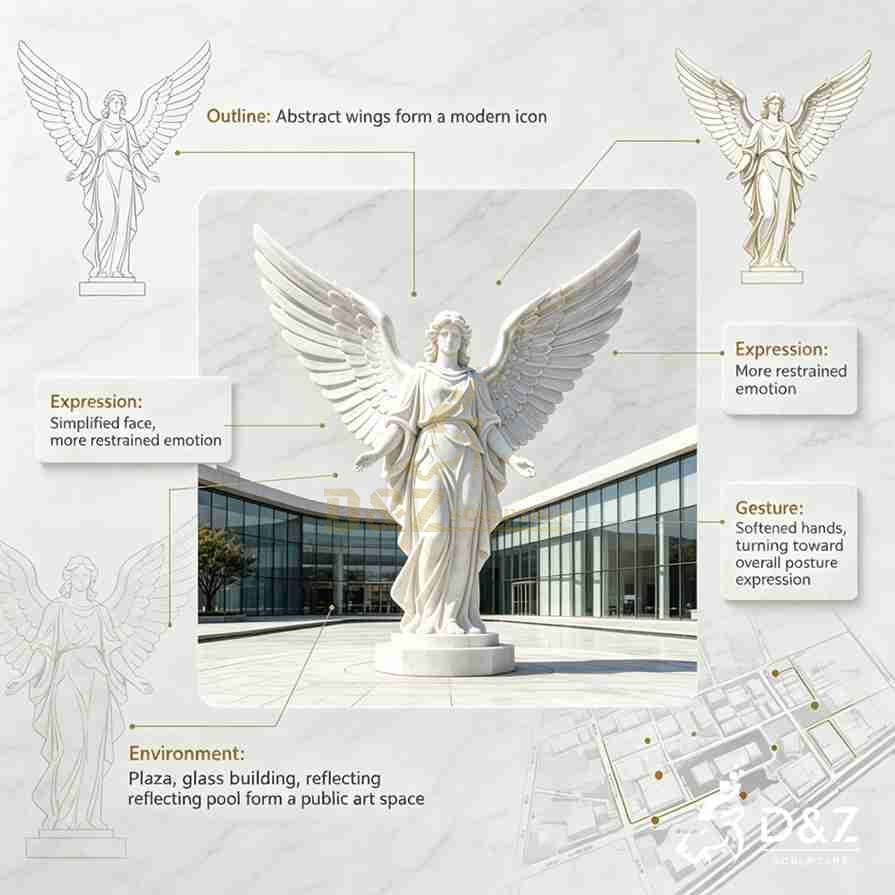
Famous angel statues are often remembered along with their surrounding spaces. The churches and bridges of Rome imbue the angel image with religious and urban historical significance, while memorial cemeteries in Europe and North America lend these works a deeper sense of remembrance. Therefore, the value of famous angel statues lies not only in the figure itself but also in the architecture and landscape, which together create a complete artistic environment. D&Z Sculpture adheres to the principle of art adapting to space in its custom designs for angel statues, maximizing the overall artistic value and spatial atmosphere of the sculpture.
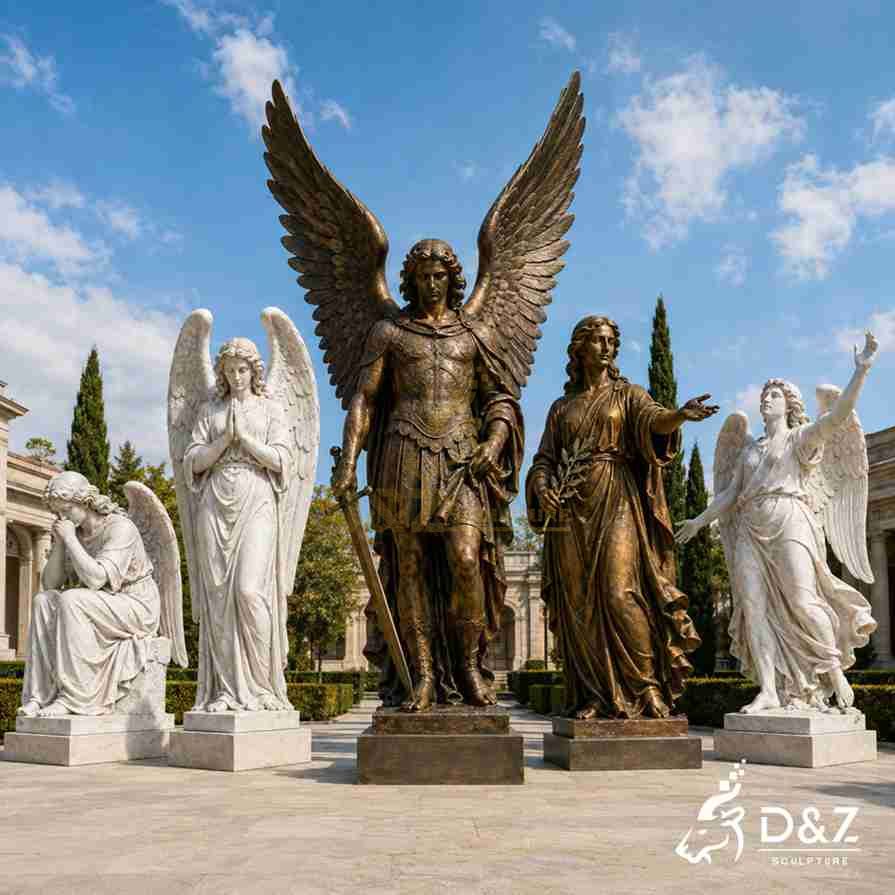
Angel statues with outstretched wings represent protection and strength; angels holding swords represent justice, courage, and action; praying angels express faith, humility, and peace; and mourning angels express sorrow and remembrance. The actions and expressions of these figures convey profound emotions, guiding viewers to emotional resonance.
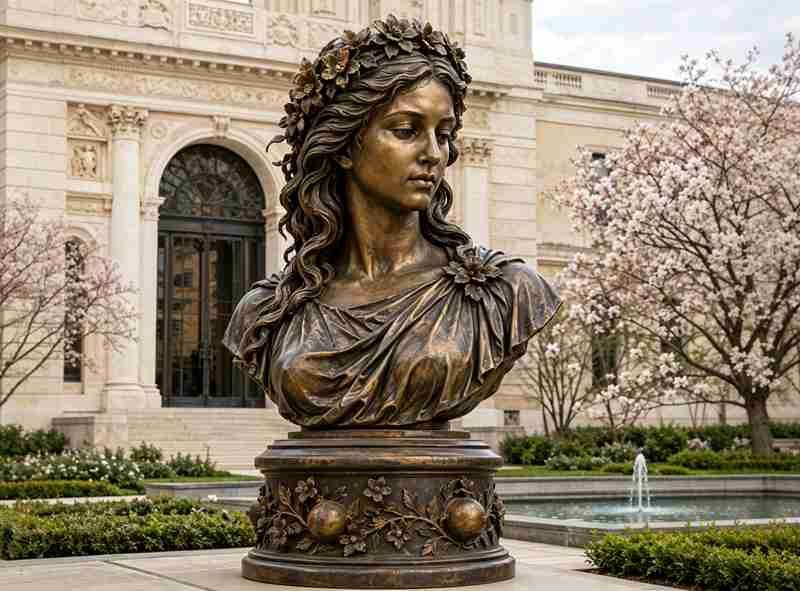
The material of the statue also influences its appearance and character. White marble angel statues allow for detailed depictions of faces, feathers, and clothing folds, while creating a pure and tranquil atmosphere. Bronze angel statues possess excellent strength and malleability, making them suitable for creating larger wings and more dynamic poses. Furthermore, the bronze surface changes over time, enhancing the historical feel of large angel statues.
Table of Contents
Why Do Famous Angel Statues Transcend Time?
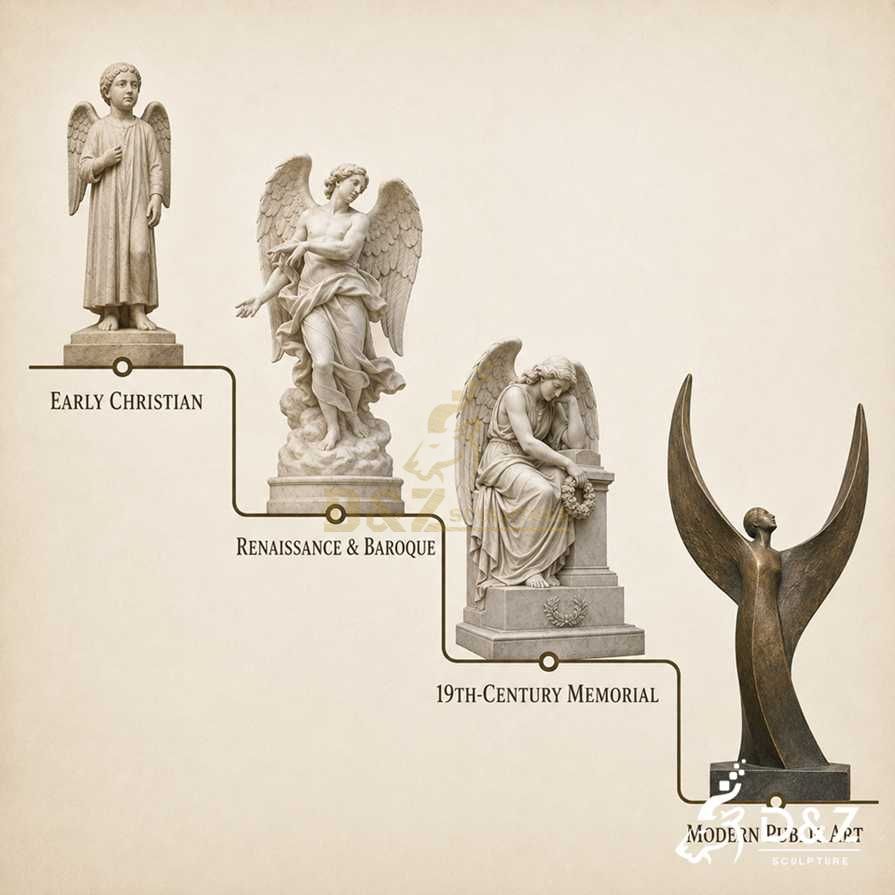
Early Angelic Images in Religious Art
Angel Sculptures of the Renaissance and Baroque Periods
Angels in Cemetery and Memorial Art
Angel Images in Modern Public Spaces
What Makes an Angel Statue Famous?
Famous Historical Angel Sculptures to Know
Popular Angel Statue Types and Their Meanings
3. Kneeling Praying Angel Statue
5. Bronze Archangel Michael Statue
6. Fallen Angel Lucifer Statue
Common Symbols in Famous Angel Statues
Bronze VS Marble Angel Statues
Application Scenarios of Large Angel Statues
How Famous Angel Statues Influence Modern Design
FAQs About Famous Angel Statues
The reason why famous angel statues have maintained their vibrant artistic life and public recognition is that these works possess a timeless spiritual core, diverse artistic aesthetics, and broad applicability. Large angel statues embody the spiritual aspirations of protection, redemption, hope, purity, and commemoration. From medieval religious temples to modern public spaces, angel statues, crafted from durable materials like natural marble and bronze, have achieved enduring value. By altering postures, expressions, clothing, and symbols, their sacred essence is deeply integrated with contemporary aesthetics, making them a timeless theme.
In early religious art, angels primarily appeared as messengers of God, interpreting religious doctrines and symbolizing the transmission and protection of divinity. Angels did not always have wings. With the legalization of Christianity, the demand for visually impactful and clearly defined religious figures increased significantly, leading to the emergence of winged angel statues. Limited by the sculpting techniques of the time, early angel statues emphasized spiritual meaning, downplaying human movement and details, thus establishing basic visual rules for later works.
Renaissance angel sculptures integrated humanism into traditional religious themes, paying greater attention to human proportions, natural movements, and facial expressions, imbuing the angel's image with both divinity and humanity.
Baroque art further enhanced the dynamic effect, with figures exhibiting a strong sense of movement, richly layered wings, and naturally draped drapery. The overall sculptures were emotionally charged and visually impactful, widely used in European palaces, churches, and other venues.
From the 19th century onwards, angels gradually became important figures in cemeteries and memorial art, carrying connotations of mourning, remembrance, solace, and immortality. Cemetery angel statues emphasized gentle, serene, and compassionate expressions, often using postures such as bowing, clasped hands, drooping wings, or bending forward, conveying the living's expectations of separation and remembrance, imbuing them with a warm humanistic touch, thus becoming an artistic medium connecting the deceased, family, and memorial spaces.
In modern public spaces, angel statues are not merely religious in nature; they are also used in city squares, cultural centers, hotel courtyards, and other places to reinforce an atmosphere of hope, peace, protection, and healing. Modern angel statues boast more diverse forms, encompassing minimalism, realism, abstraction, and creativity to meet different needs and convey a warm and positive urban humanistic spirit.
A famous angel statue achieves lasting popularity and global recognition by possessing a clear theme, a unique form, and a genuine creative background. Most renowned angel works are closely linked to historical stories, religious culture, commemorative significance, or records of artistic innovation, forming a unique cultural value that transcends mere decoration. High-quality sculpting or casting techniques allow the figure to be more complete, becoming a classic artistic symbol that transcends time.
1. Angels of Ponte Sant'Angelo, Rome
The angel statues on the Ponte Sant'Angelo in Rome are a significant example of Baroque religious art. In the 17th century, Bernini designed a group of angels holding symbols of the Passion for this bridge. The folds of their robes, wings, and postures are full of dynamism. The bridge, river, castle, and statues together create a powerful urban landscape memory.
2. Angel of the North by Antony Gormley
Angel of the North in Gateshead, England, is a famous large-scale angel artwork in the field of modern public art. It does not employ the realistic style of traditional religious sculptures. The artist uses simplified human figures and enormous metal wings to create a clear and powerful landmark image.
3. St. Michael Statue on Castel Sant'Angelo, Rome
The image of Saint Michael atop Castel Sant'Angelo in Rome is a classic representation of the guardian theme. Saint Michael is usually depicted as a warrior angel. He holds a longsword with outstretched wings, symbolizing justice, courage, and the overcoming of evil.
1. Weeping Angel Statue
The weeping angel statue is one of the most moving and classic marble angel works. The angel lies prone on the sarcophagus, its upper body resting on the lid, one arm hanging down over the outside of the sarcophagus, the other arm under its head, its head bowed and buried in its arm, its large wings hanging down, symbolizing remembrance, blessing, and eternal protection of the deceased.
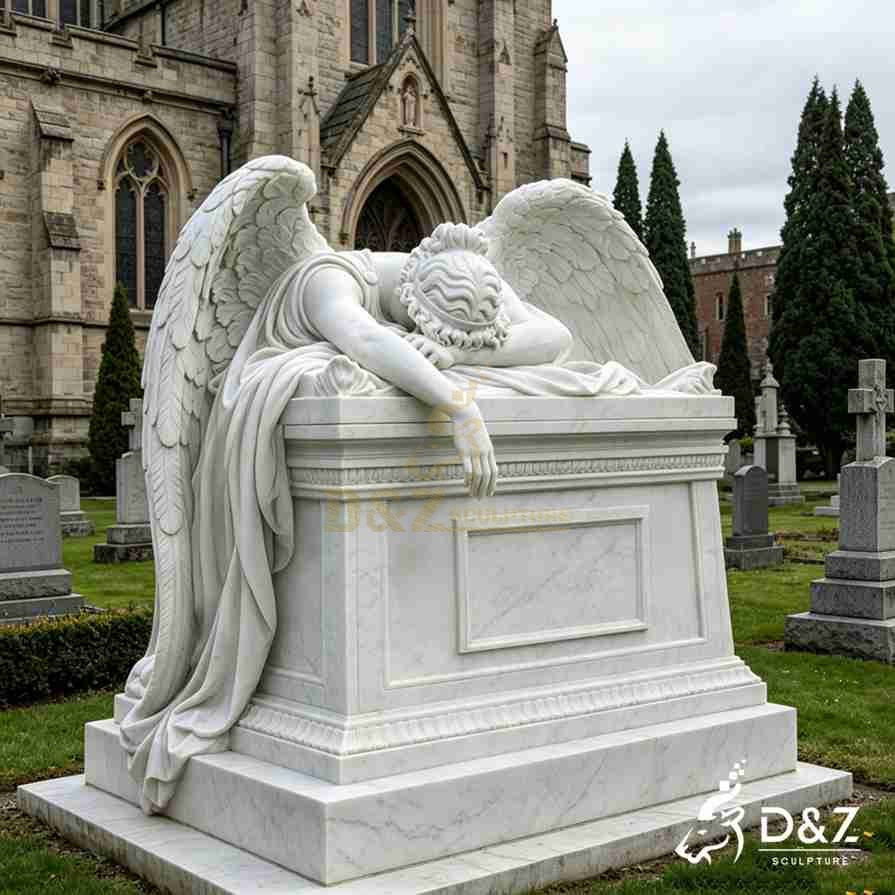
Large Weeping Angel Statue | Custom Marble Memorial Sculpture DZJ-831
2. Headless Angel Statue
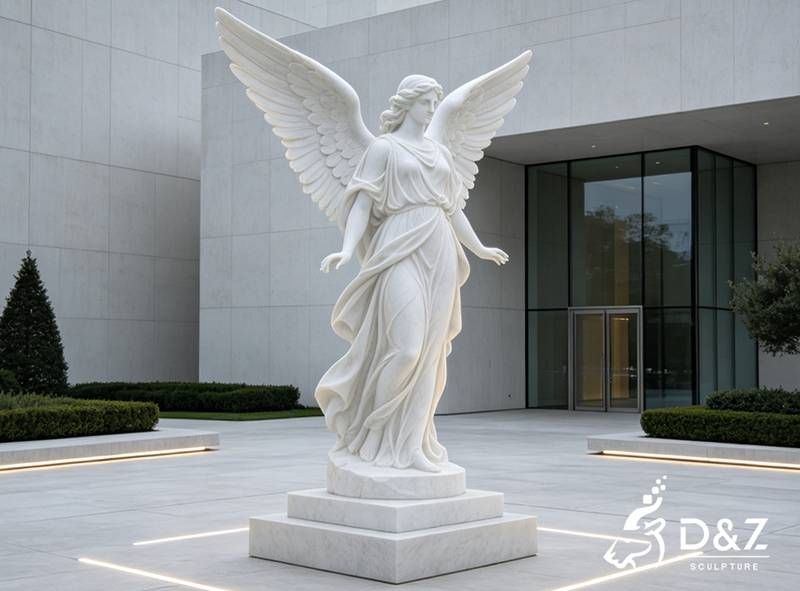
The Headless Angel Statue is a highly recognizable contemporary marble artwork. Standing upright, it is missing its head and arms, with its wings fully extended, large and complete. A long robe hangs down its body, downplaying personal emotional expression and strengthening universal spiritual connotations, representing transcendent sanctity and silent protection.
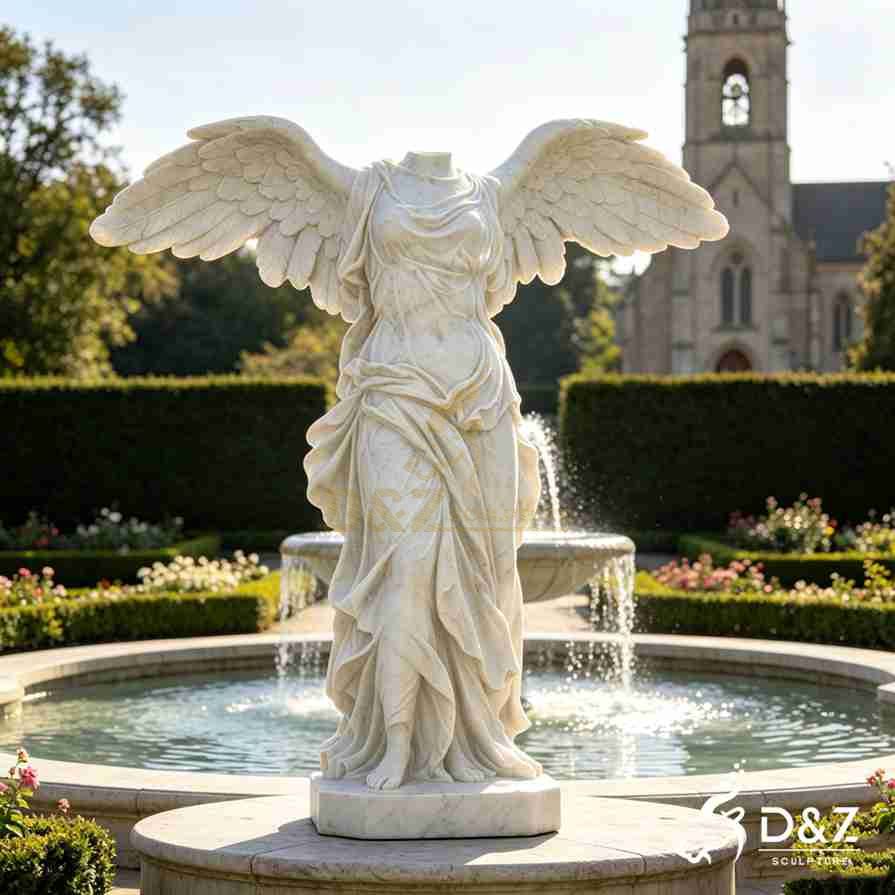
Large White Marble Headless Angel Statue | Nike-Inspired Art DZJ-832
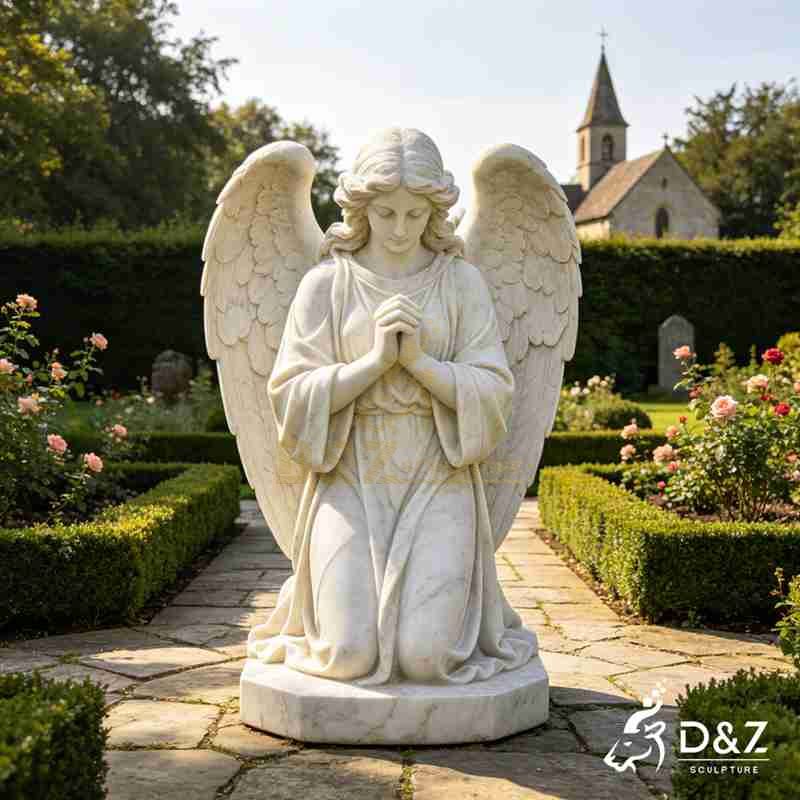
3. Kneeling Praying Angel Statue
The Kneeling Praying Angel Statue is the most widely used classic marble angel sculpture; its overall posture is solemn and dignified. The Kneeling Praying Angel Statue depicts the angel kneeling, hands clasped in prayer, head slightly bowed, symbolizing prayer, blessing, peace, and spiritual nourishment.
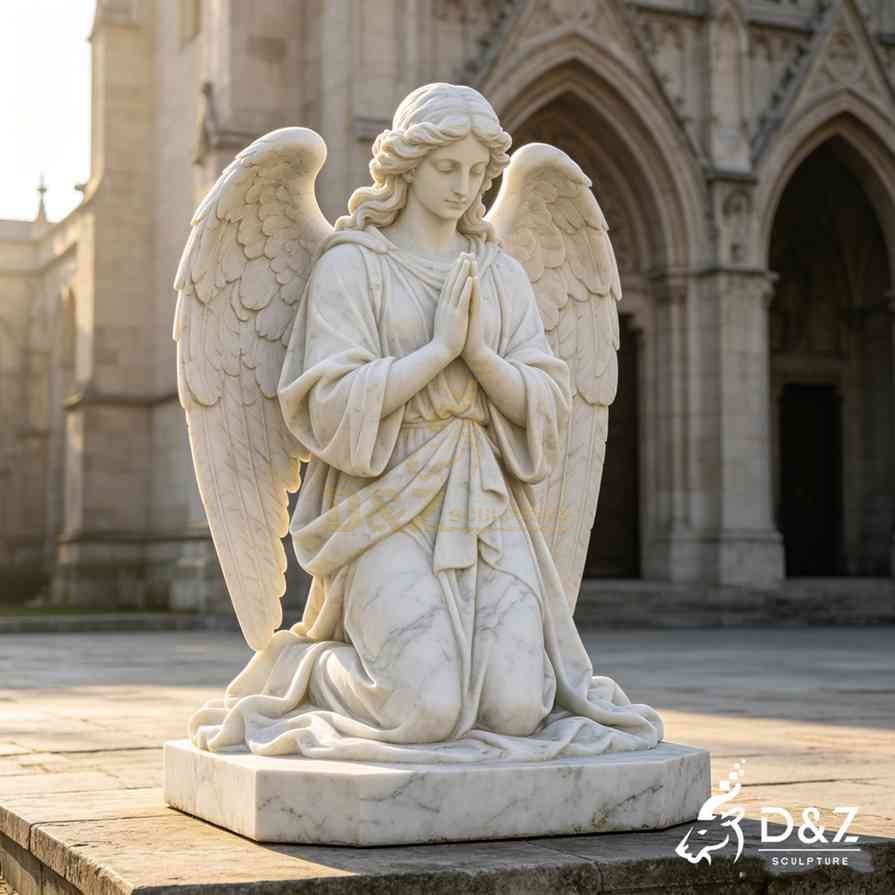
Kneeling Praying Angel Statue | White Marble Memorial Art DZJ-834
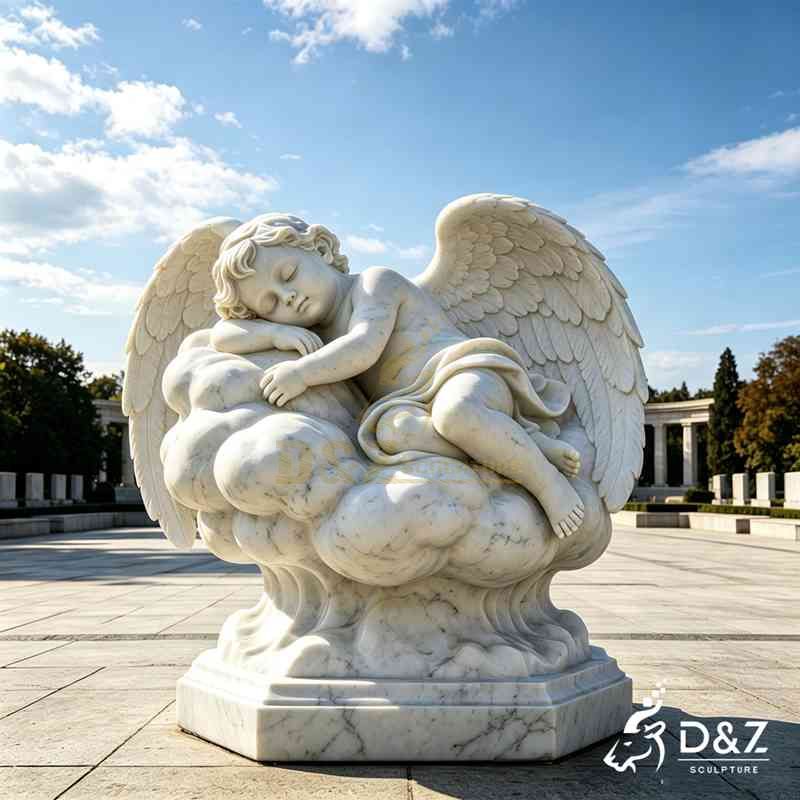
4. Sleeping Angel Statue
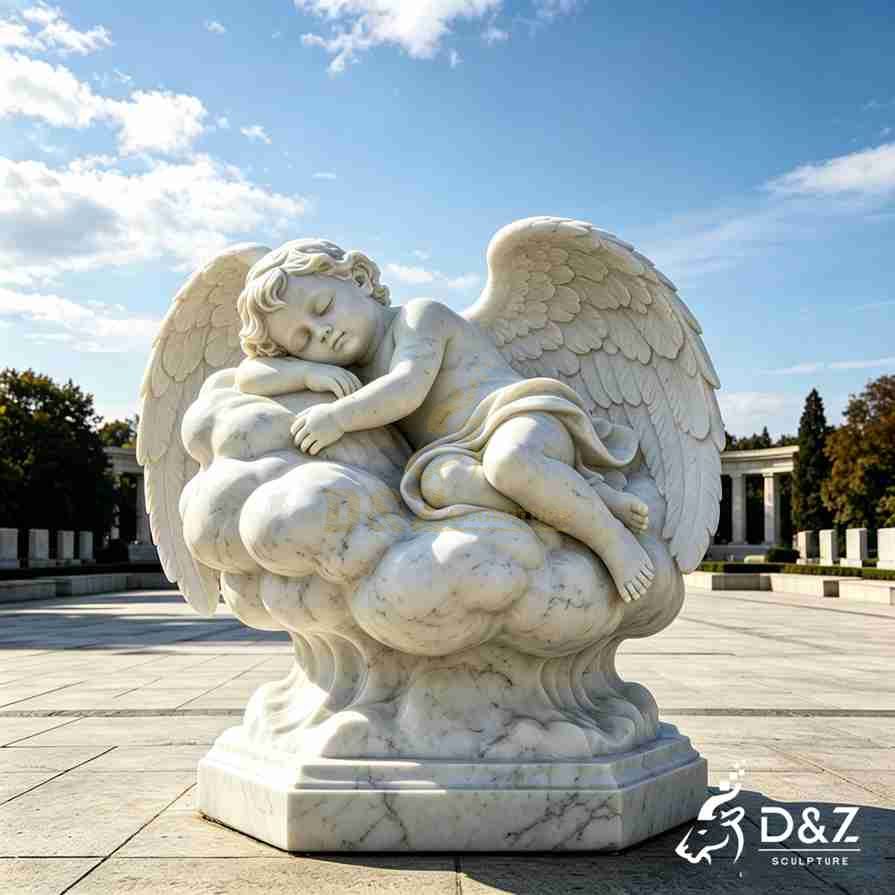
Sleeping angel statues typically depict angels resting peacefully. The overall image is of an infant angel lying on its side, its body curled up and relaxed, its arms resting on a cloud base. A pair of large wings spread out and droop, conveying peace and warmth. It is often used to express rest, protection, purity, and eternity.
5. Bronze Archangel Michael Statue
Archangel Michael is one of the most classic heroic angel figures in Western religious art. The bronze casting perfectly interprets his powerful and majestic aura. The Bronze Archangel Michael Statue stands in a fighting stance, one foot in front of the other, one foot pressing down on a demon figure below. Wings are spread; one hand raises a sword, the other grasps a chain. The strong muscle definition symbolizes protection, victory, and divine protection.
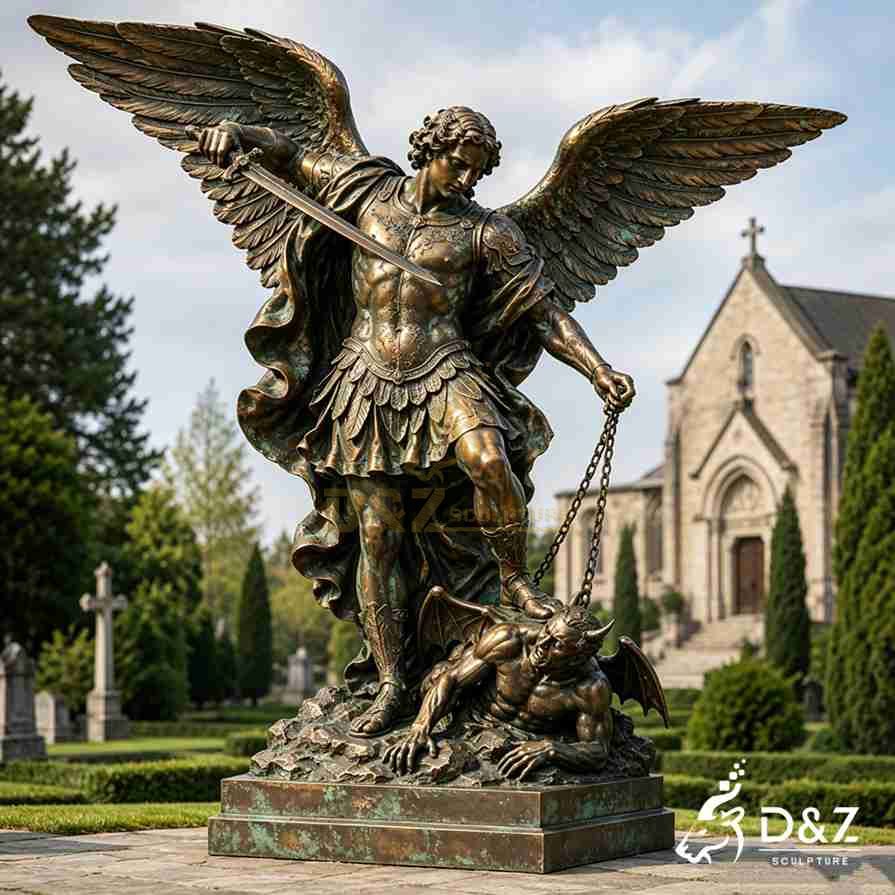
Large Bronze Archangel Michael Statue for Outdoor DZJ-835
6. Fallen Angel Lucifer Statue
The bronze Fallen Angel Lucifer statue is a unique and controversial artistic classic, possessing a strong narrative and visual impact. The Fallen Angel Lucifer Statue adopts a tilted pose of falling and struggling, with the body arched and twisted backward, emphasizing pride, rebellion, defeat, and inner conflict.
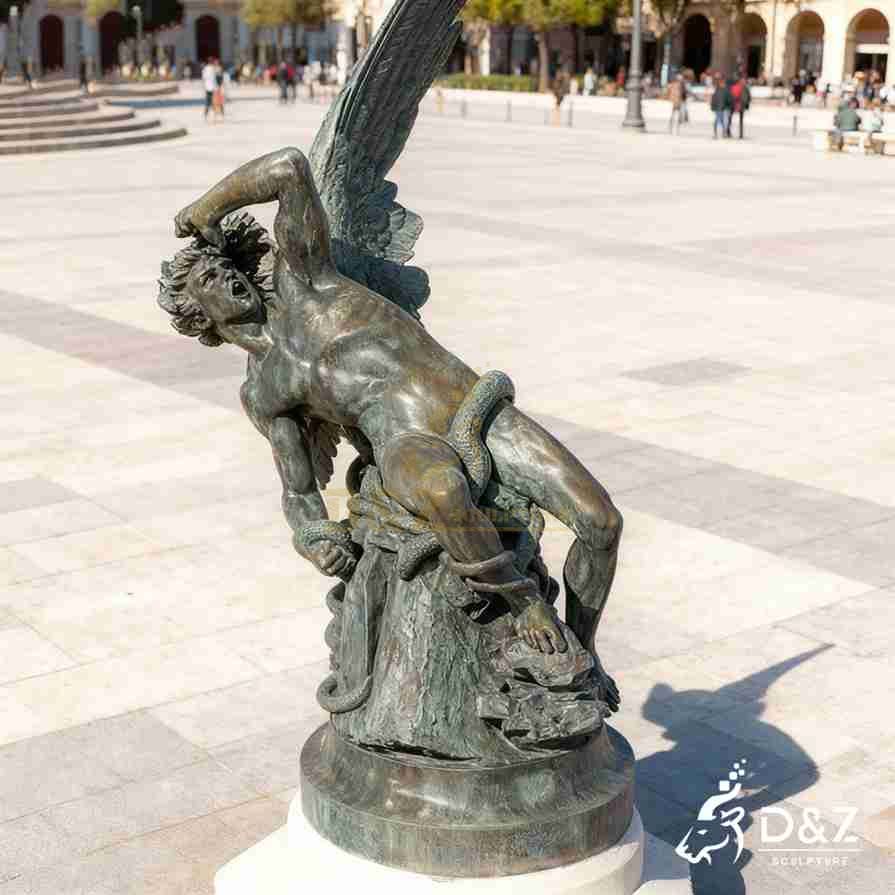
Large Bronze Fallen Angel Lucifer Statue for Sale DZJ-150
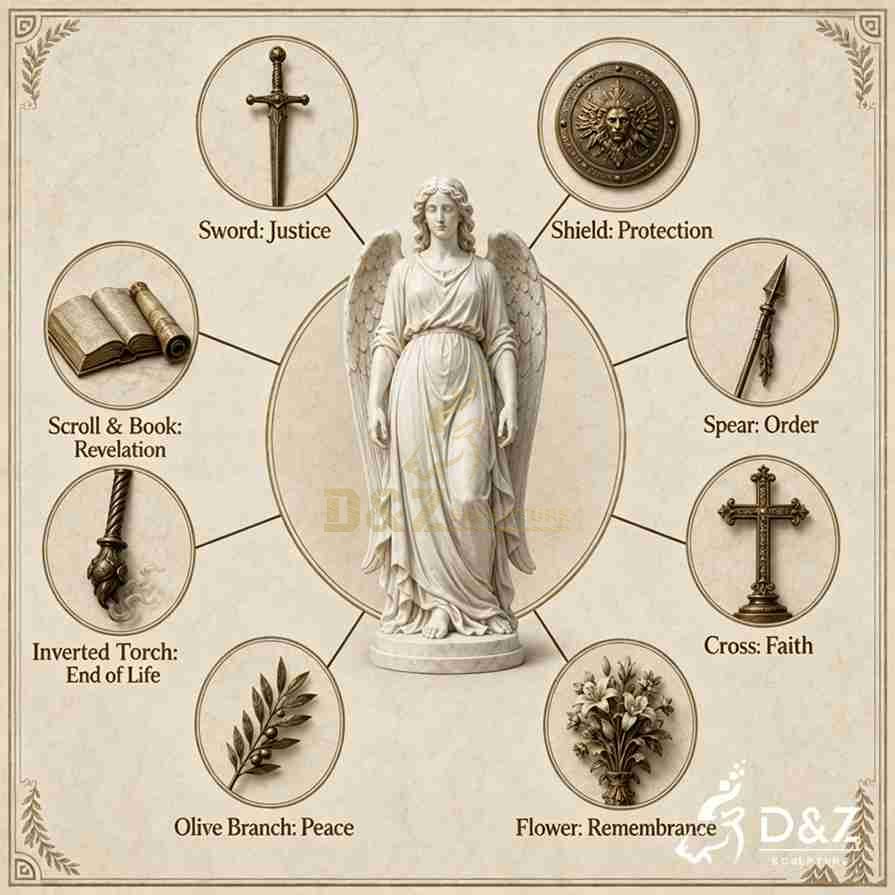
Famous angel statues often use clear symbols. A sword represents justice, action, and decision. A shield represents protection. A spear represents strength and order. A cross represents faith and redemption. Flowers express memory, life, and blessings. An olive branch represents peace. An inverted torch is common in memorial art and symbolizes the end of life. Scrolls and books can represent information, revelation, and records. These classic symbols permeate sculptural creation from ancient times to the present, making the spiritual meaning of the work more intuitive and fuller, forming a unified and highly recognizable classical artistic language.
Both bronze and marble are suitable for making angel statues, but the two materials have different characteristics. White marble angel statues possess a pure, gentle, and ethereal quality, with exquisite carving details and a high-end classical aesthetic. Bronze angel statues are structurally robust, weather-resistant, and imposing, exhibiting good structural stability and weather resistance, while also conveying a greater sense of power and modernity.
Churches and church courtyards: Ideal for depicting prayer and guardian angels, creating a sacred and solemn atmosphere; classic locations for religious projects.
Memorial cemeteries and mausoleums: Particularly suitable for mourning and depicting sleeping angels; used for remembrance and creating commemorative landscapes.
City squares and memorial parks: Suitable for powerful, large bronze angel statues such as those of Michael, serving as public spiritual landmarks.
High-end private estates and villa gardens: Renaissance- and Baroque-style angel garden statues enhance the artistic style.
Famous angel statues provide a rich design language for modern projects. D&Z Sculpture studies the postures, wings, drapery, and spatial relationships of classic works, avoiding the need for direct replication of the entire piece. It retains core themes such as protection, sorrow, or hope, and then redesigns the figure according to the site. Church projects can emphasize religious identity. Memorial projects can enhance emotional expression. Public art projects can simplify traditional elements and incorporate modern structures. Original designs retain classic qualities while avoiding a lack of distinctive character.
Q: Should outdoor angel statues be made of bronze or marble?
A: Bronze is suitable for complex poses and large, outstretched wings. Marble is suitable for classical, prayerful, and commemorative designs, and its selection should be based on the site and design.
Q: Does an angel statue require an internal structure?
A: Large bronze angels typically require an internal framework. Large marble angels also require a reliable base connection and installation system.
Q: Large angel statues are easily damaged during transportation; how can this be ensured?
A: We use segmented protection and shockproof packaging with a solid wood frame. Large sculptures are transported in modular pieces and assembled on-site.
Q: What installation considerations are needed for angel sculptures in public spaces?
A: Foundation load-bearing design and wind resistance calculations are required. Large bronze sculptures have an internal steel structural framework to ensure long-term outdoor safety and stability.
Q: Can you provide CAD engineering drawings for the angel sculpture?
A: For customized projects, we can provide CAD dimension drawings and structural drawings for client approval and site construction coordination.
Q: Can I customize an angel sculpture based on a picture?
A: Yes, you can provide a reference image, and we will extract the pose, theme, and spatial relationships from the image to create an original custom design.
Q: How are maintenance and upkeep handled afterward?
A: Marble should be regularly sealed with glaze for protection; bronze should be cleaned regularly to remove surface dust; outdoor sculptures should undergo basic inspection and maintenance annually.
Q: What are the core differences between medieval, Renaissance, and Baroque angel statues?
A: Medieval angels are restrained and focused on service and missionary work; Renaissance angels are symmetrical and graceful; Baroque angels are dynamic and unrestrained, with flowing robes and dramatic tension.
WhatsApp: 0086 13613220352
Email: info@dzsculpture.com
If you are researching or looking for famous angel statues, D&Z Sculpture can provide original designs for your project based on the stylistic language of classic works. We have 30 years of experience in sculpting and specialize in custom bronze and marble angel statues. Our team can adjust the figure's posture, wings, symbols, materials, colors, sizes, and bases according to the environment of churches, cemeteries, memorial gardens, estates, and public spaces. Contact us for angel statue design proposals and quotes suitable for your project.
Leave a message

Any landscape ideas in your mind, describe to D&Z sculpture team directly, you can imagine we can create.


Copyright © 1996-2026 D&Z Sculpture Co., Ltd. All Rights Reserved | Sitemap |