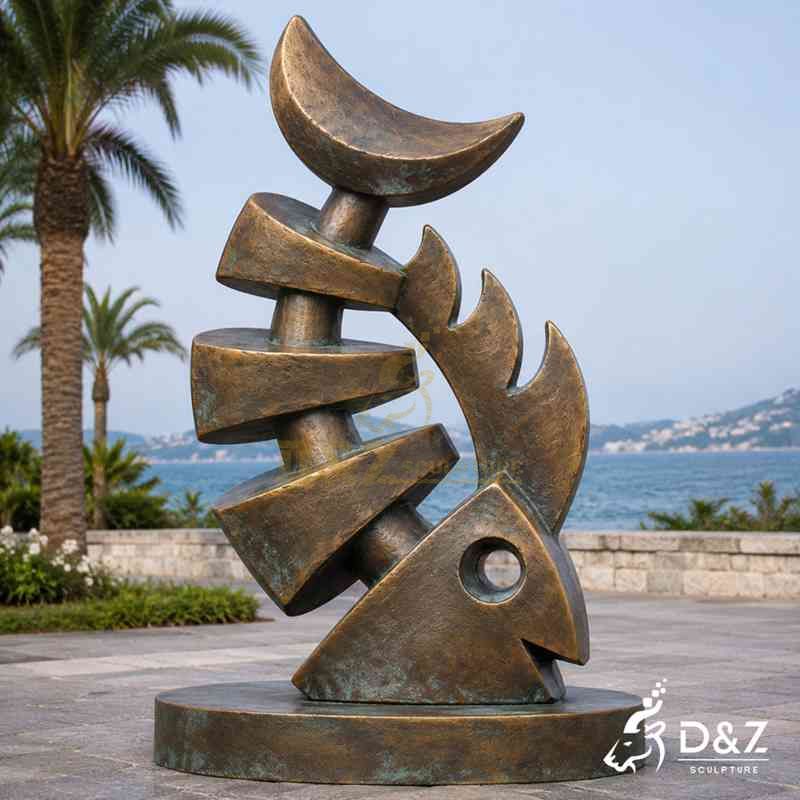
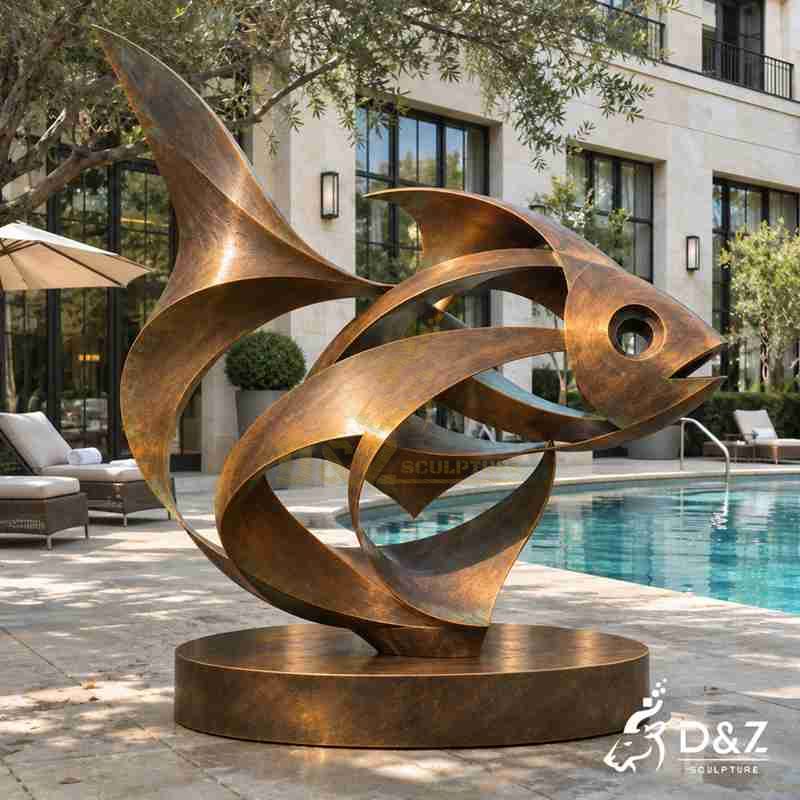
Abstract Fish Sculpture by D&Z Sculpture | Flowing Openwork Bronze Landscape Art
|Years of Extensive Experience | One-Stop Custom Service | Lifetime Warranty & Maintenance | Global Shipping |
Abstract Fish Sculpture: Bringing a Sense of Fluidity to Modern Spaces
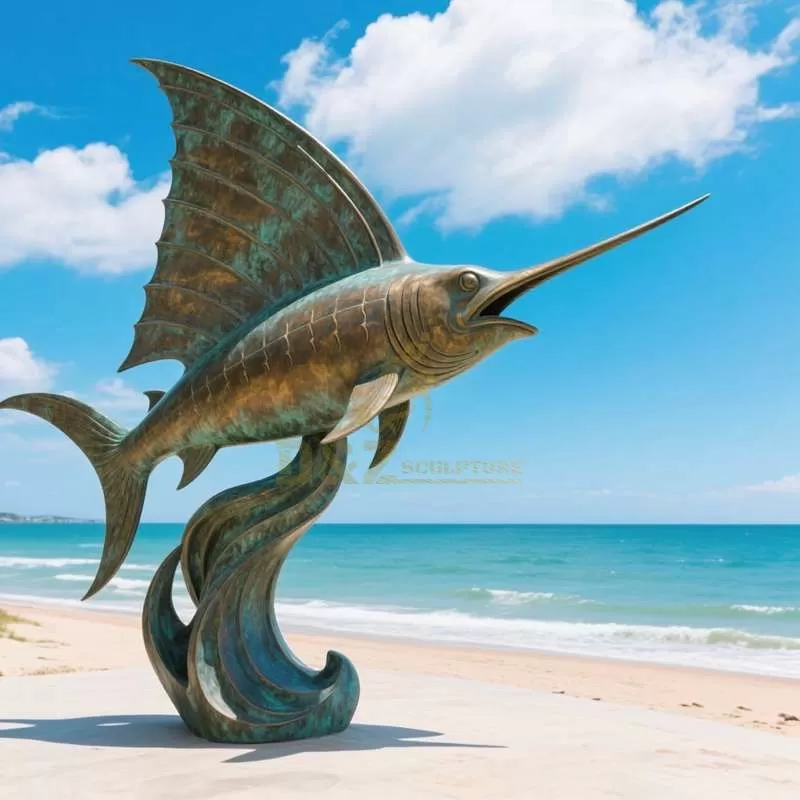
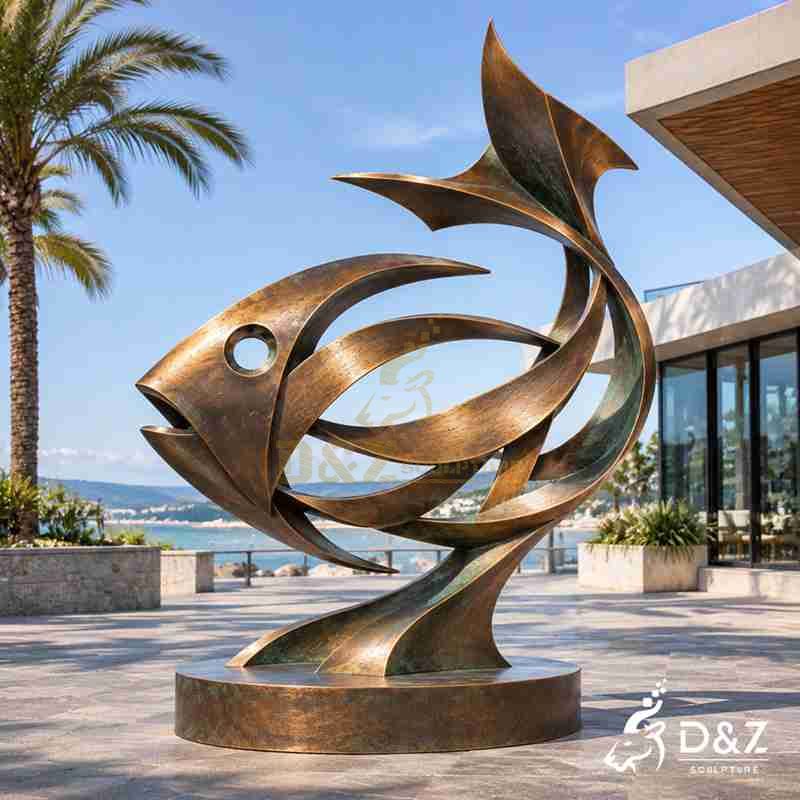
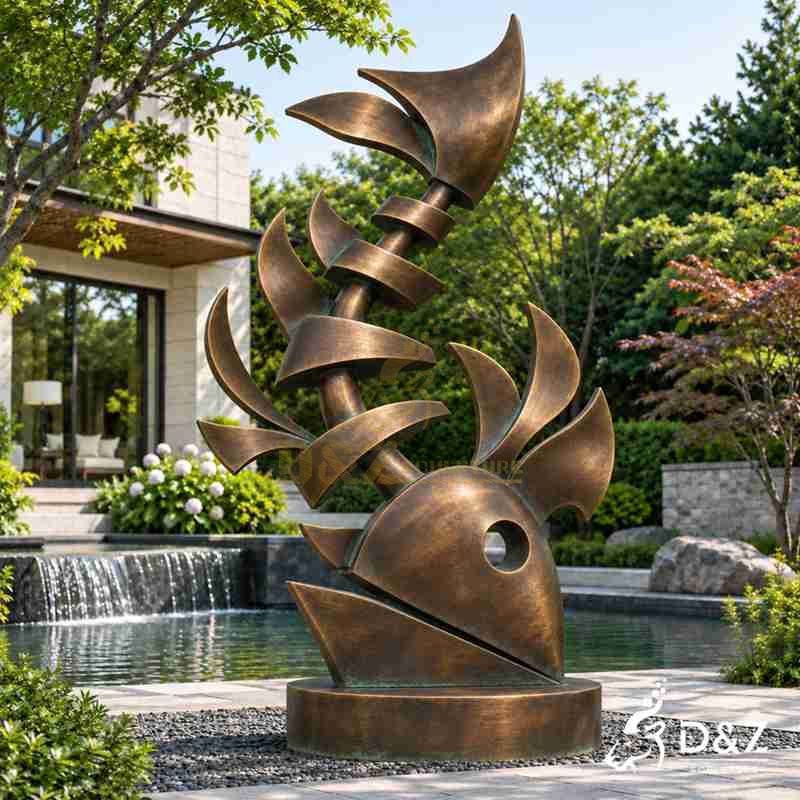
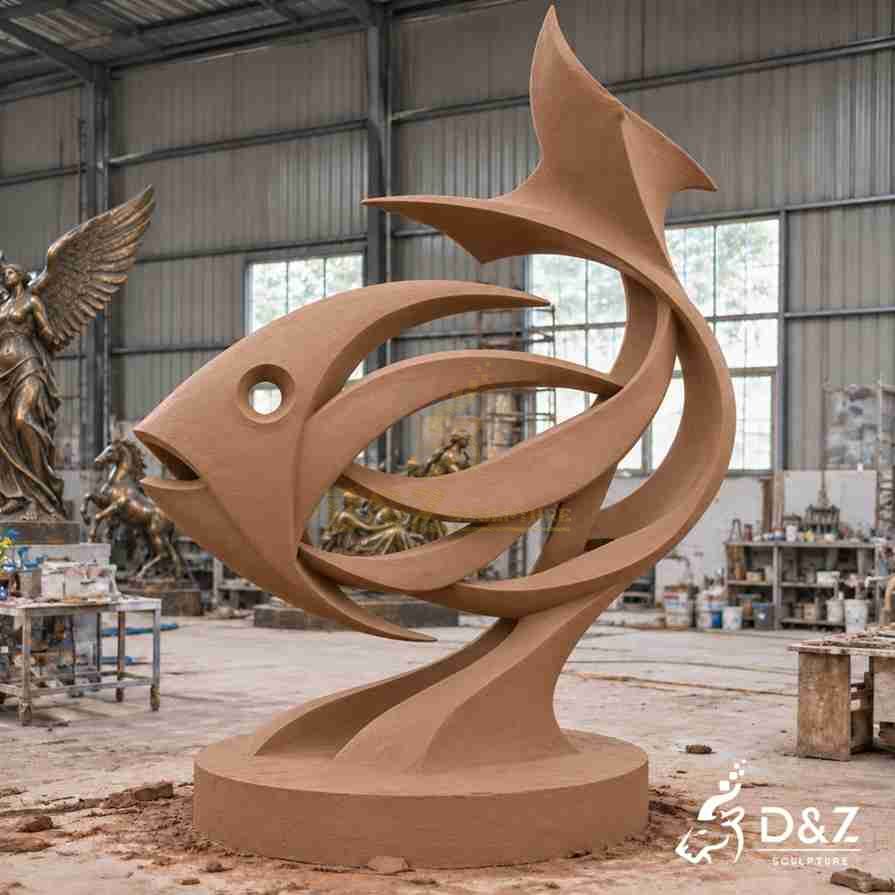
D&Z Sculpture's abstract fish sculpture designs move beyond realistic scales and intricate anatomical details, defining the form of a fish through fluid curves, overlapping surfaces, and openwork spaces. Key features—such as circular eyes, an open mouth, and an expansive tail—ensure the subject remains recognizable, while the sweeping curves evoke the grace of swimming, turning, and stretching. Explore more designs in our fish sculpture collection.
These sculptures are ideal for placement beside hotel swimming pools, at courtyard entrances, within commercial landscapes, or in indoor atriums. The openwork design allows the background to remain visible, integrating water surfaces, vegetation, and architecture into the overall composition.
We provide expert guidance based on your site's proportions, budget, and aesthetic preferences, finalizing the design through detailed form, dimension, and surface finish samples. You may choose to adopt the existing design or discuss adjustments tailored specifically to your project.
Design Characteristics: Capturing Motion Through Curves, Openwork, and Tail Form
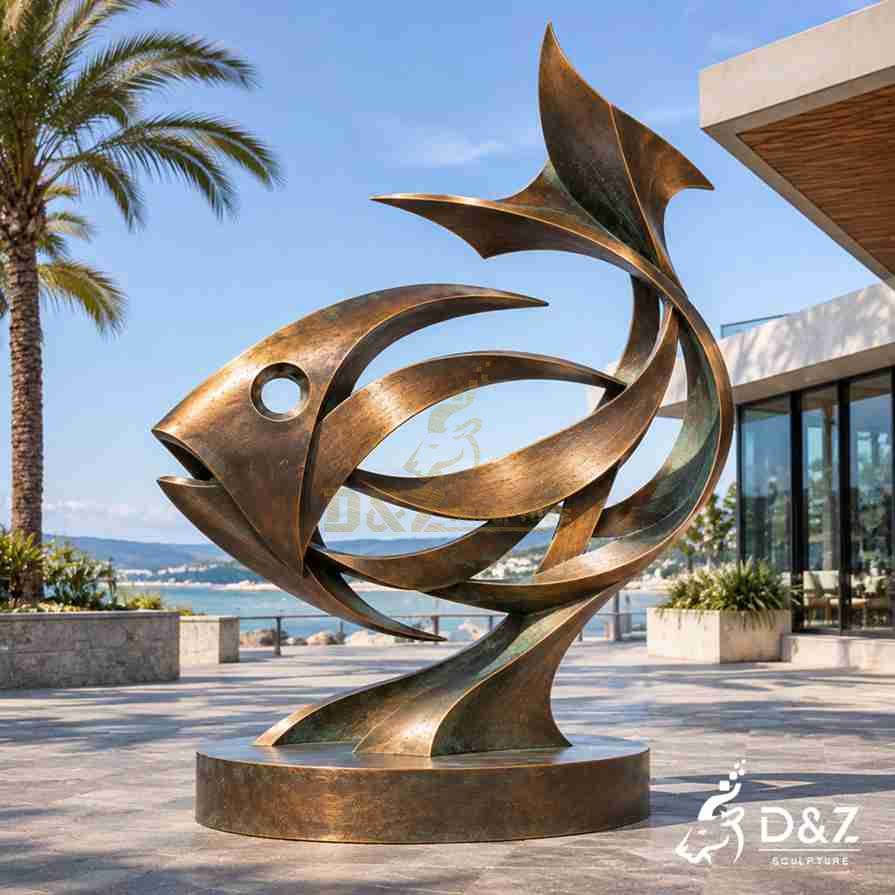
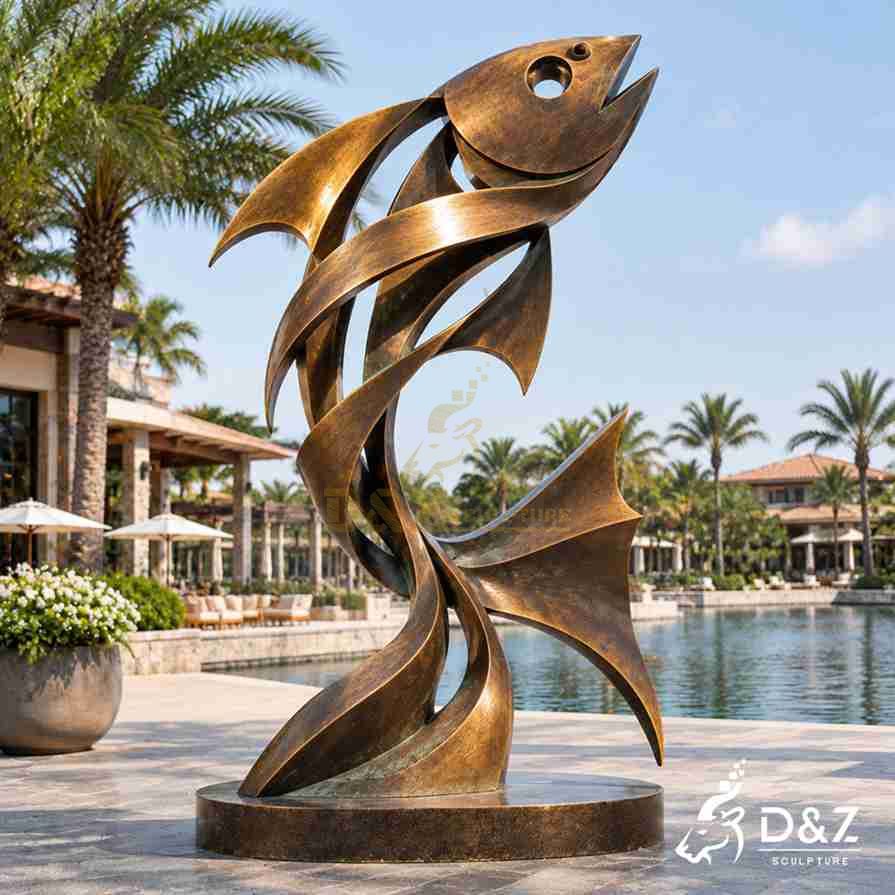
The essence of this abstract fish sculpture lies in the interplay of overlapping curves and negative space. Notable elements include the circular eyes, the sweeping extension of the tail, and the layered depth created by the openwork structure.
Circular Eyes: Serve as clear focal points, ensuring the sculpture is easily identifiable even from a distance.
Forward-Reaching Head: Works in tandem with the open mouth to establish a sense of direction and movement.
Overlapping Body: Uses variations in width, curvature, and layering to convey a fluid, dynamic quality.
Expansive Tail: Extends the composition upward, intensifying the overall sense of motion.
Openwork Spaces: Allow light and the surrounding environment to pass through the sculpture, preventing the form from feeling heavy or solid.
Bronze Base: Maintains material consistency while providing a cohesive visual anchor for the sculpture.
Design Theme: Modern Fish Sculpture
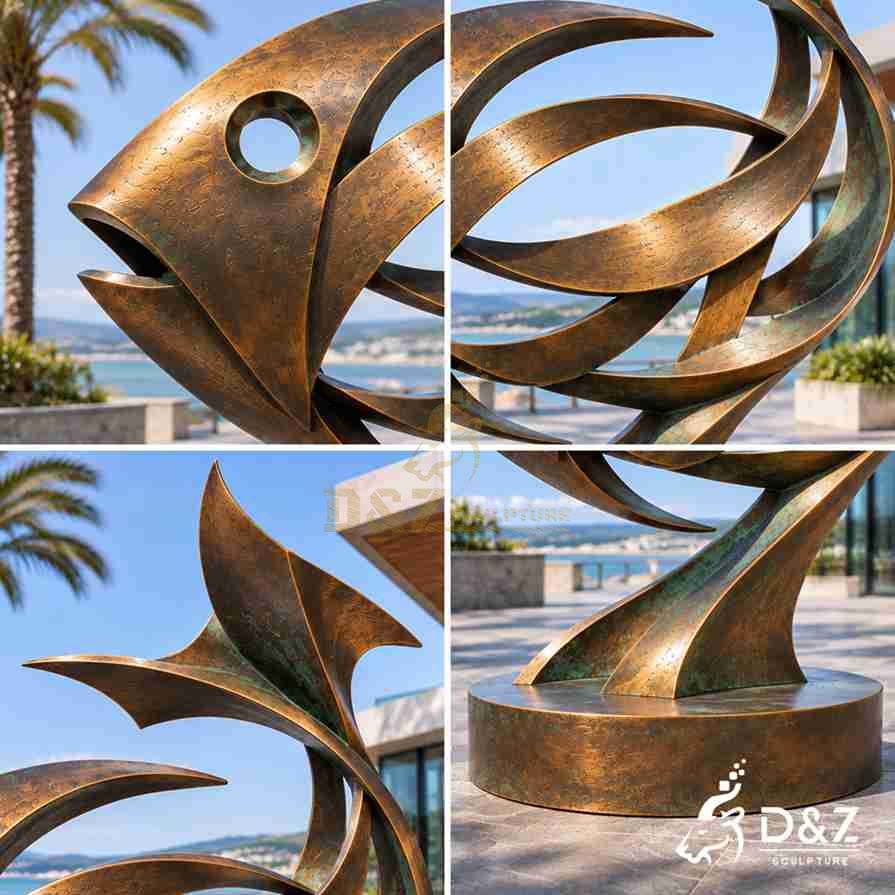
This modern fish sculpture is centered around the themes of fluidity, exploration, and freedom. The head and tail of the fish create a clear sense of direction, while sweeping, interconnected lines establish an overall sense of momentum. The openwork, curvilinear surfaces evoke the swirling motion of water, imbuing the static sculpture with a dynamic, forward-swimming quality.
You may select a primary theme based on the project's overall concept, using a concise plaque or project description to link the sculpture's form to the site design.
Color and Surface Finishes for Bronze Fish Sculptures
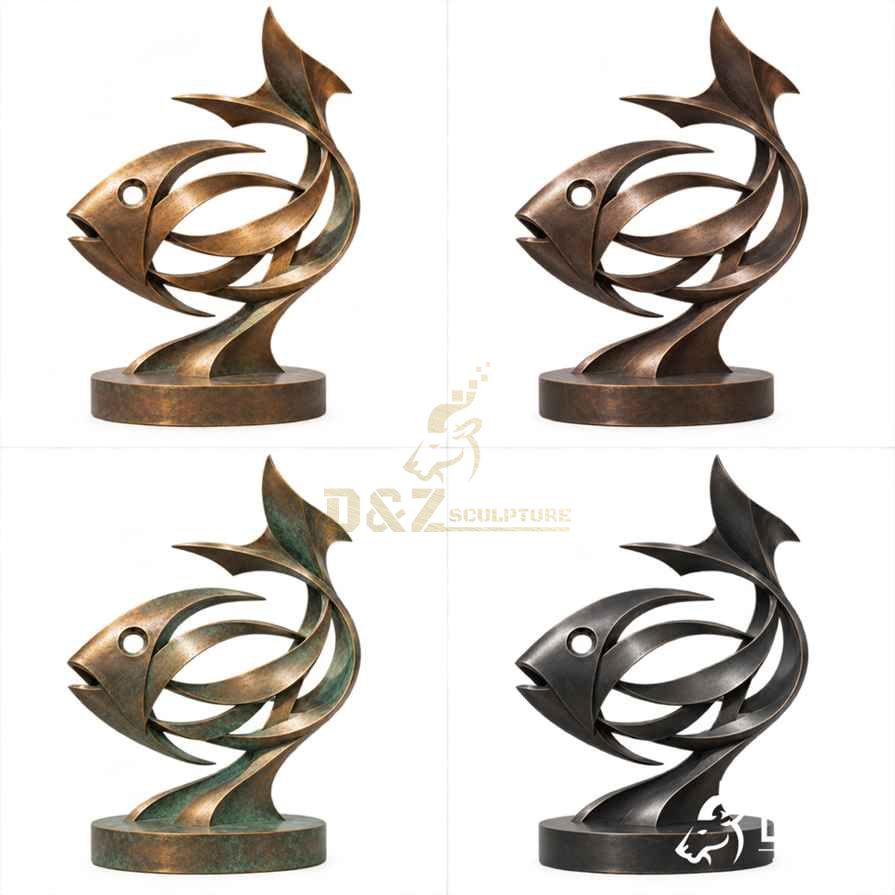
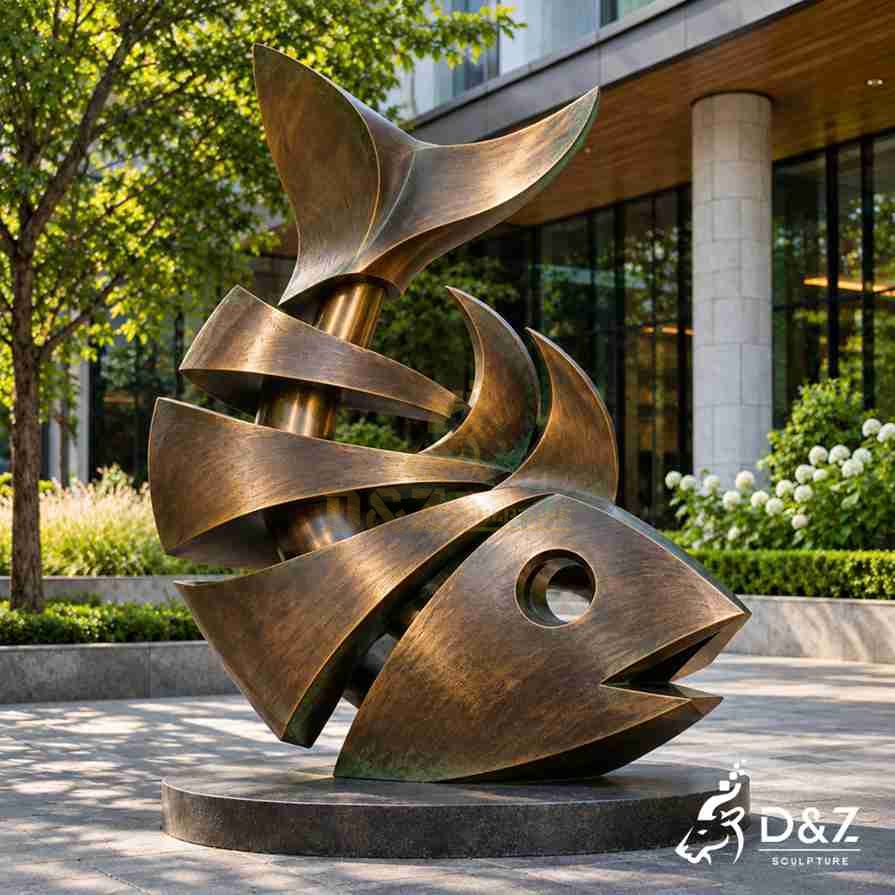
Bronze fish sculptures can be finished in tones such as warm brown, deep brown, or with selective patination (verdigris). Different hues alter the interplay of light and shadow across the curved surfaces; when making a selection, consider how the finish relates to surrounding architectural materials, vegetation, and ambient lighting.
Warm Brown: Highlights the transitions in the curved surfaces and emphasizes the warm, metallic quality of the material.
Deep Brown: Enhances the silhouette and conveys a sense of gravitas; well-suited for locations with brighter backgrounds.
Selective Patination (Verdigris): Introduces color variation, ideal for designs that aim to retain a layered, aged aesthetic.
Low-Gloss Finish: Directs focus toward the sculpture's silhouette and texture.
Higher-Gloss Finish: Intensifies reflections—though care should be taken to ensure that lighting does not create distracting glare or "hot spots" that obscure details.
Determining the Size of Large Fish Sculptures
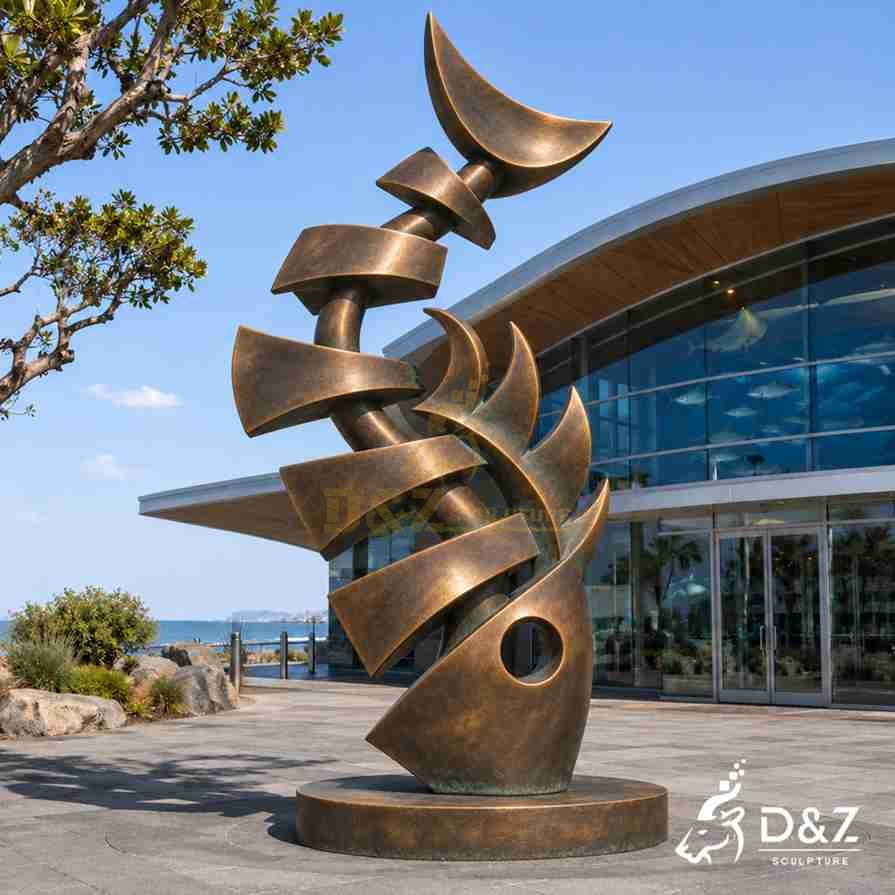
When selecting a large fish sculpture, account for the full extent of the form—including the reach of the tail, the projection of the head, the depth of the body, and the dimensions of the base.
Site Scale: Measure the designated placement area, surrounding structures, and landscape features, ensuring sufficient space for both pedestrian circulation and viewing.
Viewing Distance: Larger pieces are appropriate for expansive settings like public plazas or lakeshores, while smaller or medium-sized works are better suited for courtyards or hotel entrances.
Spatial Role: A primary focal sculpture can anchor a space with its substantial volume, whereas decorative pieces should harmonize with the surrounding environment.
Transportation and Installation: Verify access routes, entryways, lifting requirements, and on-site pathways. If a piece exceeds standard transport dimensions, consider fabrication in sections for on-site assembly.
Placement Strategies for Abstract Fish Sculptures
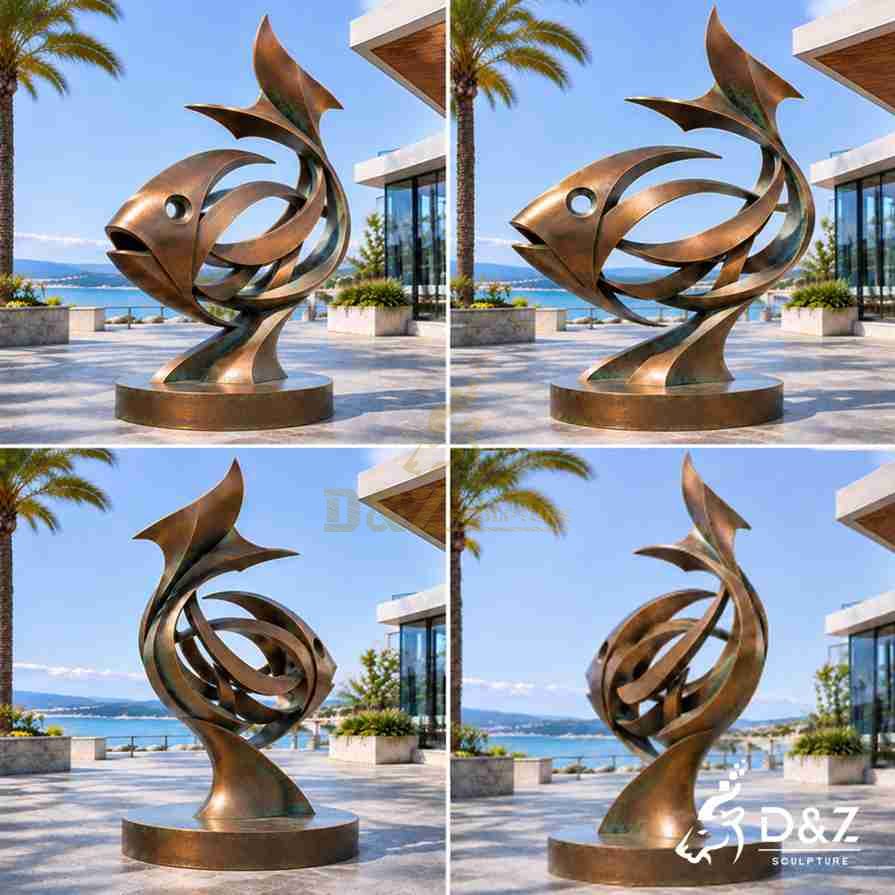
Beside a Hotel Pool: Utilize the water surface or minimalist architecture as a backdrop. Ensure that the sculpture's protruding elements do not obstruct pathways, lounge chair areas, or maintenance access routes.
Hotel Entrances and Courtyards: Orient the sculpture based on the primary approach path, while also considering how it appears from key vantage points such as the lobby, corridors, and seating areas.
Commercial Plazas and Corporate Campuses: Consider the profiles of the sculpture from various viewing angles; if the piece is intended to be viewed from all sides, ensure that the lateral and oblique perspectives are also evaluated during the design approval process.
Private Gardens: Select a placement that accounts for the mature height and density of surrounding vegetation, ensuring that the sculpture's key features—such as the "eye," the tail, or primary openwork sections—are not obscured over time.
Indoor Atriums and Lobbies: Verify the clear ceiling height, floor load-bearing capacity, entrance dimensions, and lighting conditions in advance.
An abstract fish sculpture may appear significantly different depending on its orientation. If the site is primarily viewed from one specific direction, prioritize optimizing the design for that perspective. In open spaces, evaluate the sculpture's appearance from multiple angles.
Environmental and Water Feature Considerations for Outdoor Fish Sculptures
This outdoor fish sculpture can serve as a standalone decorative element beside a swimming pool or within a landscape setting. Specific planning is required for installations near pools, inside fountains, or in areas subject to prolonged water immersion.
If you wish to incorporate a water-spouting feature, please specify this during the initial design phase so that water outlets, plumbing, equipment access, water quality, and surface treatments can be integrated cohesively.
For coastal projects, account for salt spray and direct water exposure; for garden installations, consider the direction of irrigation sprinklers and potential areas of water accumulation. Protective measures and long-term maintenance plans will be tailored to the specific environment in which the sculpture is placed.
Customization Options Based on Budget
When managing your budget, identify your primary objectives—whether that involves preserving the original form, increasing the scale, adjusting the color palette, or ensuring harmony with existing architectural materials.
Retaining the existing silhouette can often reduce the need for extensive redesign work. Alternatively, consider adjusting the overall dimensions, simplifying color gradients, or modifying the proportions of the base. Requirements regarding structural integrity and anchoring will be determined based on the specific needs of your project.
| Project Priorities | Options to Consider | Additional Factors to Verify |
|---|---|---|
| Preserving Visual Concept | Maintaining curves, openwork, and the bronze base | Proportions, texture, and surface color |
| Adapting to Limited Space | Adjusting width, depth, or the extent of protrusions | Circulation, viewing angles, and access points |
| Enhancing Visual Presence | Evaluating overall silhouette against site scale | Structural integrity, component breakdown, and lifting requirements |
| Harmonizing with Architecture | Coordinating color samples with on-site materials | Lighting, background, and final finish/sheen |
| Managing Total Costs | Defining dimensions and scope of production early | Packaging, transport, on-site installation, and maintenance |
Production Process: From Design to Finished Piece
Project Consultation: You provide site photos, dimensional constraints, color preferences, budget, destination, and timeline.
Form and Dimension Confirmation: Verify the fish silhouette, curvature, base design, orientation, and overall dimensions.
Model Review: Examine the fish head, eyes, tail, and openwork details; assess proportions from primary and angled perspectives.
Bronze Casting and Assembly: Fabricate components according to the approved technical approach, complete assembly, and refine surfaces.
Patina and Coloring: Finalize the surface appearance by confirming color tones, textures, sheen, and protective coatings.
Final Inspection: Verify dimensions, appearance, base details, and delivery information; document any areas requiring on-site touch-ups.
Packaging, Transport, and Installation
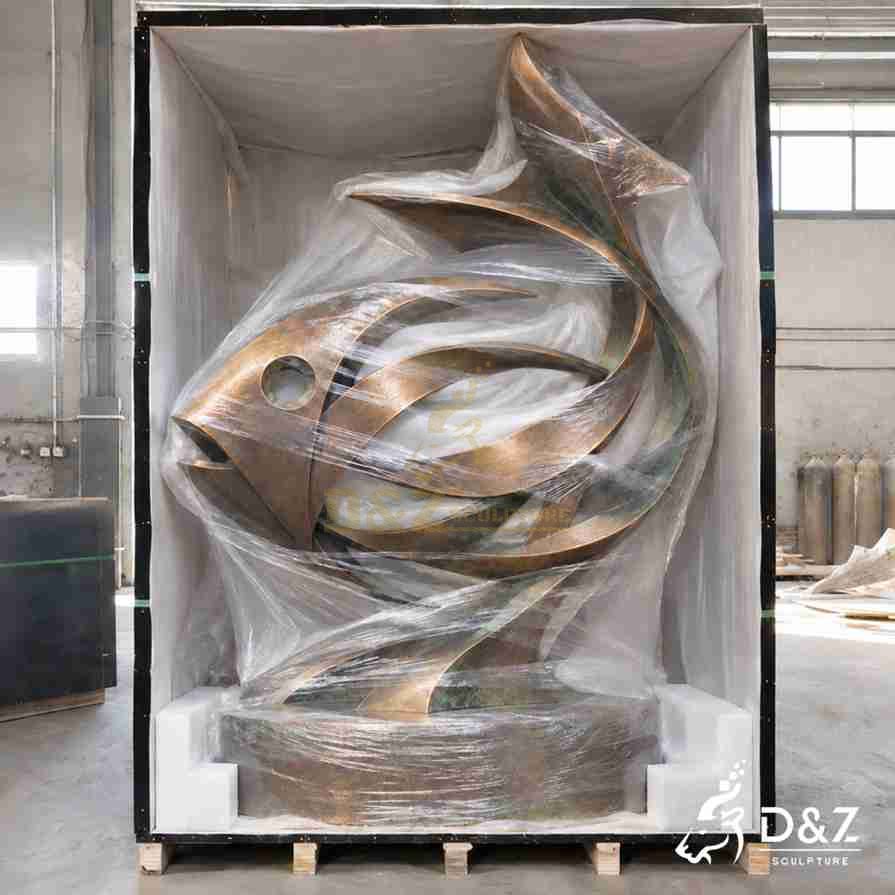
The extended tail, protruding curves, and openwork sections of the abstract fish sculpture require specialized protection. Packaging must prevent movement during transit and ensure that pressure is not concentrated on delicate curved surfaces.
Decisions regarding whether to transport the piece as a whole or in separate components should be based on the final dimensions, transport route, and site access. Before shipment, confirm the receiving area, unloading equipment, lifting path, and temporary storage conditions.
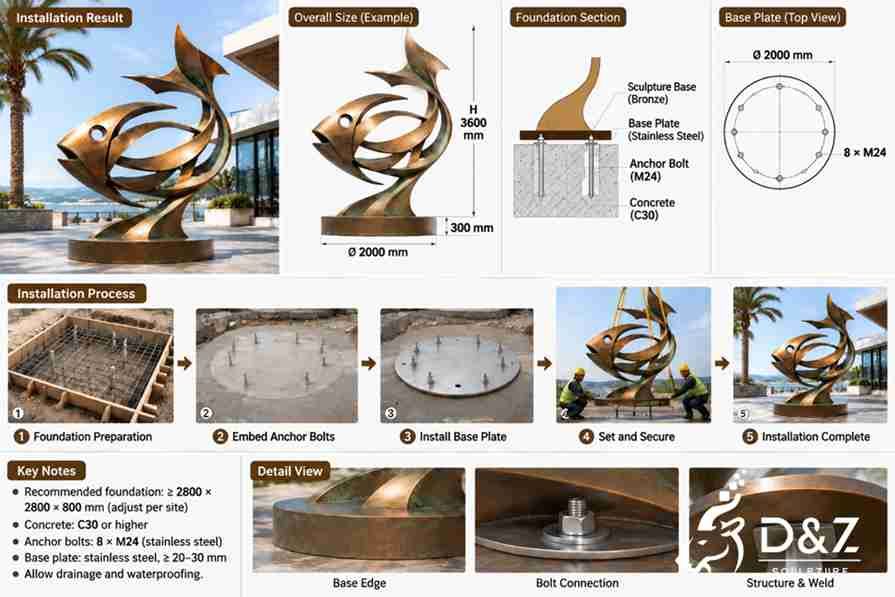
Foundation, anchoring, and lifting methods must be determined by qualified professionals based on the specific sculpture and site conditions. If on-site assembly is required, the scope for assembly, seam finishing, surface restoration, and final inspection should be clearly defined in advance.
Abstract Fish Sculpture – Frequently Asked Questions
Does an openwork fish sculpture require a special structural assessment for areas with strong winds?
Yes. An assessment should be conducted, taking into account the sculpture's dimensions, the span of its curved surfaces, connection methods, the installation base, and local wind load conditions.
Can the shape of the fish be modified?
Adjustments to the head, tail, curves, and the proportions of the openwork sections can be discussed; the final design will be based on the confirmed project specifications.
Does the surface of a bronze fish sculpture require regular maintenance?
Maintenance requirements depend on the patina, the protective coating, and the installation environment; please follow the specific care instructions provided.
What should I do if I notice localized discoloration or surface peeling?
First, document the issue with photographs and contact the manufacturer to determine the cause. They will then advise on whether cleaning, repair, or refinishing is necessary.
Will the bronze color affect the visibility of the sculpture's curves?
It can. Darker tones can accentuate the overall silhouette, while localized highlights can emphasize the transitions in the curved surfaces. We recommend using samples to compare different finishes.
What is the visual effect of an openwork structure?
An openwork structure reduces the perceived weight of the sculpture, giving it a light, airy, and transparent quality. When viewed from different angles, the intersecting lines create dynamic, multi-layered silhouettes.
What is the lead time for a custom abstract fish sculpture?
Typically 30–60 days, depending on the size, design finalization, surface finish, and current production scheduling.
Plan Your Abstract Fish Sculpture with D&Z
Share your site details and design requirements with D&Z Sculpture. We will assist you in evaluating various options for your abstract fish sculpture—including shape, size, patina, base design, and delivery arrangements—to ensure the final configuration aligns with your project space, budget, and desired visual impact.